




Classical Portrait Cameo
A classical portrait cameo captures ancient profiles in relief, offering portable artistry collected across centuries.
Classical Portrait Cameo
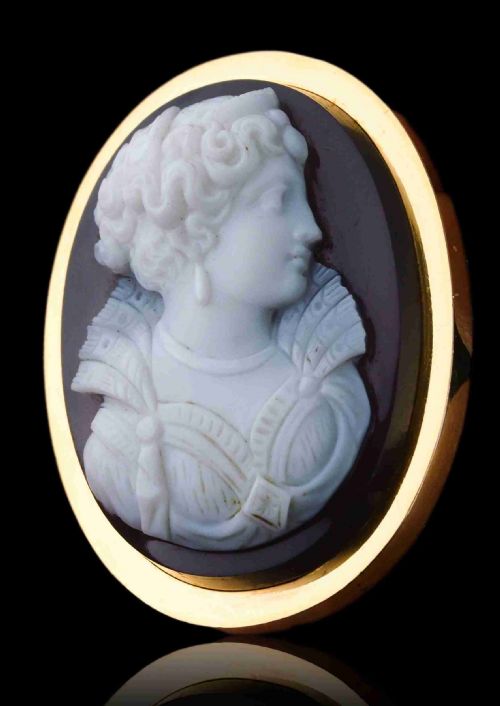
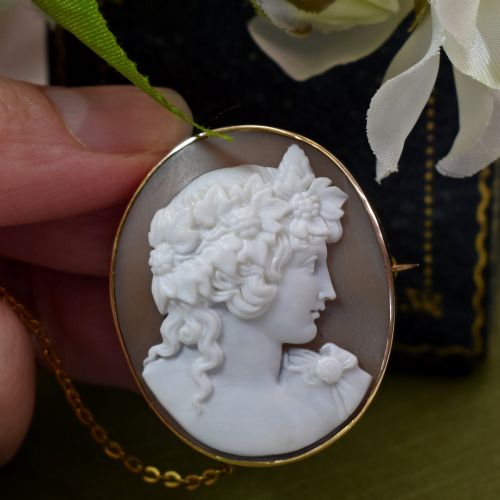
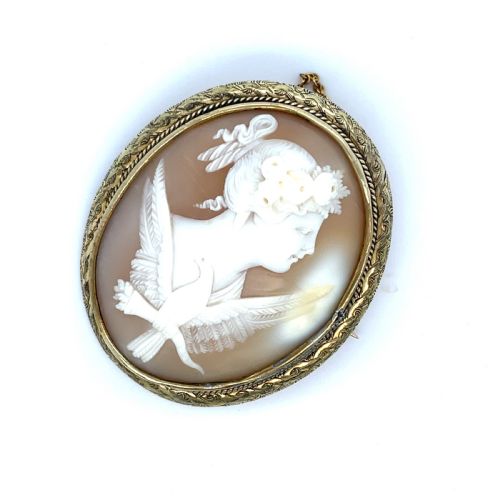
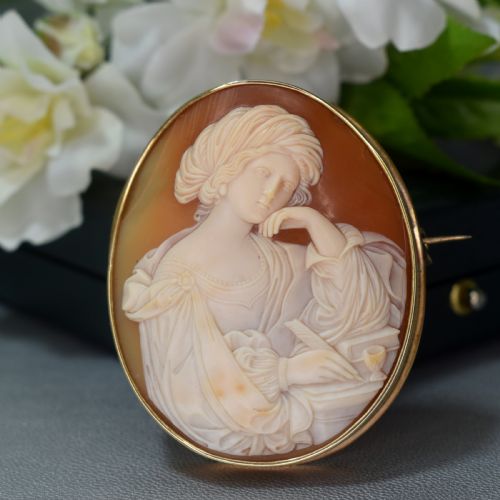
A classical portrait cameo presents a carved profile inspired by antiquity, most frequently encountered in this collection as a brooch, ring, or pair of earrings fashioned during the Victorian period or the nineteenth century. These ornaments depict mythological figures, Roman emperors, or poets in miniature relief, serving both as personal adornments and as mementos of continental travel.
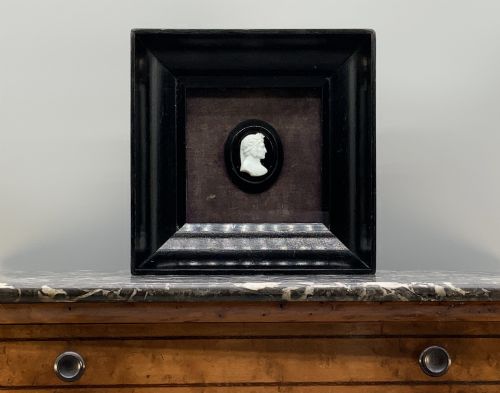
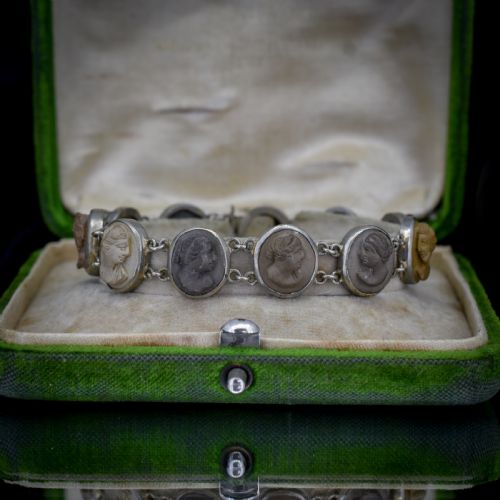
Beyond wearable jewellery, the form extends to larger wall plaques, framed art, inkstands, and bracelets originating from Grand Tour travels in Italy. The materials span carved shell, layered agate, hardstone, lava, and marble, housed in mounts of gold or silver ranging from delicate nine-carat to solid eighteen-carat settings.
Materials and Carving Methods
Carvers utilise the natural strata of shell, particularly conch and helmet shells, alongside banded hardstones such as agate and carnelian, cutting away the upper layer to leave a pale relief against a darker backing. Molten lava from Italian quarries and dense marbles provide alternative mediums for sculptural depth, shaped by hand using specialised miniature tools.
Mountings require traditional metalsmithing techniques, securing the carved profiles within closed or open-backed settings of gold, silver, pinchbeck, or enamel. The integration of the plaque into the metal frame often involves delicate claw settings or bezels tailored precisely to the contours of the stone or shell.
Forms span wearable rings, brooches, earrings, and bracelets, alongside decorative wall plaques, art, and inkstands.
Standards of Execution
The distinction between standard examples and superior work lies in the precision of the carver's hand, where musculature, drapery folds, and facial expressions possess anatomical clarity rather than generic stiffness. Relief height and the exploitation of natural colour striations within the shell or hardstone separate master-carved profiles from mass-produced tourist souvenirs.
Mount quality contributes significantly to the overall standing of a piece, with solid eighteen-carat gold frames or intricate chased gold work reflecting a higher tier of production than simpler base-metal or pinchbeck mounts. The crispness of the border and the harmony between the relief subject and its metal housing indicate the original maker's investment of time and skill.
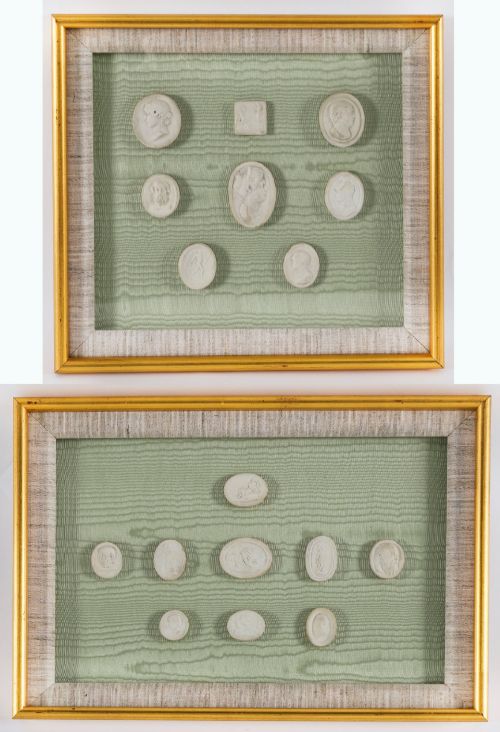
Thorvalsen Workshop·R. Pernice·Wedgwood
The Classical Portrait Cameo Glossary
- Cameo
- A method of carving an object such as a gemstone, shell, or piece of lava so that a raised relief image stands out from a background of a different colour.
- Intaglio
- A gem or other material carved in incuse so that the design sinks below the surface, operating as the inverse of a cameo.
- Grand Tour
- A cultural excursion through Europe, principally Italy, undertaken by wealthy young men and collectors during the eighteenth and nineteenth centuries to acquire art and antiquities.
- Hardstone
- A semi-precious stone such as agate, jasper, or carnelian used for carving cameos and intaglios due to its hardness and layered colour bands.
- Pinchbeck
- An alloy of copper and zinc invented in the eighteenth century to imitate gold, frequently found utilised in period jewellery mounts.
Classical Portrait Cameo: Frequently Asked Questions
How do I date a classical portrait cameo?
Dating relies on stylistic clues in the mount, the subject matter, and the material of the carving itself. Victorian examples often feature distinct gold hallmarks, pinchbeck alloys, or characteristic Neoclassical revival motifs.
Earlier eighteenth-century and Grand Tour pieces tend to utilise heavy marble, lava, or finely detailed hardstones mounted in simpler or more robust closed-back settings.
What is the difference between shell and hardstone cameos?
Shell cameos are carved from the outer layers of marine molluscs, offering softer pastel shades and a translucent quality that responds well to backlighting. They became widely popular during the nineteenth century for brooches and earrings.
Hardstone cameos utilise durable minerals like agate and carnelian, requiring greater skill to carve across natural colour bands. These pieces resist scratching and offer sharper, more permanent detail.
Were lava cameos worn as jewellery?
Lava cameos were indeed worn extensively as jewellery, particularly during the nineteenth century as souvenirs from visits to Mount Vesuvius. Carvers shaped the lightweight volcanic rock into intricate portrait brooches and matching bracelet links.
Because lava is softer than agate, these pieces exhibit a matte texture and earthy tones, requiring careful handling to preserve the fine relief work.
How were Grand Tour plaques displayed?
Grand Tour plaques were typically mounted in wooden frames, inset into decorative items like marble inkstands, or displayed on walls to signal the owner's classical education and travel credentials. Wealthy collectors gathered profiles of Roman emperors, poets, and mythological figures to decorate their libraries and drawing rooms.
These pieces served both as tangible memories of European journeys and as decorative art objects within elite households.