


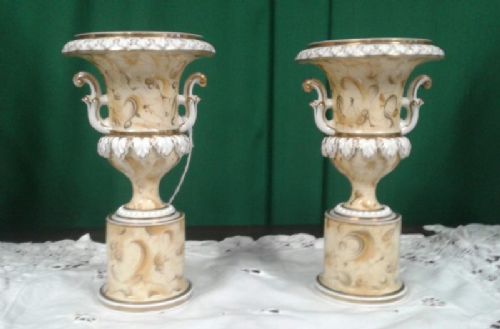


Classical Pedestal Urn Vase
These classical pedestal urn vases bring neoclassical symmetry into a room, drawing on ancient forms shaped for nineteenth-century interiors.
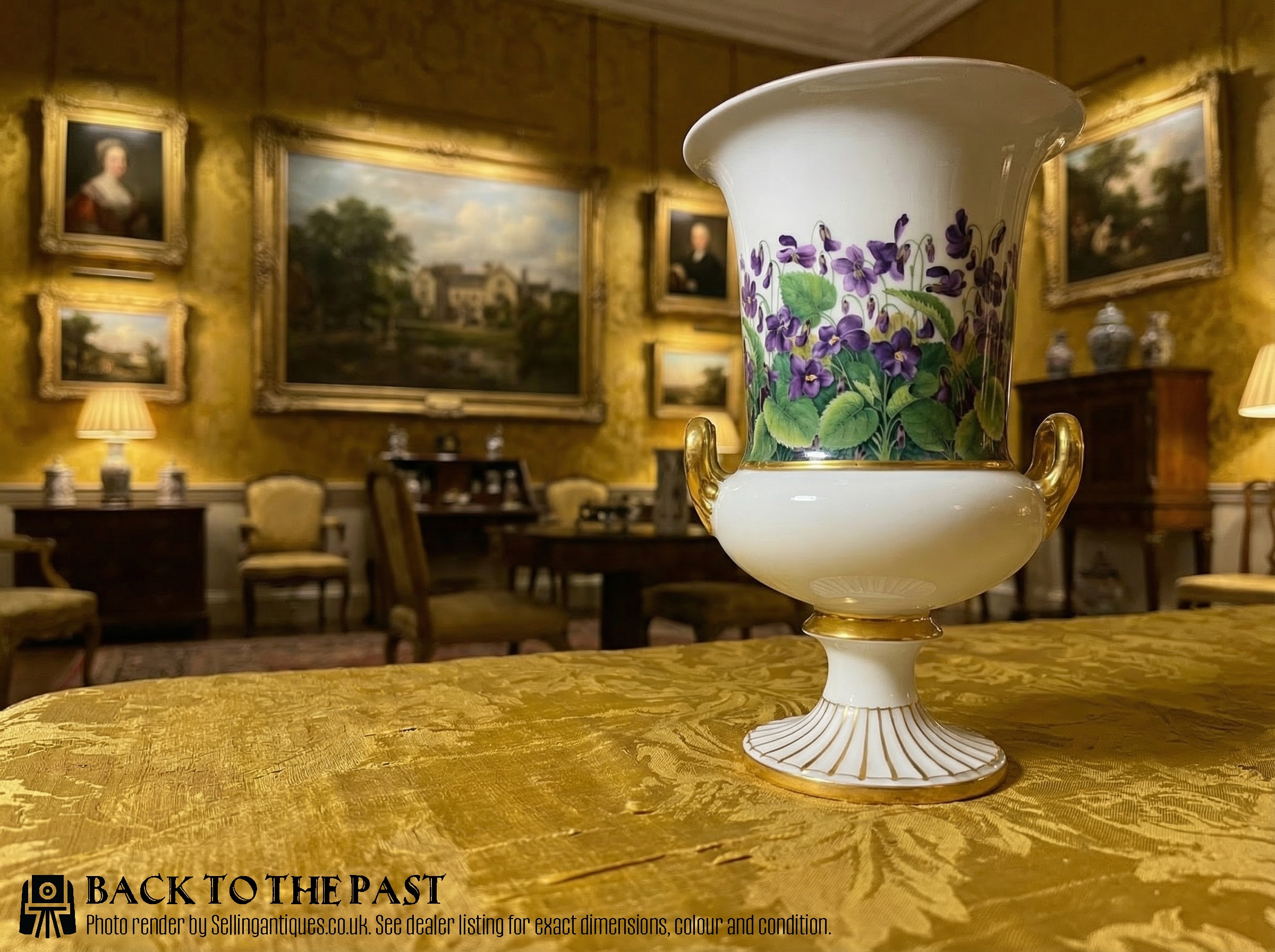
Classical Pedestal Urn Vase
A classical pedestal urn vase combines an elevated stand with an ancient vessel shape, drawing on archaeological discoveries popularised during the nineteenth century. These pieces emerge across Georgian, Regency, and Victorian periods as decorative focal points for domestic spaces and gardens.
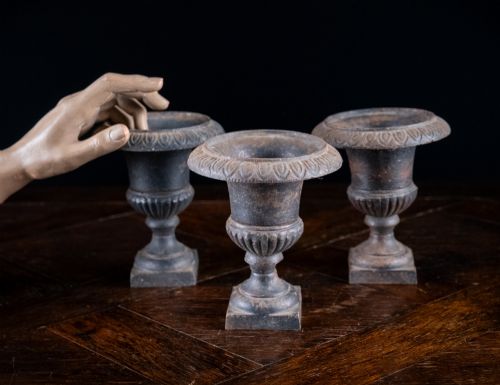
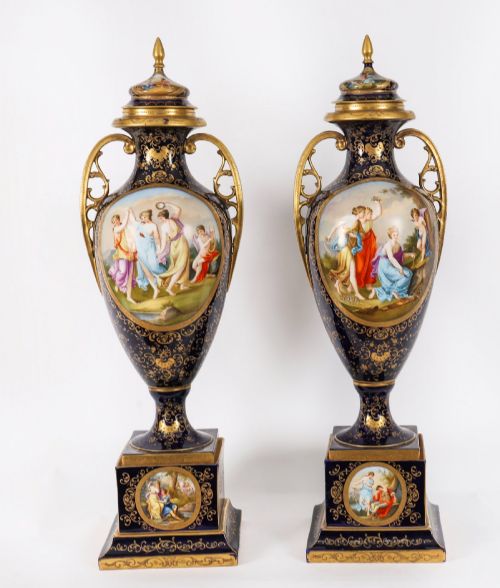
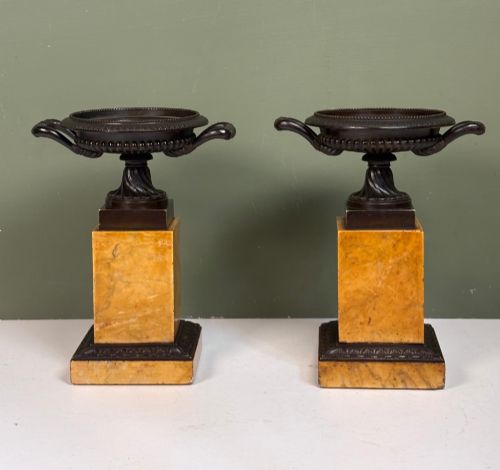
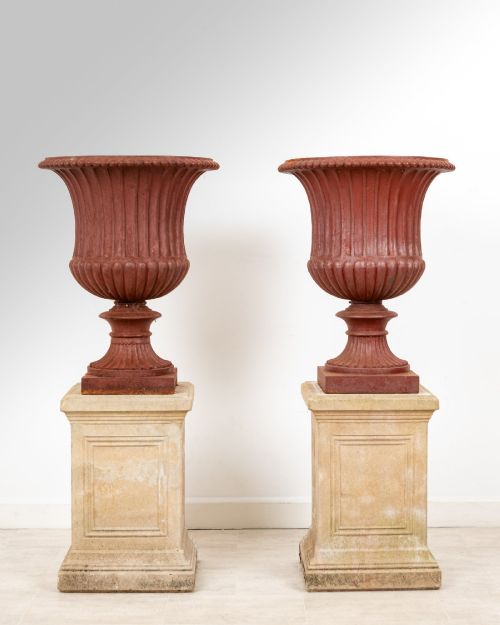
The campana shape dominates the selection, accompanied by tall lidded vases, tazzas, and amphora forms. Buyers encounter bronze, cast iron, and various porcelains intended for display on mantelpieces, pedestals, or garden terraces.
Origins span British potteries, French ateliers, Italian workshops, and German porcelain factories. Many items reflect Grand Tour travels, bringing classical antiquity home through reduced bronze models and painted porcelain.
Materials and construction methods
Metal vessels utilise bronze, cast iron, and ormolu, often cast in sections and chased by hand to define acanthus leaves and classical friezes. Patination ranges from dark brown bronze to silvered surfaces and painted cast iron.
Ceramic pieces combine moulded porcelain, majolica, and earthenware with hand-painted decoration, gilding, and applied bas-reliefs. Marble, alabaster, and scagliola provide substantial plinths and stone bodies for sculptural display.
Listings feature materials spanning bronze, marble, cast iron, porcelain, and terracotta across the nineteenth and early twentieth centuries.
What distinguishes the quality
Sharpness of cast detail separates superior metalwork from softer reproductions, particularly in the rendering of classical figures and foliage. Heavier bronze castings and crisply chased ormolu demonstrate greater workshop skill.
Porcelain quality rests on the precision of the hand-painted palette, the richness of the gilding, and the elegance of the thrown or moulded form. Well-proportioned pedestals and balanced covers indicate careful studio production.
Coalbrookdale·Ridgeways·Meissen·Wedgwood·Vienna·Sevres·Minton
The Classical Pedestal Urn Vase Glossary
- Campana
- A bell-shaped classical urn with an everted rim and a footed base. This silhouette originates in ancient pottery and metalwork.
- Ormolu
- Gilt bronze mounted onto decorative objects and furniture. The technique involves applying a gold amalgam to a bronze base.
- Cassolette
- A decorative vase or urn with a reversible lid that functions as a burner or a solid vase. These pieces appear frequently in French neoclassical designs.
- Grand Tour
- A cultural journey undertaken by wealthy Europeans through France and Italy to study classical antiquities. Souvenirs included bronze reductions of famous vases.
- Majolica
- Tin-glazed earthenware decorated with coloured metallic oxides. Victorian majolica displays vibrant glazes on sculptural garden and table vessels.
- Bas-relief
- A sculptural technique where figures project slightly from a flat background. Wedgwood jasperware utilises this method for white classical motifs.
Classical Pedestal Urn Vase: Frequently Asked Questions
What is a campana urn?
A campana urn takes its bell-like profile from ancient garden and wine vessels discovered during archaeological excavations.
These pieces feature a flared rim, deep bowl, and stem resting on a square plinth.
Where were these urns displayed?
Nineteenth-century interiors placed these vessels on mantelpieces, console tables, and dedicated stone pedestals.
Heavier cast iron and terracotta versions stood outdoors in gardens and on terraces.
How do I identify a Grand Tour piece?
Grand Tour pieces reproduce famous ancient monuments such as the Warwick Vase in bronze or alabaster.
These souvenir items date primarily from the nineteenth century and reflect classical scholarship.
What is the difference between porcelain and iron urns?
Porcelain urns from factories like Vienna and Sevres offer delicate painted scenes and gilded neoclassical detailing for indoor display.
Cast iron urns provide heavy, durable structures suited for weather exposure in gardens.