



Botanical Porcelain Vase
A botanical porcelain vase brings painted flora into a room through porcelain, bone china and ceramic.
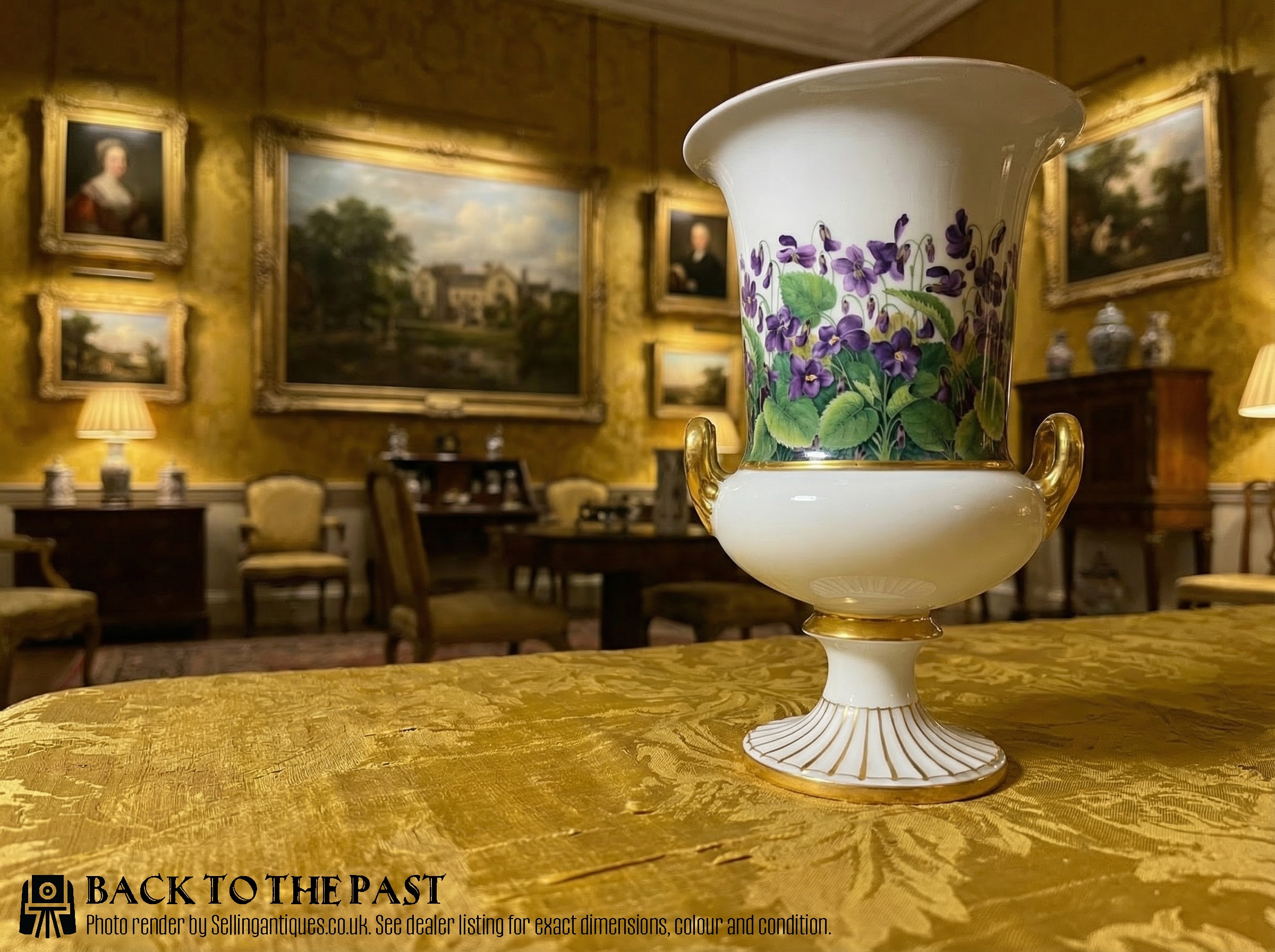
Botanical Porcelain Vase
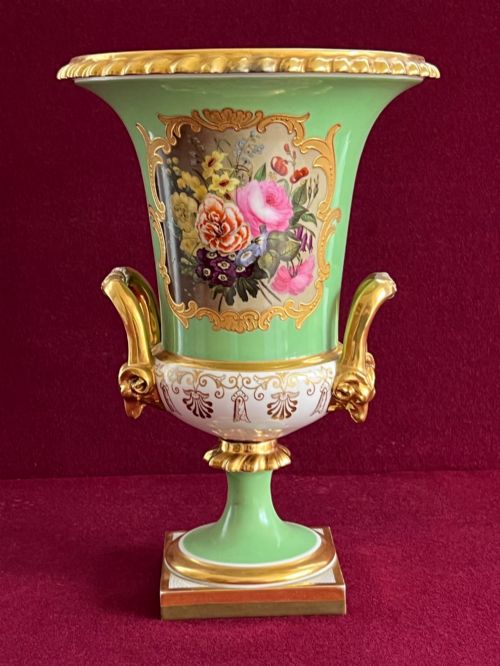
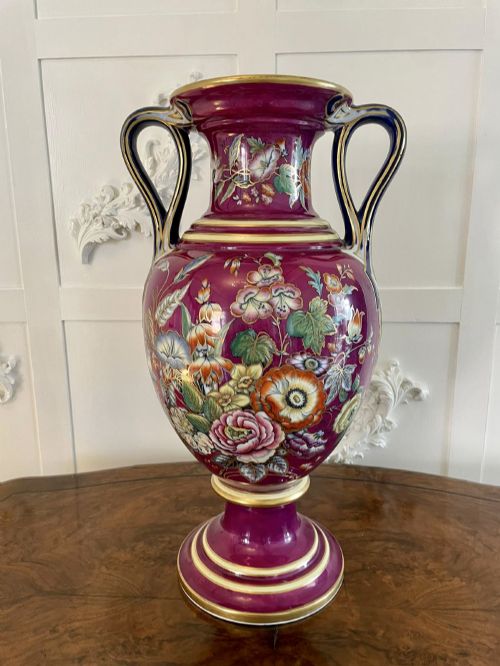
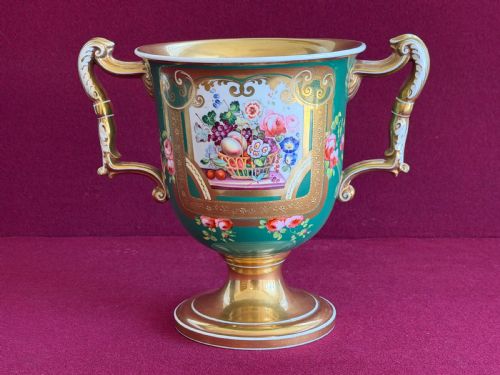
A botanical porcelain vase is a vessel designed to display painted floral motifs, drawn from the periods of the Regency era, Victorian era, and the late nineteenth century. These pieces appear as standard vases, urns, loving cups, and lamp bases, decorated with hand-painted flora and foliage.
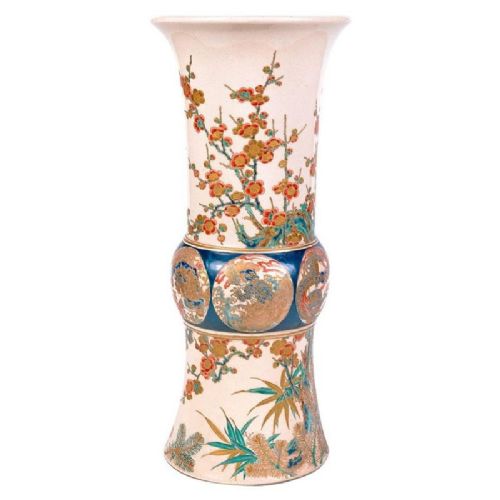
The objects on this page largely represent nineteenth century production, moving from Regency works through Victorian styles to Art Nouveau creations. Alongside standard ceramic forms, buyers encounter specialised pieces such as rose water sprinklers and pot pourri vessels.
Makers from English factories and continental potteries produced these items utilising porcelain, bone china, and opaque glass. The decorative schemes frequently combine hand-painted floral subjects with gilt, gold leaf, and enamel highlights.
What varies in quality
Quality in a botanical porcelain vase rests upon the execution of the hand-painted flora and the precision of the gilding. Skilled hand-painted botanical details exhibit fine brushwork and naturalistic colour blending, distinguishing them from simpler decorative applications.
The refinement of the porcelain body and the complexity of the form create distinctions across the range. Elaborate moulding, such as twin handles and pedestal bases combined with intact gold leaf, marks out superior examples.
Listings feature porcelain, bone china, and ceramic forms spanning the Regency, Victorian, and Art Nouveau periods.
H & R Daniel·Flight Barr and Barr·Ernst Wahliss·Royal Dux Bohemia·Royal Worcester
The Botanical Porcelain Vase Glossary
- Porcelain
- A ceramic material made by heating materials, generally including kaolin, in a kiln. It fires to a hard, non-porous white body.
- Bone china
- A type of porcelain that is composed of bone ash, feldspathic material, and kaolin. It offers high strength and translucency.
- Gilt
- A thin layer of gold applied to the surface of the ceramic. This finish highlights handles, rims, and decorative borders.
- Enamel
- Opaque or transparent glass-like substance fused to the surface of porcelain through firing. It provides vibrant colour details in the floral painting.
- Urushi lacquer
- A natural resin used for over-paint decoration on select ceramic pieces. It creates a durable, glossy finish derived from tree sap.
Botanical Porcelain Vase: Frequently Asked Questions
How do I identify a Regency period vase?
Regency pieces often display refined Neoclassical shapes and precise hand-painted botanical details associated with early nineteenth-century English factories.
Examine the form and the style of the floral painting to connect the piece to makers active around the early eighteen hundreds.
What is the difference between porcelain and bone china?
Bone china incorporates bone ash into the ceramic mixture, which increases its strength and translucency during high-temperature kiln firing.
Standard porcelain relies on traditional kaolin and petuntse pastes without bone ash content.
How should I clean a hand painted vase?
Dust the surface gently with a soft dry cloth to protect the hand-painted botanical decoration and any applied gold leaf.
Avoid using water or chemical cleaners that might damage delicate enamel and gilt highlights.
Are these vases suitable for holding water?
Many historical vessels function primarily as decorative objects or lamp bases rather than utilitarian containers for fresh stems.
Check the interior for any old repairs, lacquering, or electrical conversions before introducing water.