





Classical Pastoral Wall Art
Classical pastoral wall art captures idyllic landscapes and romantic rural scenes, offering a timeless window into mythological and rustic harmony for your interior.
Classical Pastoral Wall Art
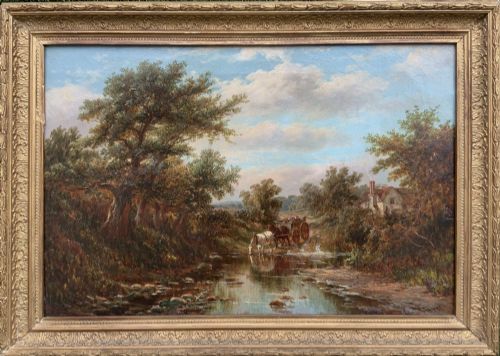
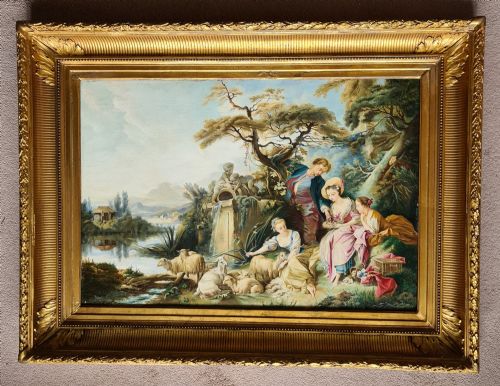
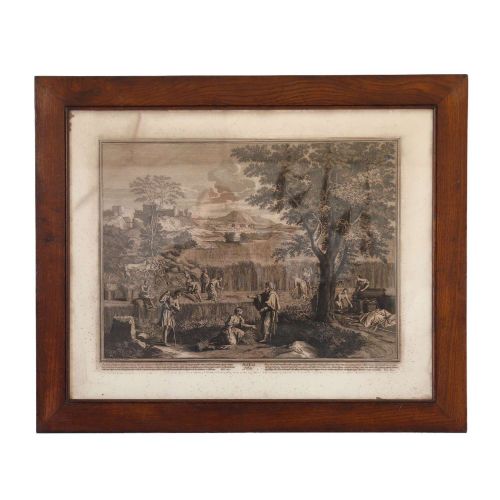
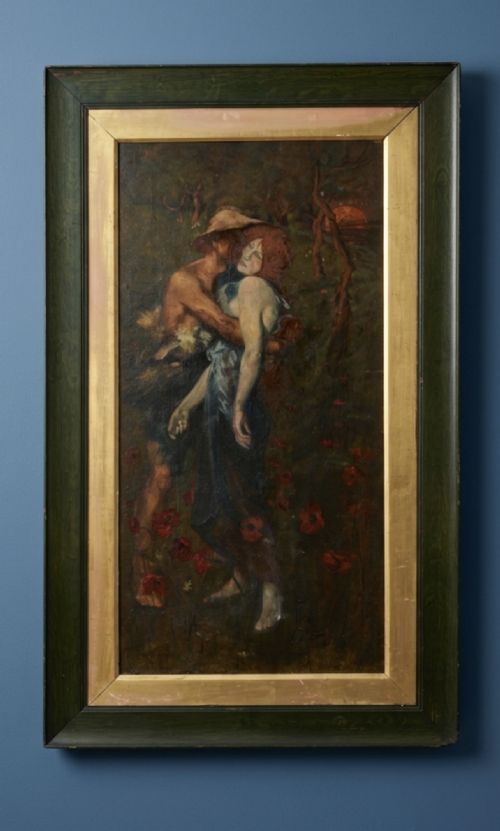
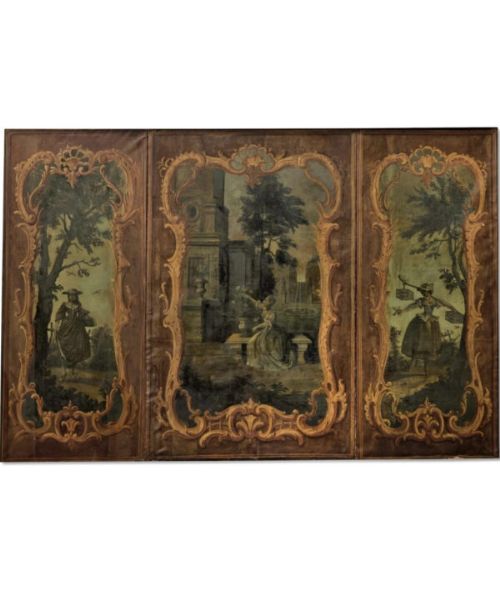
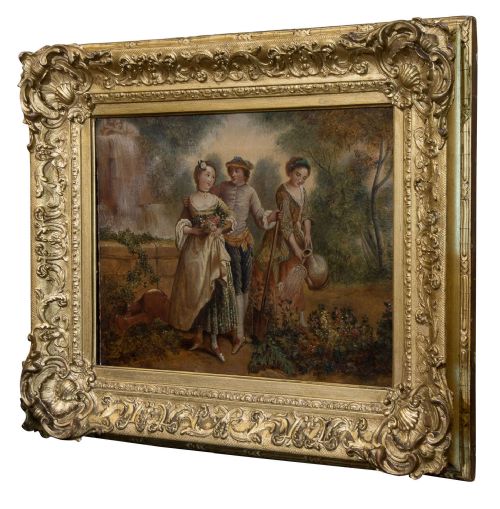
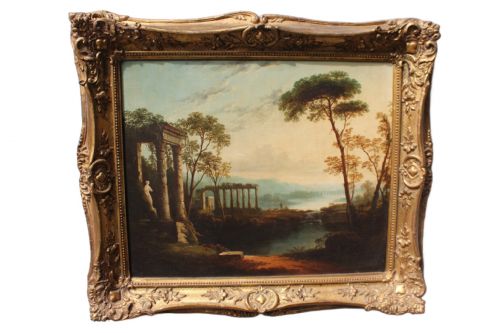
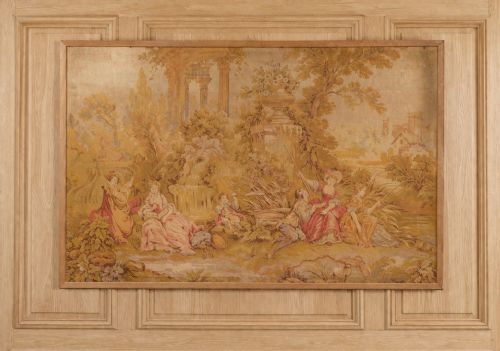
Classical pastoral wall art encompasses oil paintings, framed prints, engravings, and woven tapestry panels that depict idealized rural scenes, shepherds, and ancient ruins. These works draw heavily upon historical periods ranging from the seventeenth century through to the mid-twentieth century, including Georgian and Victorian interpretations.
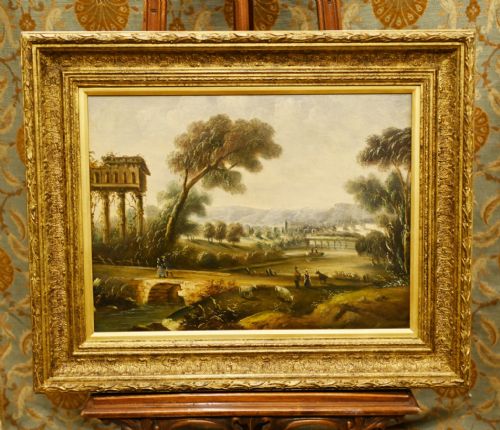
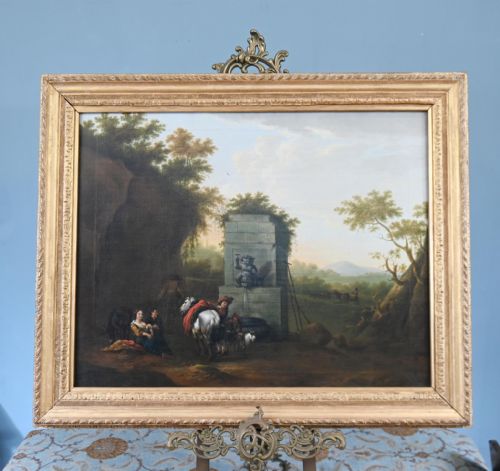
The most common formats on this page are oil paintings on canvas and framed paper prints, often inspired by masters such as Claude Lorrain, Nicolas Poussin, and François Boucher. You will frequently encounter Italianate landscapes and French Rococo compositions that reflect Grand Tour sensibilities and romanticized rural life.
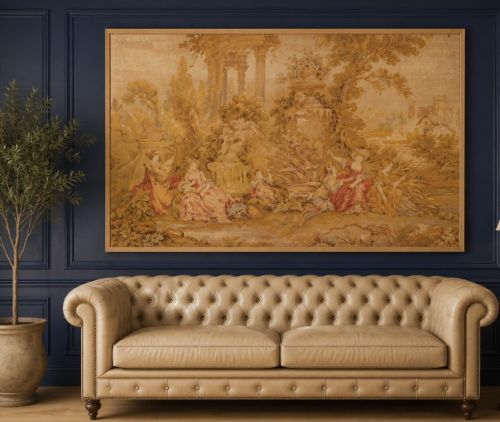
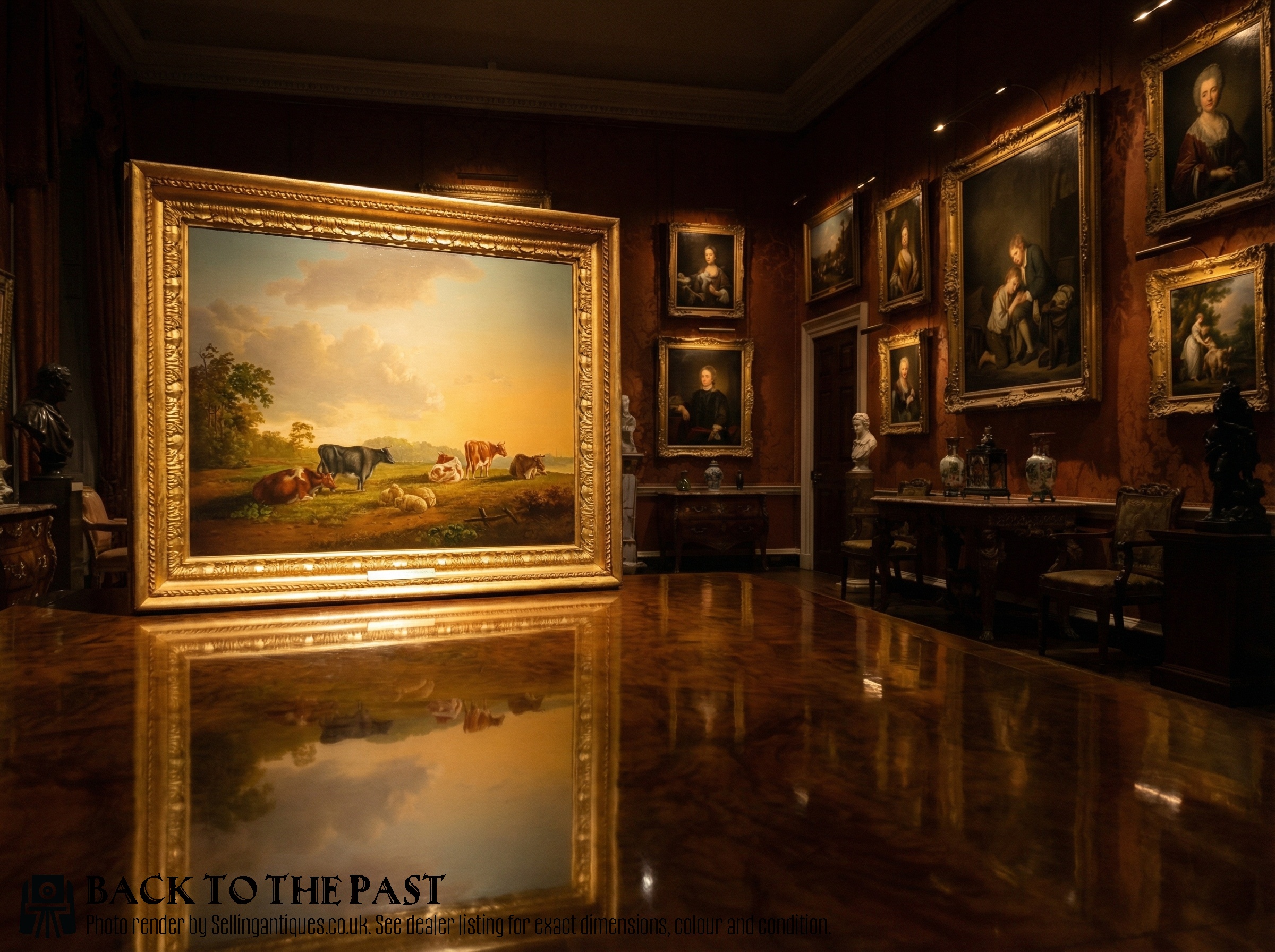
Pieces span various scales, from intimate framed works to large tapestry panels suited for substantial architectural spaces. The imagery consistently balances natural settings with classical architecture, figures, and animals to create a composed sense of pastoral serenity.
Materials and Construction
The primary medium for these works is oil paint applied to canvas, often supported by traditional wooden stretcher frames and housed within ornate gilt wood frames accented with gold leaf. Paper works rely on engraving, etching, and mezzotint techniques, sometimes enhanced with hand-colouring.
Larger textile examples utilise wool and silk yarns in woven tapestry panels designed for wall hanging. Glazing is frequently applied to protect paper prints and delicate engravings behind glass.
Listings feature works spanning the 17th century through the mid-20th century, utilising oil on canvas, paper, gold leaf, and woven wool.
Evaluating Quality and Execution
Quality in these works is determined by the dexterity of brushwork, the depth of perspective in landscape composition, and the fidelity of the execution, particularly in pieces that replicate earlier masterworks. Finer paintings demonstrate subtle tonal gradations in oil paint and balanced integration of figures within the natural scenery.
The integrity of the framing contributes significantly to the overall object, with period gilt wood frames offering greater historical cohesion than later replacements. For woven tapestries and prints, the crispness of detail and preservation of the original material define the higher tier of the range.
Francois Boucher·Poussin·Greiffenhagens·Jan Miel·Friedrich von Kaulbach·Claude Lorrain·Eugene Verboeckhoven·Cignaroli·Jean Antoine Watteau·Augustus Jules Bouvier·John Boydell·Peter de Wint
The Classical Pastoral Wall Art Glossary
- Grand Tour
- A traditional trip of Europe undertaken by upper-class European young men of sufficient means, resulting in the acquisition of art and landscape paintings. These souvenirs often established the taste for Italianate classical scenes.
- Grisaille
- A painting executed entirely in shades of grey or neutral greyish-brown, often designed to imitate sculpture or relief work. It appears frequently in decorative architectural wall hangings.
- Mezzotint
- A printmaking process of the printmakering family in which the image is worked from dark to light by scraping and burnishing the copper plate. This technique allows for rich tonal variations and smooth gradients.
- Tapestry panel
- A heavy textile piece woven on a loom with pictorial designs, used historically for wall hanging to insulate rooms and decorate grand interiors. Large examples incorporate wool and sometimes silk.
- Italianate classical
- A style of painting that idealises Italian landscapes with classical ruins, idealized lighting, and pastoral figures. It stems from seventeenth-century traditions popularised by artists like Claude Lorrain.
Classical Pastoral Wall Art: Frequently Asked Questions
What is classical pastoral wall art?
Classical pastoral wall art consists of historical paintings, prints, and tapestries featuring idealized rural landscapes, classical ruins, and pastoral figures. These pieces originate from various centuries and reflect European artistic traditions inspired by antiquity and nature.
They serve as decorative wall hangings that bring historical charm and picturesque scenery into domestic interiors, ranging from intimate framed prints to large textile panels.
How do I care for antique oil paintings?
Antique oil paintings on canvas require stable environmental conditions away from direct sunlight and excessive humidity. Regular, gentle dusting with a soft, dry brush helps maintain the surface.
Avoid using liquid cleaners or chemical solvents on the canvas or the gilt wood frame, as these can damage the aged paint layers and gold leaf.
What distinguishes a Grand Tour painting?
Grand Tour paintings typically depict Italian landscapes, classical architecture, and pastoral gatherings collected by travellers during their European journeys in the eighteenth and nineteenth centuries. They often reflect the artistic influence of masters like Claude Lorrain.
These works capture the romanticized view of classical antiquity that fascinated collectors of the period.
Are framed tapestries heavy to hang?
Large woven tapestry panels can be substantial in weight, especially when mounted within wooden frames or backed for wall display. They require secure wall fixings suited to the specific architecture of your room.
Checking the weight distribution and using appropriate hanging hardware ensures the textile and frame remain properly supported over time.