


Classical Painted Wall Mirror
A classical painted wall mirror brings proportion and reflected light to a room, drawing on Regency, Victorian, and Georgian designs.
Classical Painted Wall Mirror
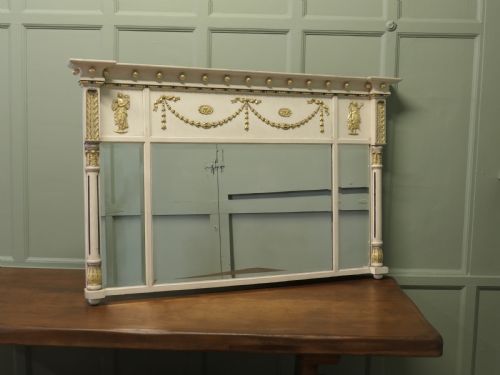
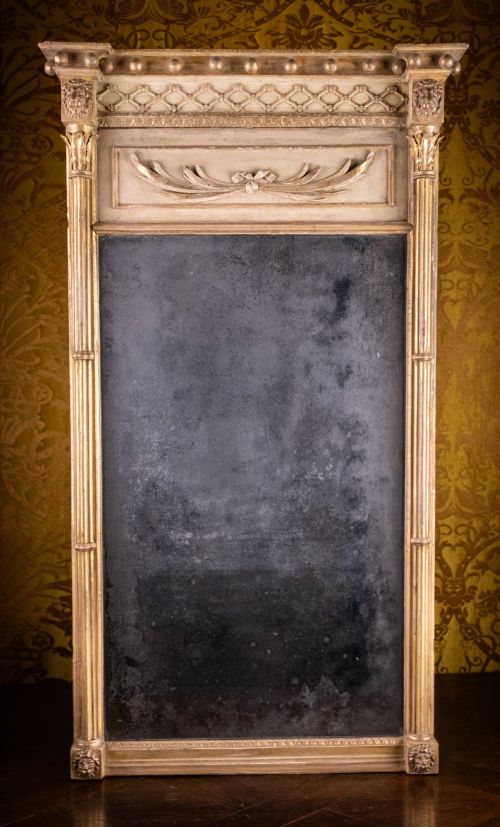
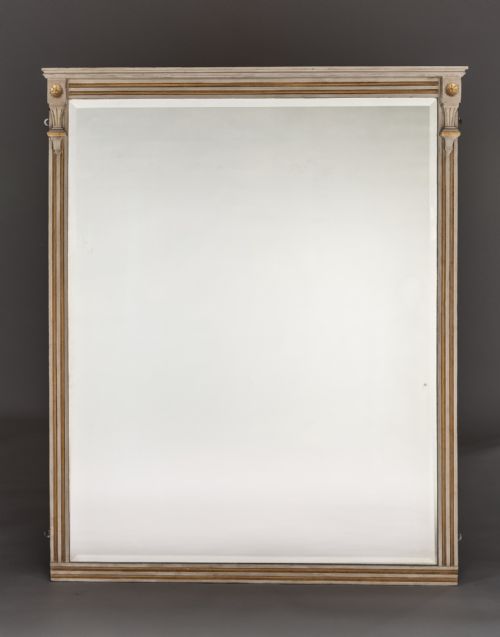
A classical painted wall mirror serves as a major decorative focal point within a domestic interior, originating in various periods from the eighteenth century through to the early twentieth century. Buyers seeking a classical painted wall mirror will frequently encounter grand overmantel mirrors, tall pier mirrors designed for spaces between windows, and trumeau panels incorporating painted scenes or decorative reliefs.
The selection spans several distinct aesthetic movements, notably Regency, French Empire, Louis XVI style, and Victorian neoclassical designs. Pieces often feature architectural elements such as columns, lion masks, and Vitruvian scroll frames, originating from English, French, and Italian workshops across the nineteenth century.
Materials and Construction
Frames are constructed from wood, carved gesso, and giltwood, combined with applied paint and gold leaf to achieve parcel-gilt and crackle finishes. Many examples utilise traditional joinery methods on pine or hardwood substrates, overlaid with moulded gesso ornaments to create classical motifs.
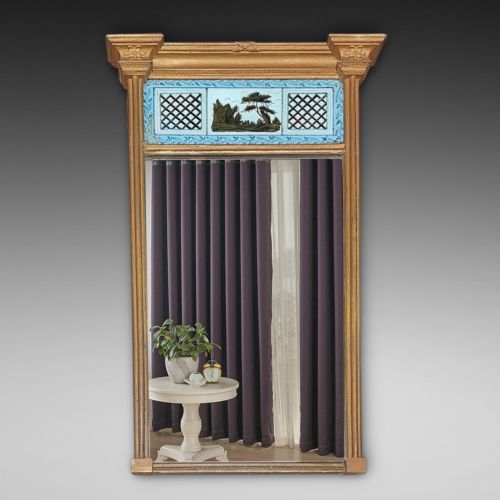
Reflective surfaces consist of standard mirror glass alongside specialised elements like verre églomisé panels and triptych or triple plate arrangements. Painted panels within trumeau frames utilise oil paint on wood or canvas, often depicting classical figures, pastoral scenes, or decorative scrollwork.
Current listings feature pieces spanning the Georgian, Regency, and Victorian eras, utilising painted wood, giltwood, and gesso.
Craftsmanship and Proportion
Quality rests in the crispness of the gesso carving, the depth of the gilding, and the harmony of the classical proportions. Superior examples display finely modelled details such as column capitals and relief panels that remain sharp under layers of historic paint and gold leaf.
The integrity of the glass plates and the execution of any integrated painted or églomisé panels determine the overall character of the piece. Authentic ageing across the mirror glass and paint layers contributes to a cohesive visual depth found in higher-tier specimens.
The Classical Painted Wall Mirror Glossary
- Trumeau
- A decorative wall mirror featuring an upper panel containing a painting or carved relief. This French style integrates woodwork and mirror glass into a single architectural unit.
- Pier mirror
- A tall mirror specifically proportioned to hang on the wall space between two windows. These pieces often feature narrow frames designed to maximise reflected light.
- Verre églomisé
- A process of applying gold or silver leaf to glass and then etching a design through the metal. It creates a reflective, metallic background for painted details.
- Gesso
- A plaster-like mixture applied to wood frames and carved or moulded into relief decoration. It forms the base for subsequent gilding and painting.
- Parcel-gilt
- A finish where only specific carved portions of a painted or stained wooden object are highlighted with gold leaf. This technique accentuates architectural details.
Classical Painted Wall Mirror: Frequently Asked Questions
Where should I hang an overmantel mirror?
An overmantel mirror traditionally hangs directly above a fireplace mantelpiece to reflect light and anchor the room's central hearth.
Ensure the wall fixings are secured adequately into masonry or studs, as many antique frames carry considerable weight from their wooden and gesso construction.
What is a trumeau mirror?
A trumeau mirror combines a lower reflective glass plate with an upper decorative panel containing either an oil painting or a carved classical relief.
Originating in eighteenth and nineteenth-century interior design, these pieces served as permanent architectural fittings within panelled rooms.
How do I identify a Regency mirror?
Regency mirrors typically display neoclassical motifs such as reeded columns, ball-bearing friezes, ebonised details, and convex or architectural plates.
They often incorporate giltwood frames and occasionally feature verre églomisé panels reflecting the early nineteenth-century taste for classical antiquity.
Can these mirrors be cleaned safely?
Clean the glass using a soft cloth and a minimal amount of glass cleaner sprayed onto the cloth rather than directly onto the plate. Avoid getting moisture onto historic painted surfaces, giltwood, or the edges of the mirror glass where silvering degradation may occur.