
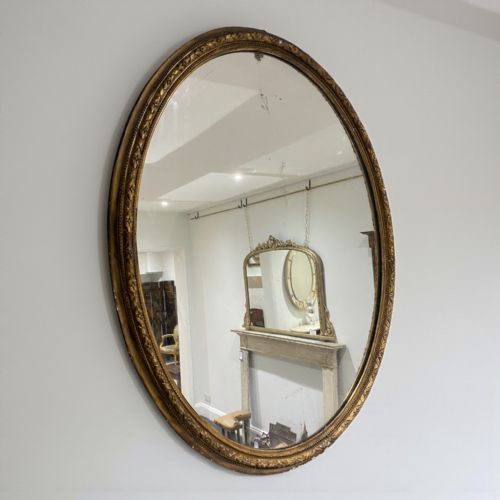
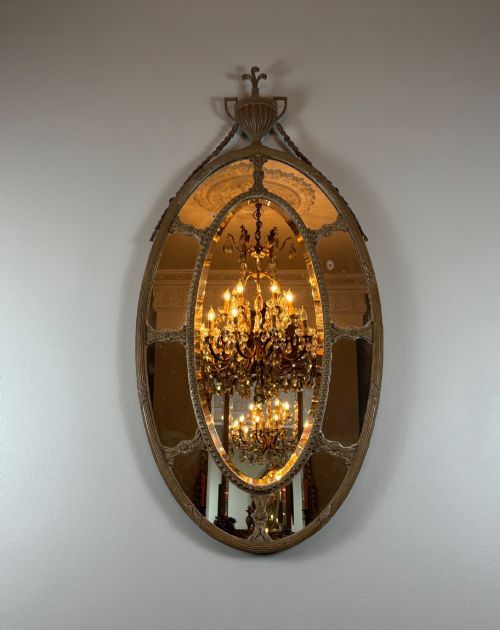


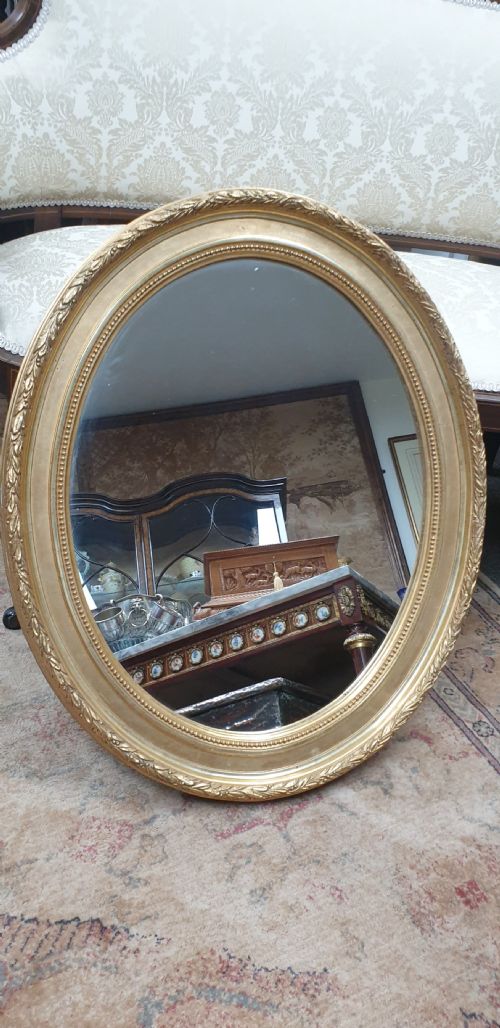


Classical Oval Wall Mirror
A classical oval wall mirror brings refined symmetry to a room, framing light and space with architectural poise.
Classical Oval Wall Mirror
A classical oval wall mirror draws the eye with its curved frame and balanced proportions, anchoring a mantelpiece or hallway wall. These pieces reflect neoclassical tastes, drawing on Georgian, Regency, and Victorian revivals.
The selections encountered here span centuries, reaching back to early pieces from seventeen hundred alongside nineteenth-century interpretations. Overmantel mirrors and wall mirrors appear frequently in mahogany, cast iron, and giltwood.
Adam revival styles and Regency designs dominate the aesthetic, frequently incorporating decorative motifs like urns and swags. Buyers find both monumental proportions and intimate border glass configurations suited to diverse interiors.
Materials and construction methods
Craftsmen shaped these frames from dense woods like mahogany and built up intricate decorative relief using gesso over carved wooden bases. Giltwood surfaces received thin layers of gold leaf applied over bole, catching candlelight and daylight alike.
Cast iron provided sturdy structure for heavier overmantel mirrors produced during the nineteenth century. Mirrored glass plates, bevelled or flat, were set within the rebates and secured at the back with traditional wooden panels.
One monumental classical wall mirror stretches an impressive two hundred and sixty centimetres high.
Distinguishing quality across the range
Quality rests in the crispness of the carved ornament, where hand-modelled gesso swags and urns display sharp definition rather than soft contours. The depth and warmth of the original gilding, showing subtle tonal variations under the gold leaf, separate superior examples from later, flatter applications.
Structural integrity of the wooden frame and the originality of the mirror plate itself contribute significantly to a piece's standing. Early carved frames with unbroken surface patination demonstrate a higher level of historical preservation.
The Classical Oval Wall Mirror Glossary
- Giltwood
- Wood carved and coated with gold leaf. This finish defines the most decorative frames of the Georgian and Regency periods.
- Gesso
- A plaster-like mixture applied to wood and moulded into relief ornaments. It allows for intricate swags and urns on neoclassical frames.
- Overmantel mirror
- A large mirror designed to hang above a fireplace mantel. These pieces frequently feature horizontal or monumental vertical proportions.
- Parcel gilt
- Woodwork partially decorated with gold leaf while other areas reveal the natural grain beneath. Mahogany frames often utilise this technique.
- Girandole
- A wall mirror fitted with candle sconces attached to the frame. The polished glass reflects the candlelight to brighten dark panelled rooms.
Classical Oval Wall Mirror: Frequently Asked Questions
Where should I place an oval wall mirror?
These mirrors suit principal reception rooms, above mantelpieces, or positioned opposite windows to maximise natural light. Their curved outline softens the rigid geometry of standard doorways and panelling.
Smaller examples work effectively in hallways or above console tables, creating a welcoming focal point upon entry.
How do I clean an antique mirror frame?
Dust giltwood and gesso surfaces gently with a soft, dry brush to prevent damage to fragile raised decoration. Avoid using moisture or chemical polishes on gilded surfaces as they strip the gold leaf.
Clean the glass plate sparingly using a cloth dampened slightly with distilled water, ensuring no liquid seeps behind the frame rebate.
What defines the Adam revival style?
Adam revival mirrors draw inspiration from eighteenth-century neoclassical architecture, featuring symmetrical arrangements, delicate urns, and trailing floral swags. These designs prioritise grace and geometric harmony over heavy baroque ornamentation.
Revival pieces produced during the Victorian era adopted these exact motifs with notable craftsmanship and refined gilding.