
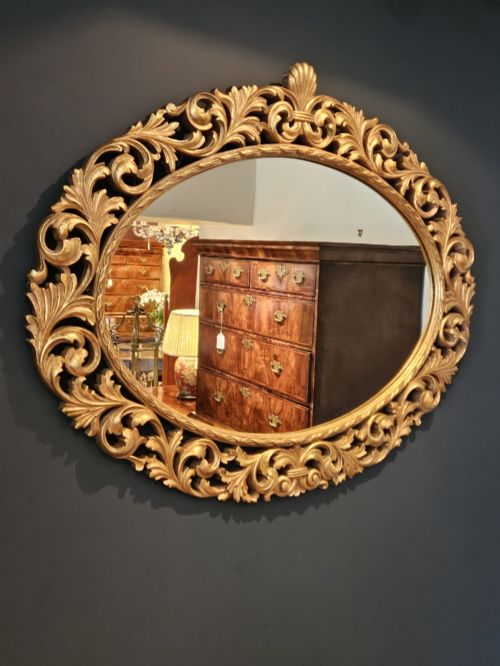


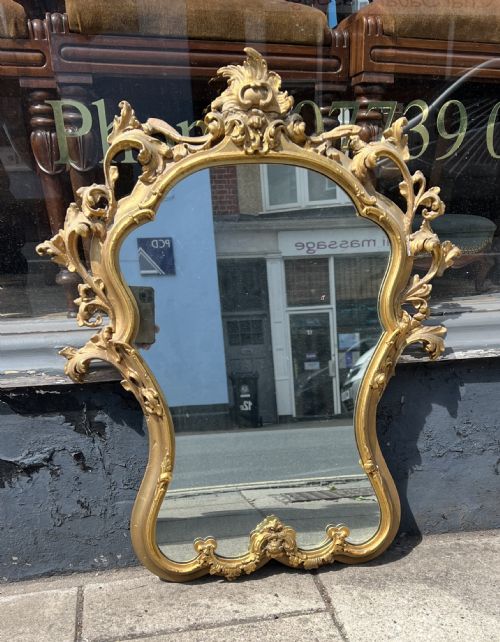


Rococo Scrolled Wall Mirror
These rococo scrolled wall mirror examples bring ornate 18th-century exuberance into domestic interiors through carved asymmetric frames and gilded surfaces.
Rococo Scrolled Wall Mirror
A rococo scrolled wall mirror combines exuberant organic movement with asymmetrical cartouches, C-scrolls, and S-scrolls derived from mid-18th-century decorative design. Pieces encountered span genuine 18th-century Georgian and Italian origins alongside later revival periods from the nineteenth and twentieth centuries.
Forms range from small fretwork sycamore slips to large overmantel mirrors and pier glasses designed to dominate a chimney breast or console table. The visual weight relies on pierced carving, floral motifs, and sweeping crests that define the rococo aesthetic.
Makers across different eras interpreted these scrolls through local timber traditions, producing variations from substantial giltwood frames to lighter painted or hand-decorated surfaces. Each piece reflects the enduring appeal of the style across successive revival movements.
Materials and construction
Frames rely principally on timber such as pine, sycamore, or substantial softwood foundations built to support heavy ornamentation. Carvers applied gesso layers over the wood base to create a smooth, responsive ground for fine detail work before gilding.
Gold leaf or gilt metal application brought a luminous finish to the carved scrolls, often complemented by antiqued mirror glass plates. Some Italian and decorative variants incorporate hand-painted elements directly onto the frame or glass.
Listings feature examples spanning from the 17th century through to 1930s French and Italian revivals, utilising gesso, giltwood, and pine.
Assessing quality in carved frames
The depth and crispness of the hand-carving separate superior examples from mechanical or later mass-produced alternatives. Sharp undercut scrolls and delicate pierced work demonstrate the carver's skill in handling the timber.
The integrity of the gesso and the warmth of the original gilding dictate the visual impact of the surface over centuries of existence. Original mirror plates with appropriate foxing and distortion add historical weight compared to plain modern replacements.
The Rococo Scrolled Wall Mirror Glossary
- Gesso
- A plaster-like mixture applied to timber frames to provide a smooth surface for gilding. It allows carvers to achieve sharp relief details.
- Giltwood
- Timber that has been coated with gold leaf over a prepared base. This technique protects the underlying wood while creating a reflective metallic finish.
- Cartouche
- An ornamental tablet or frame resembling a rolled-up piece of paper, often used as a central motif in rococo design. It frequently bears asymmetrical scrollwork.
- Pier glass
- A tall mirror designed specifically to hang on the wall space between windows, often placed above a console table. These pieces maximise light reflection in period rooms.
- Fretwork
- Ornamental design created by cutting patterns through thin wood using a saw. This technique appears on lighter 18th-century frames.
Rococo Scrolled Wall Mirror: Frequently Asked Questions
How do I hang a heavy giltwood mirror?
Substantial frames require professional wall fixings secured directly into masonry or heavy timber studs rather than standard plasterboard hooks.
Weight distribution must be carefully managed using robust mirror plates or steel wire rated well above the actual mass of the piece.
Are these mirrors suitable for bathrooms?
High humidity and fluctuating temperatures can damage historical gesso, exposed timber, and delicate metallic leaf surfaces over time.
Dry interior rooms away from direct moisture sources remain the safest environment for preserving antique gilded frames.
How can I tell an 18th-century mirror from a revival piece?
Examination of the timber backing, hand-carving irregularities, and the composition of the gesso layer reveal the manufacturing period.
Earlier pieces show tool marks and oxidisation patterns distinct from 19th-century or 1930s revival interpretations.
Can I clean the antique glass plate?
Gentle dusting with a soft, dry cloth prevents the accumulation of particulate matter on the fragile reflective surface.
Liquid cleaners should be avoided to prevent moisture seeping behind the plate and damaging the silvering or the frame rebate.