


Classical Ormolu Candlesticks
Classical ormolu candlesticks bring bright gilt warmth and sculptural weight to a room, offering the decorative brilliance of the nineteenth-century drawing room.
Classical Ormolu Candlesticks
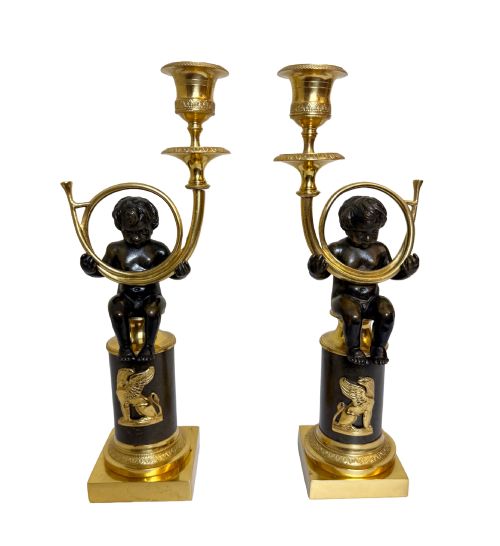
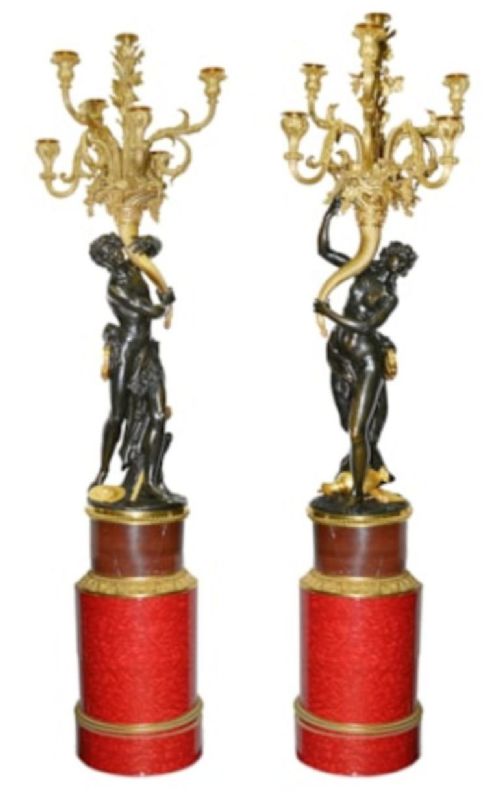
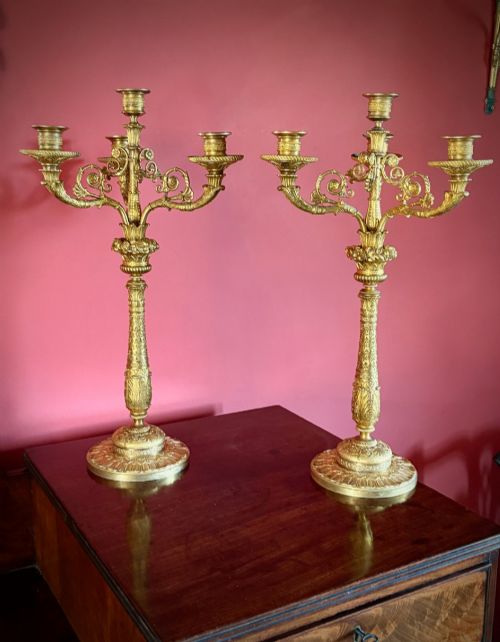
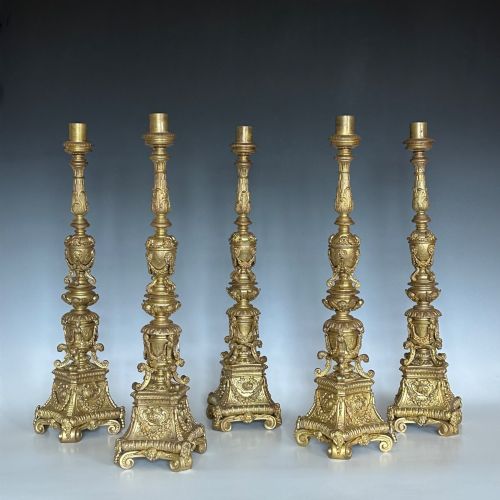
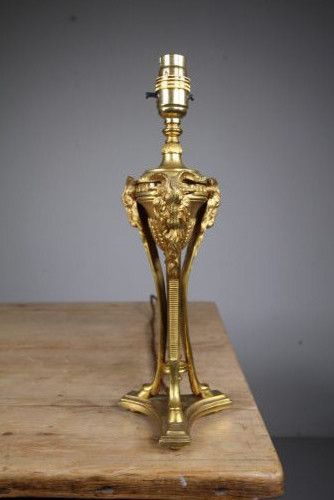
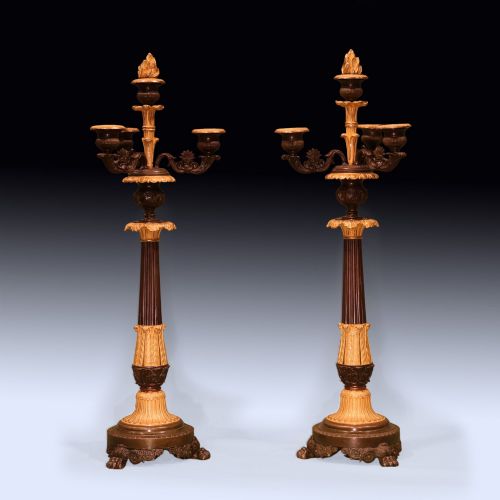
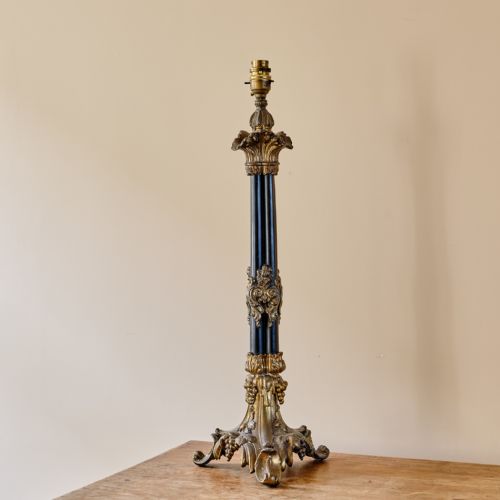
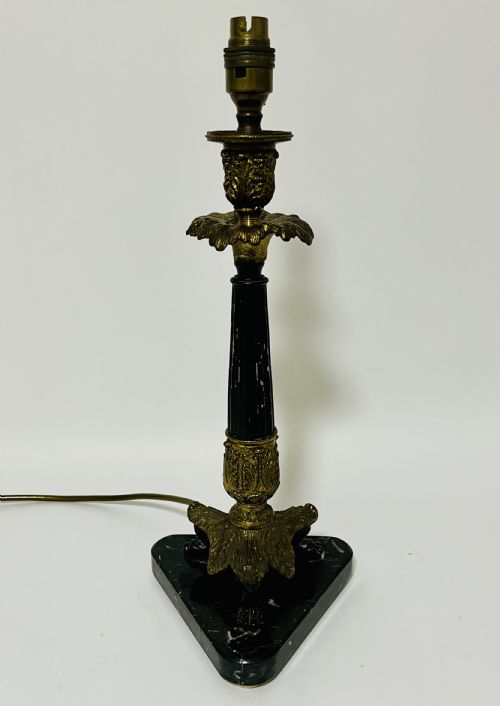
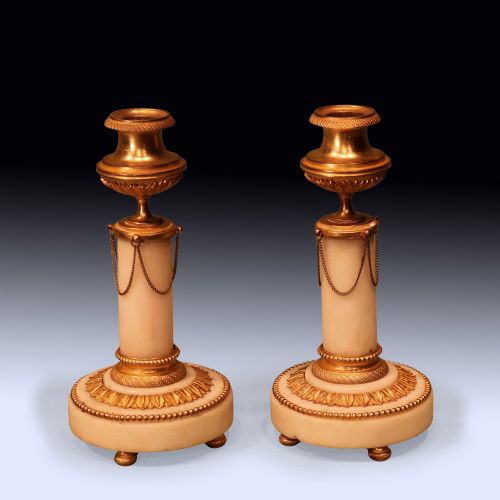
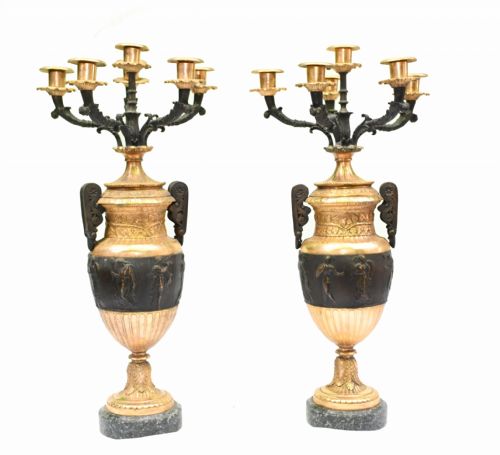
Classical ormolu candlesticks encompass matched pairs and multi-branch candelabra created in styles ranging from French Empire and Regency to Louis XVI and Victorian. These items take the form of single stick supports, table lamps, and figural or architectural shafts designed to hold candles.
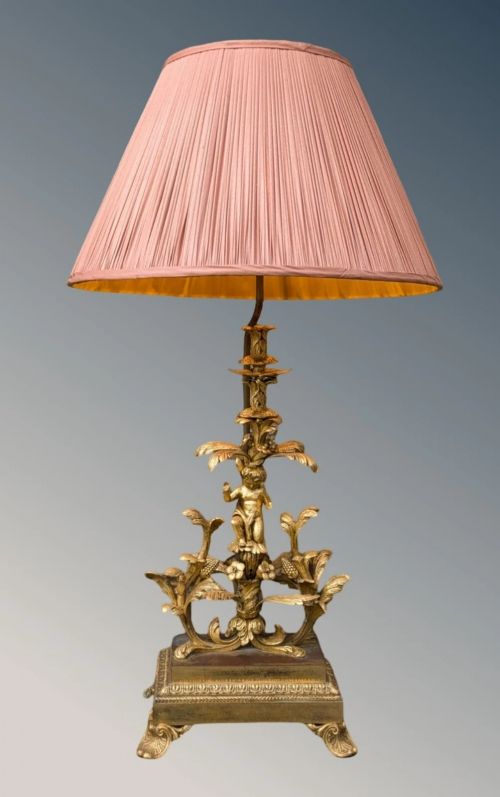
The objects appearing on this page date primarily from the nineteenth century, alongside eighteenth-century examples and early twentieth-century interpretations. Buyers encounter subjects incorporating cherubs, rams heads, zodiac motifs, and caryatids standing upon white marble or slate bases.
Materials and Metalwork
The manufacture of these pieces relies on bronze or brass cast in detailed moulds, subsequently treated with mercury gilt or fire-gilding to achieve the characteristic rich ormolu surface. This metalwork is frequently paired with contrasting patinated bronze, dark slate, or polished white marble components.
Makers integrated fabric or silk shades onto later conversions, while structural elements such as bobeches and multi-branch sconces were assembled from distinct cast segments joined mechanically or through pinning.
Design influences span French Empire, Neoclassical, Regency, Louis XVI, Victorian, Charles X, and Restauration periods.
Craftsmanship and Definition
Quality rests in the crispness of the chasing, where sharper, deeper tool marks on the bronze reveal the hand of a more skilled artisan rather than a soft, blurred cast. The precision of the assembly and the weight of the bronze dictate the overall solidity of the piece.
The integrity of the mercury gilding, showing deep golden tones rather than flat modern plating, separates superior examples from lesser production. Furthermore, the inclusion of complex figural elements like zodiac figures or four seasons iconography denotes ambitious workshop output.
The Classical Ormolu Candlesticks Glossary
- Ormolu
- A gilded bronze finish achieved through the application of a mercury and gold amalgam, fired to leave a durable metallic layer. This technique creates a distinct golden lustre found on classical lighting.
- Candelabra
- A branched lighting fixture designed to hold multiple candles simultaneously. These pieces often feature removable central finials or branches.
- Bobeche
- A small collar or drip pan fitted below the candle nozzle to catch melting wax. It protects the main body and arms of the candlestick from residue.
- Patinated Bronze
- Bronze treated with chemical solutions to darken the surface to a deep brown or green tone. This dark finish provides contrast against bright ormolu mountings.
- Caryatid
- A sculpted female figure serving as an architectural support column. In these items, they form the central shaft of the candlestick.
Classical Ormolu Candlesticks: Frequently Asked Questions
How do I clean ormolu?
Dust gently with a soft dry cloth to protect the historic gilt surface from abrasion. Avoid chemical dips, brass polishes, or abrasive cleaners that strip the mercury gilding.
Moisture can damage underlying base metals or marble components if trapped. Keep the pieces away from direct heat sources and damp environments.
Are these wired for electricity?
Many examples on this marketplace function as table lamps alongside traditional candleholders. Some retain their original configuration while others were adapted later in their history.
Inspect the wiring status of individual pieces before purchase if you intend to use them as lamps. Conversion methods vary from removable cord setups to drilled bases.
How do I tell Empire from Regency?
French Empire pieces display strict symmetry, martial iconography, and classical motifs derived from Napoleonic taste. Regency items, produced in England during a similar period, often incorporate distinct national symbols and heavier gilt bronze mounts.
Both styles utilise similar foundry techniques and material combinations of marble and ormolu. Regional design preferences in the bases and figures provide the primary visual distinction.
What is a Grand Tour piece?
Grand Tour items were acquired by travellers visiting continental Europe during the eighteenth and nineteenth centuries. These souvenirs replicate classical antiquities and architectural monuments encountered abroad.
They often feature reductions of famous sculptures or bronze mounts on marble plinths. Their presence reflects the educational travels of collectors from that era.