


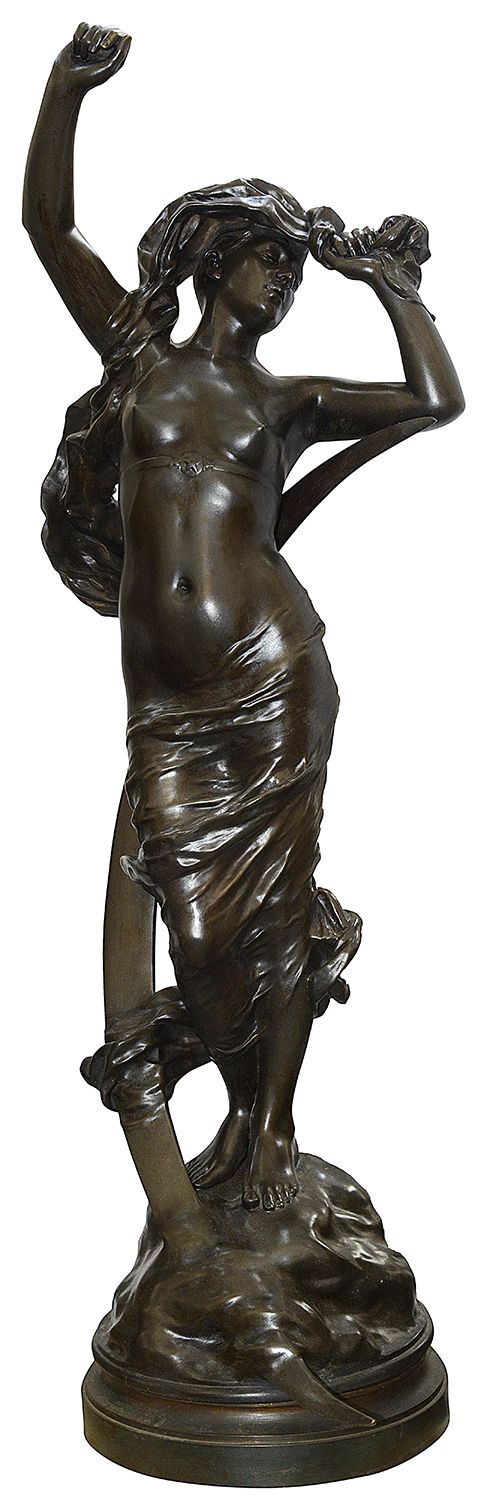


Classical Nymph Bronze Sculpture
A classical nymph bronze sculpture brings mythological grace indoors through enduring metalwork.

Classical Nymph Bronze Sculpture
A classical nymph bronze sculpture represents female figures from mythology, captured in forms such as dancing maidens, pipers, and semi-nude maidens. These works frequently draw upon French Neoclassical, Art Nouveau, and French Rococo Revival styles.
Buyers encounter sculptures and statues originating mainly from the nineteenth century, alongside pieces dated around 1800, 1880, 1910, and 1920. Makers and sculptors referenced include August Moreau, S. Kinsburger, Clodion, Eugène Désiré Piron, Houdebine, Carrier, Antoine Coysevox, and Barbedienne.
How they were made
These figures rely on cast bronze, patinated bronze, and silvered bronze, occasionally paired with marble bases or rendered in gilt brass. The casting process preserves intricate details in drapery, hair, and posture.
Surfaces receive specialised patination or silvering to accentuate depth and texture across the figures, from solitary nymphs to multi-figure dancing groups.
Classical Nymph Bronze Sculpture Retail Price Guide 2026
Typical asking prices for classical nymph bronze sculpture among the pieces listed under this phrase on Sellingantiques today, from the lower quarter to the upper quarter. They describe what is for sale here now, not the wider market.
Materials listed across these works include cast bronze, patinated bronze, silvered bronze, marble, and gilt brass.
What varies in quality
Sculptures signed by recognised makers or cast by prominent foundries command greater attention for their fidelity to original models. The finesse of the chasing and the sophistication of the patination define the visual impact of each casting.
The complexity of the composition also influences the piece, ranging from single standing maidens to dynamic multi-figure groups with detailed interaction.
Auguste Moreau·S. Kinsburger·Clodion·Eugène Désiré Piron·Houdebine·Carrier·Antoine Coysevox·Barbedienne
The Classical Nymph Bronze Sculpture Glossary
- Patinated bronze
- Bronze treated with chemicals to produce a specific surface colour and finish. This technique enhances tonal contrast and protects the metal.
- Neoclassical
- A style inspired by the classical art and culture of ancient Greece and Rome. It emphasises proportion, restraint, and mythological themes.
- Art Nouveau
- An international style of art and architecture characterised by intricate linear designs and flowing organic shapes. It appears in several twentieth-century nymph figures.
- Gilt brass
- A yellow metal alloy coated with a thin layer of gold. It offers a bright decorative surface.
- Cast bronze
- Metal poured into a mould to form a three-dimensional shape. This method allows sculptors to reproduce complex figurative details accurately.
Classical Nymph Bronze Sculpture: Frequently Asked Questions
Where should I display a bronze sculpture?
These sculptures suit stable, flat surfaces such as sideboards, mantelpieces, or dedicated pedestals where the surrounding space allows clear viewing from multiple angles.
Keep the metal away from direct heat sources and excessive moisture to protect the patination over time.
How do I clean a bronze sculpture?
Dust the surface gently with a soft, dry cloth or a feather duster to remove particles without disturbing the patina.
Avoid using water, chemical cleaners, or metal polishes, as these treatments strip away historical finishes.
What periods do these sculptures date from?
The available selection primarily spans the nineteenth century, including specific dates around 1800, 1880, 1910, and 1920.
French ateliers and foundries produced the majority of these classical figures.
How are artists identified on these pieces?
Signatures or foundry marks typically appear directly on the bronze base or along the lower edge of the sculpture.
Some works are cast after earlier masters, bearing inscriptions that note the original sculptor.