






Classical Marble Table Clock
A classical marble table clock brings heavy stone presence and precise mechanical weight to a room, offering both sculptural form and functional time.
Classical Marble Table Clock
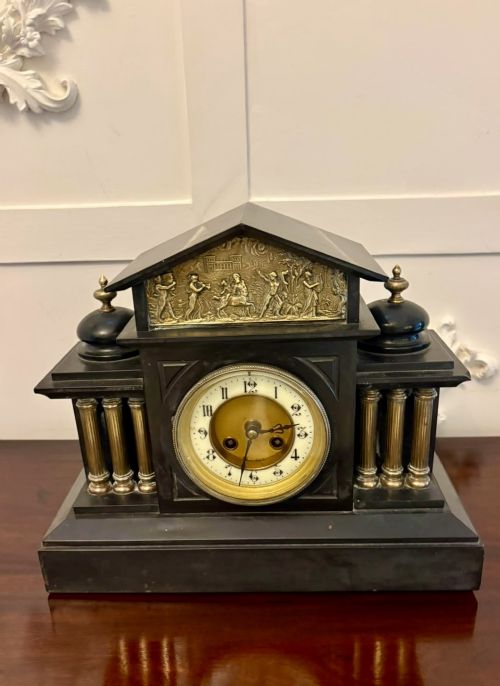
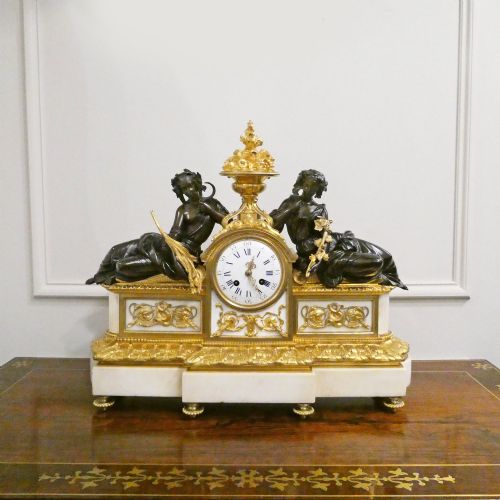
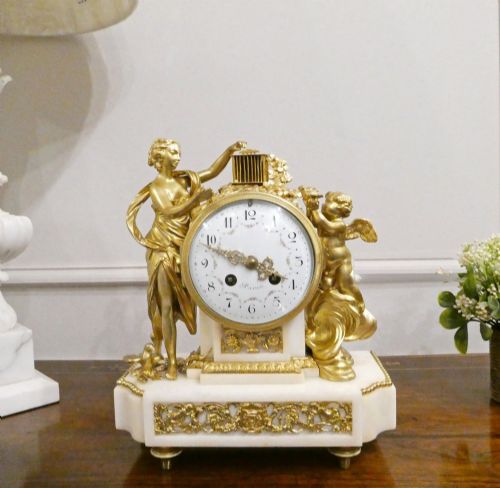
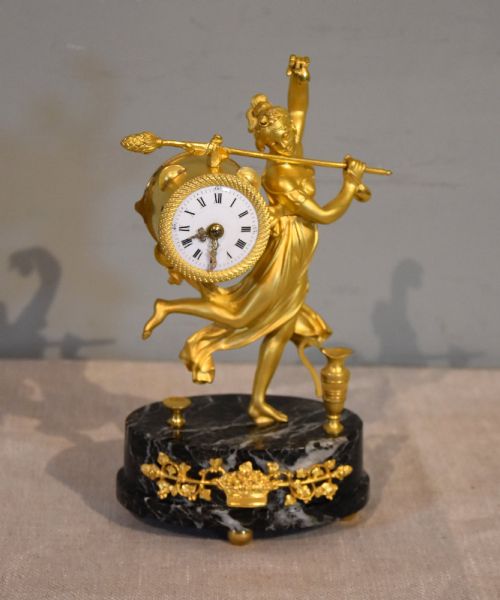
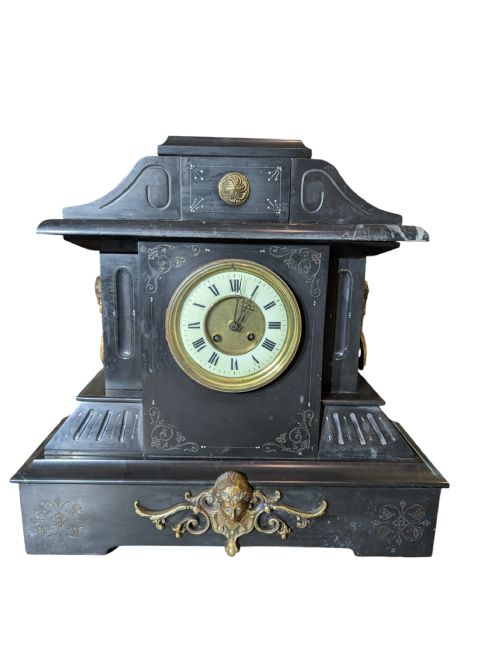
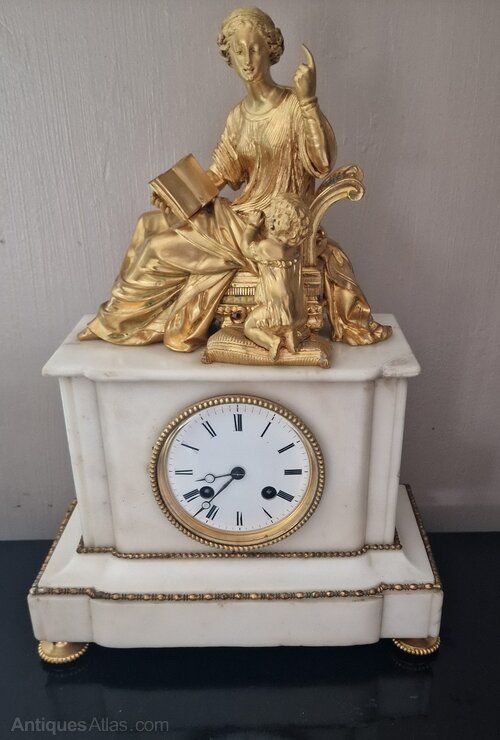
A classical marble table clock stands as a substantial domestic timepiece, combining heavy natural stone housing with intricate metalwork and mechanical movements. These pieces range from severe architectural portico designs to ornate figural compositions featuring classical motifs and historical figures.
The versions most frequently met on this page belong to the nineteenth century, spanning the Victorian era and French Empire or Louis XVI revival styles. Black marble, rouge marble, sienna marble, and green onyx feature prominently as the primary housing materials for these works.
Makers often housed eight-day movements within these stone bodies, sometimes accompanied by matching side garnitures to form a complete decorative garniture set. The aesthetic leans heavily on neoclassical symmetry, incorporating columns, gilt mounts, and bronze statuary.
Materials and Construction
Masons shaped dense blocks of marble, slate, and onyx into architectural housings, pedestals, and porticos using saws, chisels, and polishing abrasives. These stone bodies were frequently inlaid with contrasting marbles or engraved with geometric and floral motifs.
Foundries cast accompanying ornaments in bronze, brass, and ormolu, applying gilt finishes to highlight classical figures, mounts, and bezel surrounds. Enamel dials, often protected behind glass doors, received delicate painted numerals and minute tracks.
Clockmakers fitted mechanical gear trains, escapements, and pendulum suspensions into the stone chassis, creating reliable striking or time-only movements driven by springs or weights.
Several Victorian clockmakers hid delicate ticking movements inside weighty blocks of stone carved to look like ancient temples and bronze-mounted palaces.
Determining Quality in Stone Timepieces
The weight, selection, and preparation of the stone dictate the foundational quality of the piece, with dense, flawless marbles and rich natural colour variations separating superior examples from simpler faux finishes or plain slates. Finely polished surfaces and crisp bevels indicate skilled masonry.
The crispness and heft of the metalwork mark the difference between standard production and exceptional execution, as hand-chased gilt bronze and detailed figural sculpture require advanced foundry skill. Maker signatures stamped on the movement or backplate add historical weight and attest to superior workshop standards.
The complexity and condition of the mechanical movement also separate ordinary clocks from masterworks, particularly when movements feature specialised escapements, striking mechanisms, or reliable eight-day performance.
Vincenti·Japy Freres·Philippes Paris·Berger Paris·Deniere and Cailleaux
The Classical Marble Table Clock Glossary
- Ormolu
- Gilded bronze produced by applying a mercury and gold amalgam to a cast bronze object and heating it to drive off the mercury. This technique creates a rich, durable golden surface seen on many classical clock mounts.
- Garniture
- A set of decorative matching objects designed to be displayed together on a mantelpiece or sideboard, typically comprising a central clock flanked by two matching vases or candelabra.
- Portico clock
- A style of mantel clock featuring a temple-like architectural frame supported by four or more columns, enclosing a suspended pendulum swing.
- Fusee
- A conical pulley used in clock and watch movements to equalize the declining power of a mainspring as it unwinds. This mechanism helps maintain steady timekeeping accuracy.
- Enamel dial
- A clock face made by fusing powdered glass to a metal substrate at high temperatures, resulting in a smooth, glossy white surface that resists fading and holds painted numerals.
Classical Marble Table Clock: Frequently Asked Questions
How do I wind a classical marble table clock?
Most of these timepieces use an eight-day mechanical movement wound via a specialised key inserted into small winding holes on the enamel dial. Turn the key gently until you feel resistance, taking care not to overwind the mainspring.
Ensure you use the correct key size to avoid damaging the winding square. Regular gentle winding keeps the movement tension stable and maintains accurate timekeeping.
What is a clock garniture set?
A clock garniture set consists of a central mantel clock accompanied by matching side ornaments, such as urns, vases, or candelabra designed in the same material and style. These sets were manufactured to create a balanced, symmetrical display on a fireplace mantel or sideboard.
The matching pieces share identical marble bodies, gilt bronze mounts, and decorative motifs to unify the arrangement. They reflect the high Victorian and French interior design preference for coordinated decorative schemes.
How should I clean marble clock cases?
Dust marble and slate surfaces regularly with a soft, dry cloth to prevent grime accumulation in carved recesses and gilt mounts. Avoid harsh chemical cleaners, abrasives, or excessive water, which can damage the stone polish and corrode the metal elements.
For gilt bronze mounts, a gentle sweep with a dry artist's brush removes dust without disturbing the delicate gold surface. Professional conservation is recommended if deep cleaning of the stone or metal is required.
How do I tell an architectural clock from a portico clock?
An architectural clock typically presents a solid, block-like stone facade resembling a building or monument, often featuring heavy pediments and heavy side pilasters. These emphasise the sheer mass and varied colour of the marble or slate.
A portico clock uses distinct vertical columns to create an open, temple-like structure where the pendulum is visible swinging freely between the supports. This lighter structural layout showcases the mechanical movement from multiple angles.