



Classical Mahogany Furniture
Classical mahogany furniture brings together the bold architectural lines of the Regency, French Empire, and William IV periods with rich timber and classical mounts.
Classical Mahogany Furniture
Classical mahogany furniture encompasses case pieces, tables, and seating produced from the nineteenth century into the twentieth century, drawing on neoclassical and empire design vocabulary. The selection on this page leans heavily toward nineteenth-century Regency and French Empire forms, alongside later interpretations from the Victorian, Edwardian, and early twentieth-century periods.
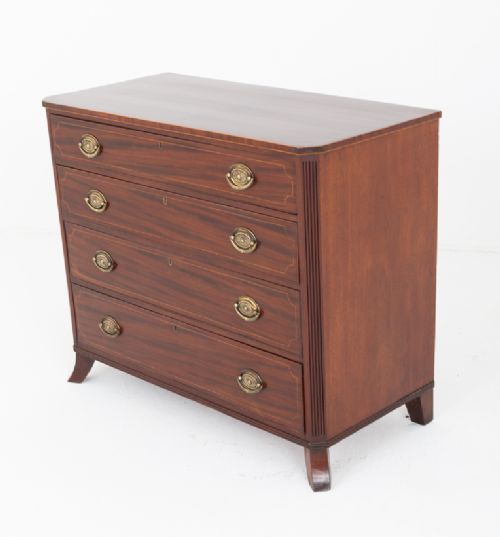
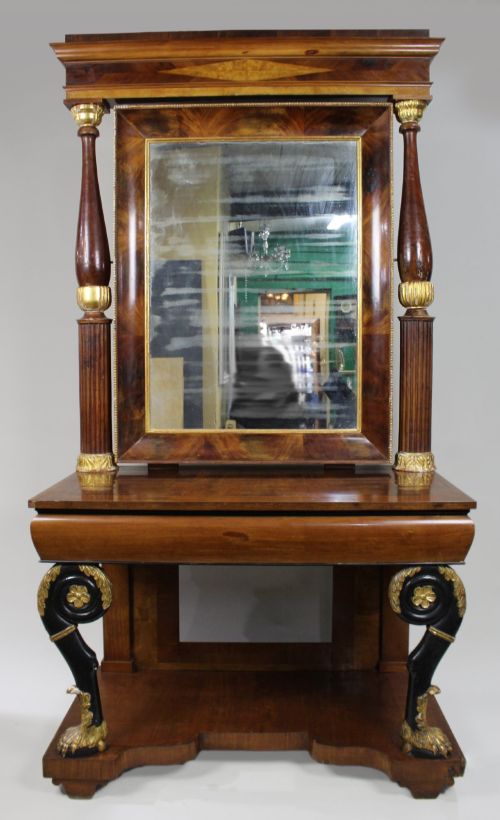
Buyers encounter distinct forms built for specific domestic uses, ranging from console tables, pedestal cabinets, and semainiers to cylinder desks, writing tables, and chests of drawers. Many of these pieces incorporate architectural elements such as columns, pilasters, and marble tops, reflecting formal classical inspiration.
Origins span British workshops, French cabinet makers, Dutch marquetry artisans, and American makers, demonstrating how widely classical ideals spread across different regions. Regional variations emerge in the choice of secondary woods, inlay techniques, and mount metals, while retaining the core mahogany foundation.
How classical mahogany furniture was made
Makers utilised solid mahogany and flame mahogany veneer laid over secondary timbers, often accentuating the grain figure on drawer fronts and tabletops. Flame mahogany veneer required high skill to match and balance across large surfaces like cylinder desks and console tables.
Ormolu mounts, brass galleries, and cast bronze details were frequently applied to accent the dark timber, particularly on French Empire and Regency pieces. Marble tops, inset leather writing surfaces, and glass panels also feature prominently across tables, cabinets, and desks.
Inlay work involving satinwood, maple, and marquetry added contrasting colour and geometric or floral motifs to cabinets, card tables, and bureau bookcases. Structural joinery relied on traditional methods suited to heavy timbers, supporting large architectural forms like pedestal sideboards and display cabinets.
Cellarettes once kept wine cool near the dining table, doubling as miniature architectural sarcophagi.
What varies in quality
The quality of classical mahogany furniture rests upon the selection and matching of timber veneers, where symmetrical flame patterns and rich colouration elevate a piece. Finer examples display continuous grain across drawer tiers and seamless integration of veneers on curved surfaces.
The crispness of carved details, whether acanthus leaves, classical columns, or paw feet, distinguishes superior workshop production from routine output. Hand-chased ormolu mounts and heavy cast brass hardware further separate standard commercial items from bespoke commissions.
Internal construction standards, including secondary wood selection, dovetail fineness, and original backboards, reveal the integrity of the maker's craft. Maker stamps or attribution to established firms like Edwards and Roberts, Jacob, or Mack Williams and Gibton add documented provenance that influences standing.
Keeble London·Edwards and Roberts·Jacob·Mack Williams and Gibton
The Classical Mahogany Furniture Glossary
- Ormolu
- Gilded bronze mounts applied to furniture. This technique was widely used in French Empire and Regency pieces to create striking contrast against dark mahogany.
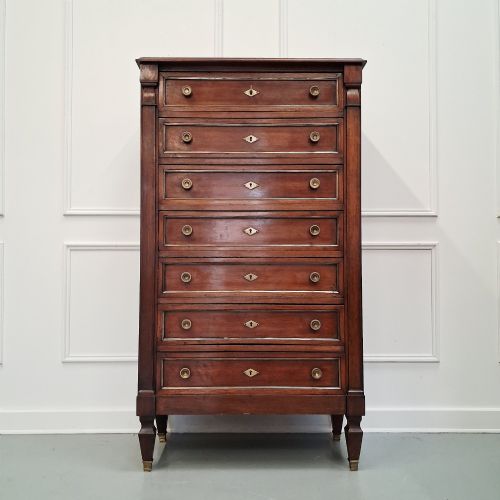
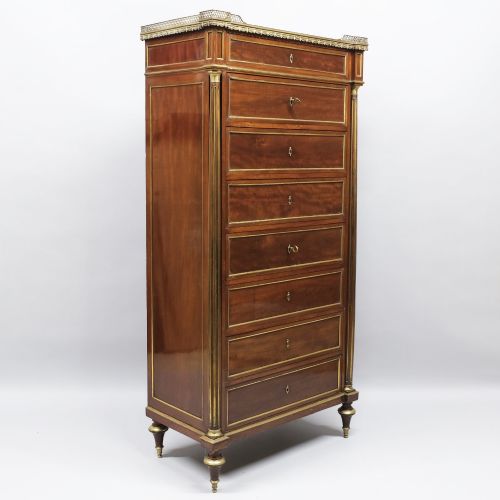
- Semainier
- A tall, slender chest of seven drawers. Originally designed with one drawer for each day of the week, it appears frequently in French classical interiors.
- Console table
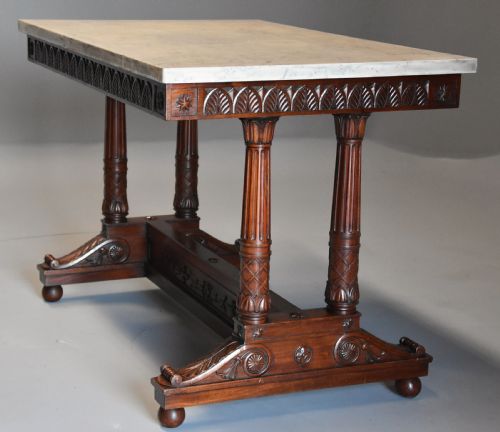
- A table designed to stand against a wall, often supported by front legs or console brackets. They frequently feature marble tops and architectural framing.
- Flame mahogany
- A veneer cut from the fork of the mahogany tree where branches meet the trunk. It creates a distinctive, swirling flame-like figure prized by cabinet makers.
- Bonheur du jour
- A light ladies' writing desk featuring a small cabinet or set of drawers on top. These delicate pieces often showcase fine inlay or parcel gilding.
- Cellarette
- A fitted container for holding wine bottles near the dining table. Regency examples often take architectural pedestal or sarcophagus forms.
Classical Mahogany Furniture: Frequently Asked Questions
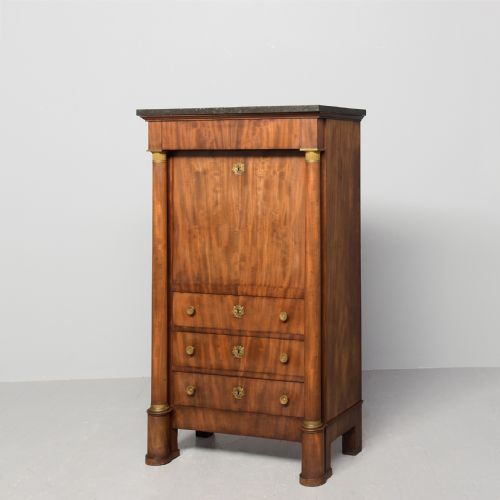
What is a secretaire abattant?
A secretaire abattant is a tall upright cabinet featuring a drop-down front that opens to reveal a writing surface and small fitted interior drawers. This form became popular in French classical and empire interiors for private correspondence.
The vertical design saved floor space while offering substantial storage behind locked doors, making it both a decorative and practical addition to a reception room or study.
How do I identify French Empire style?
French Empire furniture is characterised by heavy architectural proportions, dark mahogany surfaces, and prominent classical motifs such as bronze ormolu mounts, columns, and paw feet. The aesthetic reflects Napoleonic taste and classical antiquity.
Pieces from this tradition often feature large flame mahogany veneers and striking contrasts between the dark timber and bright metallic hardware, giving them an imposing presence.
Where were pedestal cabinets placed?
Pedestal cabinets typically stood flanking a sideboard, a doorway, or a bed, serving as paired functional units in grand dining rooms and bedrooms. Their tall, narrow proportions suited architectural wall spaces.
During the Regency period, these cabinets often housed commodes, storage for serving items, or bedside necessities, matching the heavy classical furniture schemes of the room.
What is Dutch marquetry?
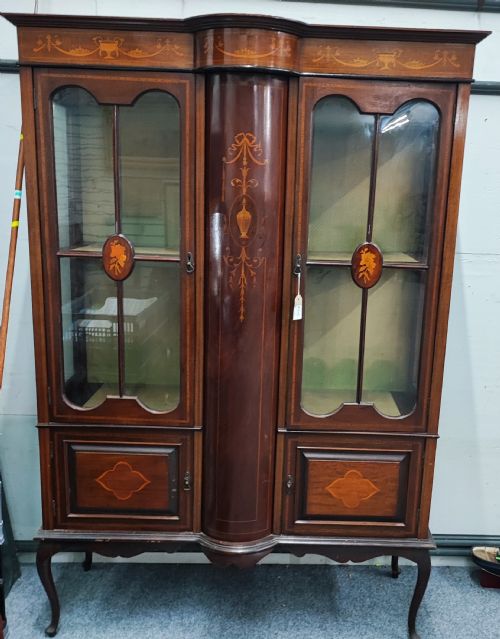
Dutch marquetry involves intricate inlaid designs using various coloured woods, ivory, or bone to create floral, pictorial, or geometric scenes across the entire surface of a piece. It turns flat cabinet fronts into elaborate panels.
This decorative technique appears on bureaus and cabinets in the selection, showing a lighter, more ornamental contrast to plain polished mahogany.
How should I care for mahogany?
Mahogany furniture requires stable indoor humidity and protection from direct sunlight to prevent the timber and veneers from drying out or fading. Gentle dusting with a dry or slightly damp cloth preserves the polished surface.
Avoid placing pieces near direct heat sources, and treat antique finishes with care by using traditional waxes sparingly to maintain the natural lustre of the wood.