





Classical Inlaid Cupboard
A classical inlaid cupboard brings refined wood veneers and delicate stringing into a room, offering both display space and concealed storage.
Classical Inlaid Cupboard
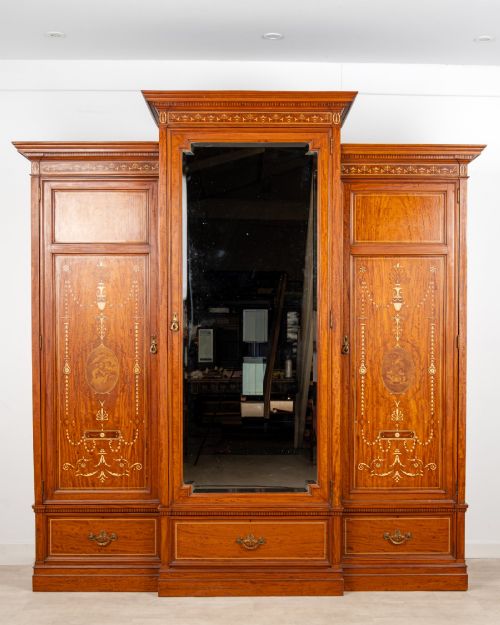
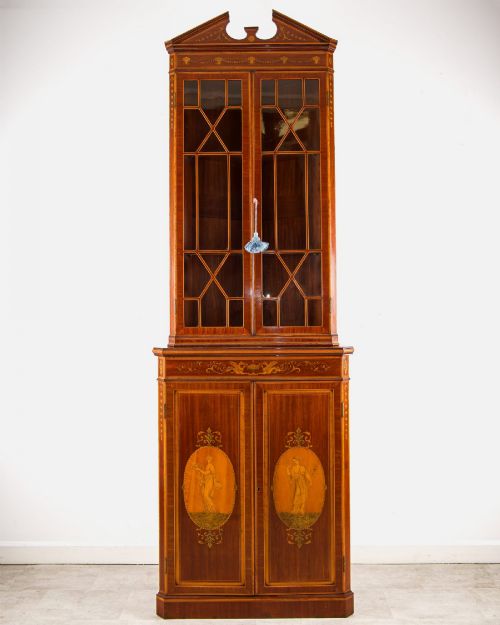
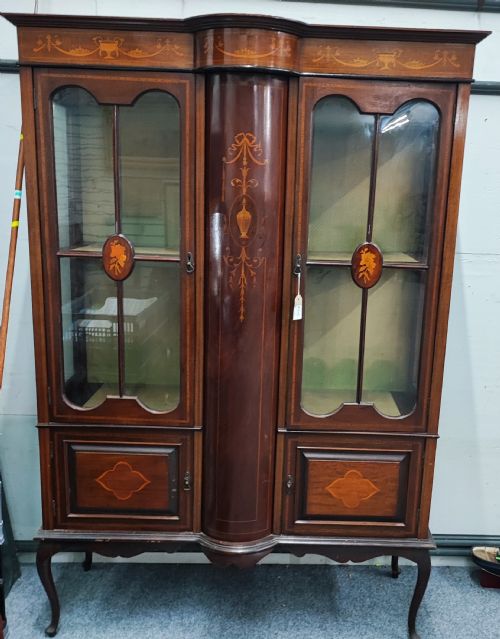
A classical inlaid cupboard encompasses a broad array of forms designed for storage and display, appearing in varied shapes from corner units to tall wardrobes. The pieces found here span the nineteenth and early twentieth centuries, drawing heavily upon Sheraton Revival, Regency, and Neoclassical design vocabularies. Buyers encounter everything from compact bedside cabinets to large exhibition pieces, reflecting diverse domestic requirements across different periods.
Corner cabinets and display cabinets dominate the selection, often featuring glass panels alongside detailed wood craftsmanship. Wardrobes, armoires, linen presses, and side cabinets also emerge within these listings, showing how cabinet makers adapted classical motifs for various rooms. The prevalence of Edwardian and Victorian examples highlights a sustained Victorian and post-Victorian interest in lighter, decorated furniture.
The aesthetic leans towards symmetry, balanced proportions, and orderly ornamentation characteristic of classical revivals. Makers utilised timber contrasts to frame doors, cornices, and panels, creating visual depth without heavy carving. These cupboards function as practical storage vessels while serving as focal points within formal reception rooms or bedrooms.
How they were made
The construction of a classical inlaid cupboard relies upon stable secondary timbers faced with fine veneers such as satinwood, mahogany, rosewood, and kingwood. Artisans applied these thin sheets to carcases to create smooth, expansive surfaces capable of taking complex decorative schemes. Boxwood and other contrasting woods were then sliced into thin threads for stringing, outlining panels, drawers, and borders.
Marquetry inlay forms a central decorative technique, employing varied tinted and natural wood veneers arranged into floral, urn, or architectural motifs. Craftsmen meticulously cut these pictorial elements by hand and fitted them flush into the primary timber ground. Brass hardware, including hinges, locks, and glazing bars, completes the structural assembly alongside glazed doors and marble tops on select pieces.
Available forms range from compact bedside cabinets and corner units to large wardrobes, display cabinets, and music side cabinets.
What varies in quality
Quality in these cupboards rests upon the precision of the veneer work and the crispness of the marquetry details. Superior examples display seamless joins in the stringing and harmonious timber selection where grain patterns mirror one another. Lesser pieces show lifting veneers, mismatched timber patches, or overly mechanical inlay execution.
The architectural integrity of the carcase and the refinement of the secondary details also distinguish better pieces. High-end cabinets exhibit substantial brass fittings, finely moulded cornices, and original glass panes within astragal glazing bars. Original painted accents, where present, remain intact and retain their subtle tonal gradations rather than appearing flat or heavy-handed.
Keeble London·Pietro Ferrario·Edward and Roberts
The Classical Inlaid Cupboard Glossary
- Marquetry Inlay
- A decorative technique where small pieces of tinted and natural wood veneer are arranged into pictorial designs and embedded into a wooden surface. This method creates intricate patterns on doors, panels, and friezes.
- Satinwood
- A durable, hard timber with a natural golden sheen and satin-like lustre, frequently used as a primary veneer in Sheraton Revival and Edwardian furniture. It provides a bright background for contrasting inlay work.
- Astragal Glazing
- Wooden mouldings that divide a glass door into smaller panes, commonly seen on display cabinets and bookcases. These bars offer structural support while contributing to the linear geometry of the facade.
- Sheraton Revival
- A late nineteenth and early twentieth-century design movement inspired by the neoclassical furniture of George Sheraton. It prioritises light proportions, satinwood veneers, painted details, and classical symmetry.
- Demi-lune
- A half-moon shape used for the footprint and top of specific side cabinets and commodes. This curved form allows pieces to sit flush against a wall while offering a softer profile than traditional right-angled furniture.
Classical Inlaid Cupboard: Frequently Asked Questions
Where should I place a classical inlaid cupboard?
These cupboards suit drawing rooms, dining spaces, or hallways where their veneered surfaces and glass panels can catch the light. Corner models fit neatly into unused angles, while display cabinets provide an ideal showcase for ceramics and glassware.
Position them away from direct heat sources and strong sunlight to protect delicate satinwood veneers and natural wood glues from drying out over time.
How do I clean an inlaid wooden surface?
Dust the exterior regularly with a soft, dry cloth to prevent particulate accumulation in the recessed marquetry lines. Avoid using modern silicone sprays or abrasive cleaning agents that can strip the historic polish.
Apply a microcrystalline wax sparingly once or twice a year if the timber appears dry, buffing gently with a clean cloth to maintain the natural sheen.
How can I distinguish Edwardian pieces from Victorian ones?
Edwardian cupboards, particularly those in the Sheraton Revival style, often feature lighter satinwood veneers and airier proportions. Victorian examples frequently utilise heavier mahogany or rosewood timbers with denser, more robust decorative carving.
Examine the interior secondary woods and construction methods, as nineteenth-century pieces generally show hand-cut dovetails whereas later items may incorporate early machinery.
Can these cupboards hold heavy books or dishes?
Most side cabinets, linen presses, and bookcases possess sturdy internal shelving designed for household storage. Check the depth and support of individual shelves before loading them with dense collections of hardbacks.
Display cabinets with glass doors are best reserved for lighter decorative objects rather than heavy domestic tableware to protect the antique framework.