



Classical Gilded Sconces
Classical gilded sconces bring rich illumination to a room, cast in bronze, brass and giltwood across French and Italian designs.
Classical Gilded Sconces
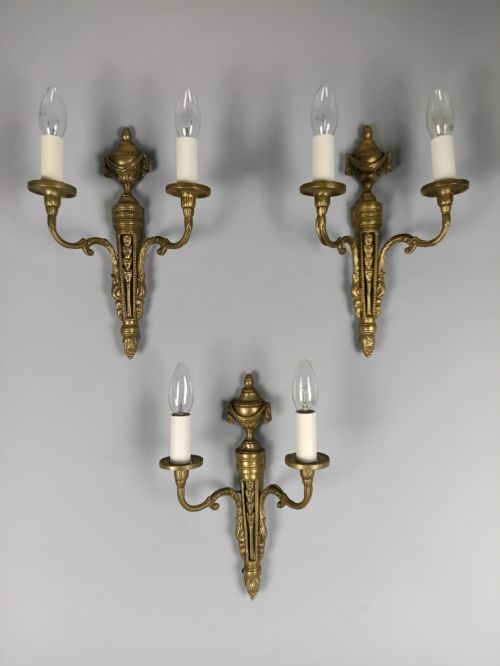
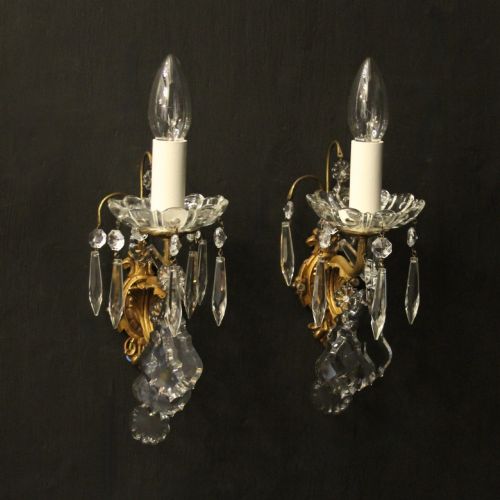
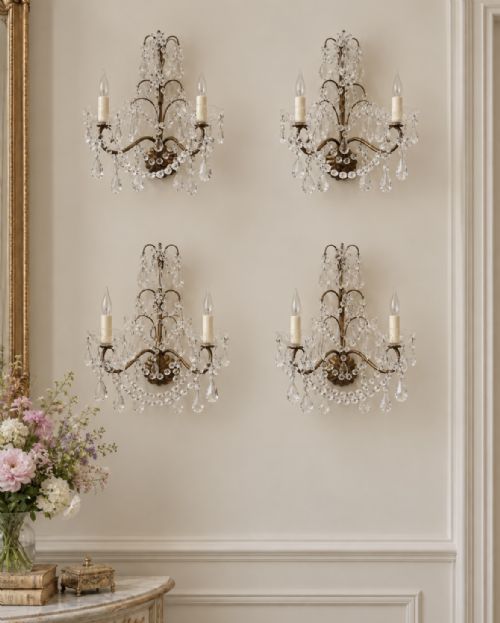
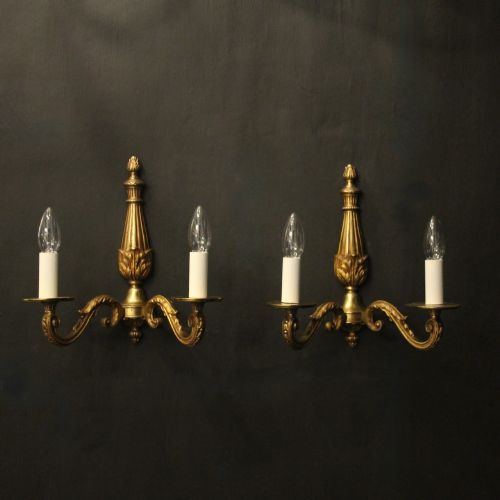
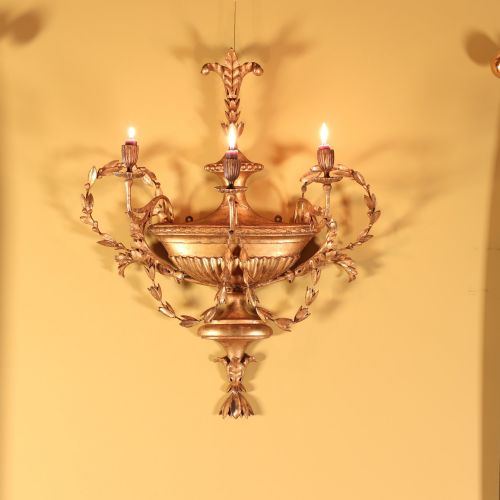
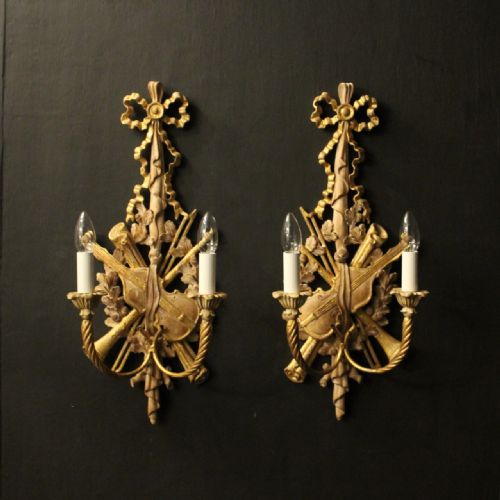
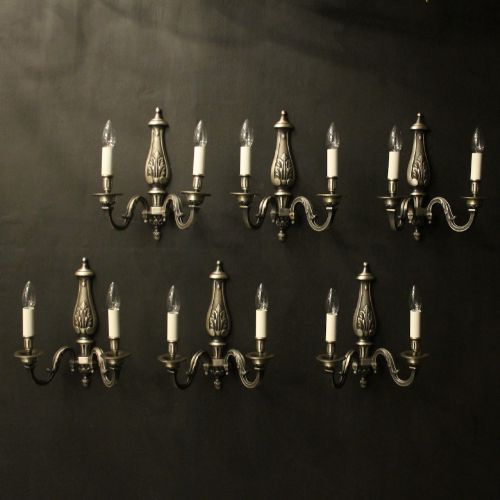
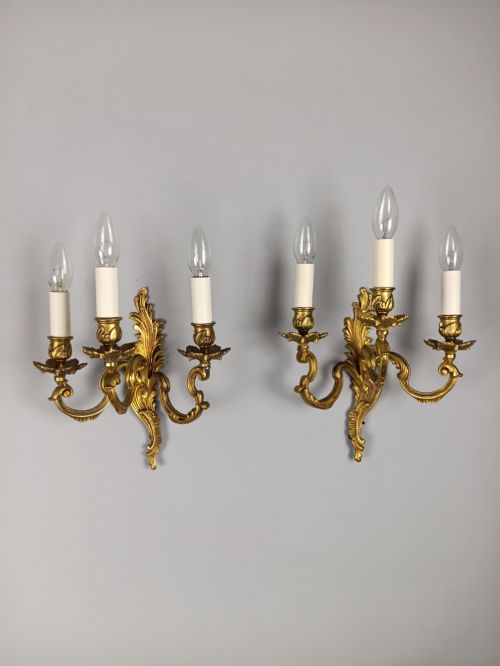
Classical gilded sconces span wall lights, brackets and girandole mirrors originating from French, Italian and English workshops. These lighting pieces take the form of twin, triple or four-arm wall fixtures designed to hold candles or electrical conversions.
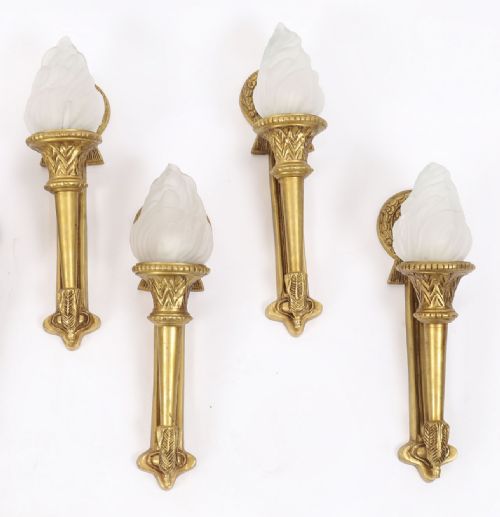
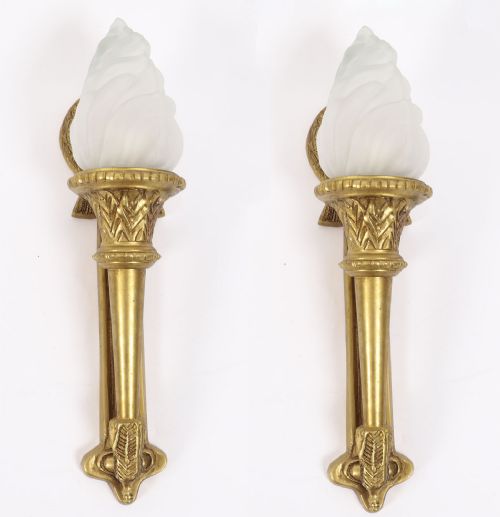
Forms extend from flaming torch designs and figural motifs to ornate scrolling arms bearing classical ornamentation. Pieces date from the mid-eighteenth century onward, incorporating styles such as French Regence, Louis XVI and Adam Revival.
Materials and construction methods
Construction relies heavily on cast bronze, brass and ormolu, alongside carved giltwood and gesso applied to wooden foundations. Metal components utilise mercury gilding, gold leaf or silver gilding to achieve reflective metallic surfaces.
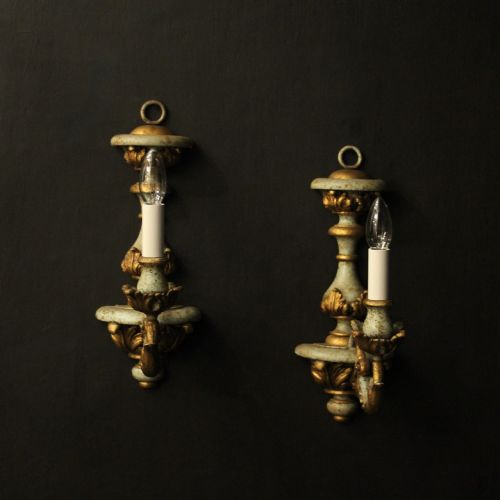
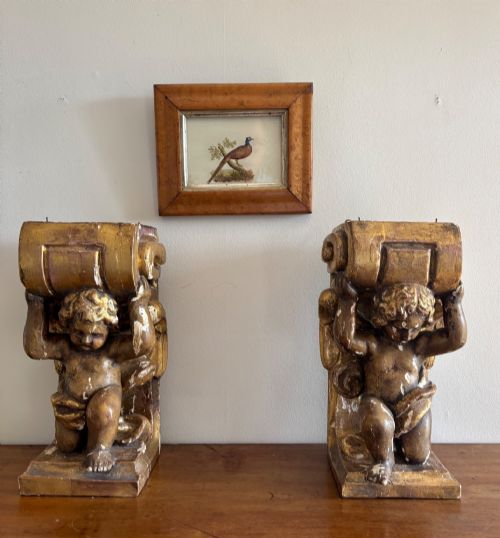
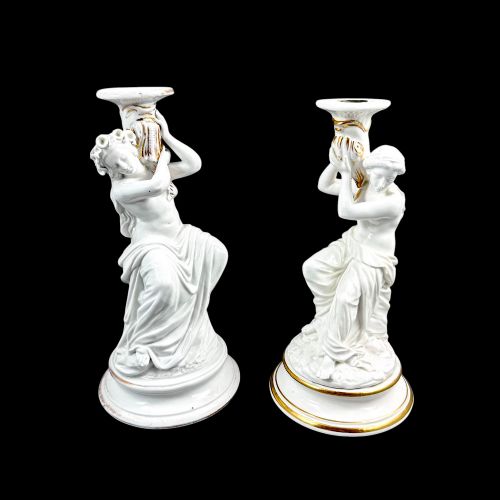
Carved wooden brackets and sconces employ traditional gesso layers beneath gold leaf applications to build up crisp decorative detail. Glass elements, porcelain figures and biscuit shafts appear combined with metalwork on specific nineteenth-century and twentieth-century examples.
Classical Gilded Sconces Retail Price Guide 2026
Typical asking prices for classical gilded sconces among the pieces listed under this phrase on Sellingantiques today, from the lower quarter to the upper quarter. They describe what is for sale here now, not the wider market.
Grand Tour travellers brought home biscuit-shafted bronze candlesticks to prove they had successfully navigated the ruins of antiquity.
Evaluating craftsmanship and detail
Quality differentiates through the crispness of the bronze casting and the depth of the hand-carved detail in giltwood pieces. Superior examples exhibit sharply chiselled ormolu mounts and well-preserved gilding layers rather than flat or worn surfaces.
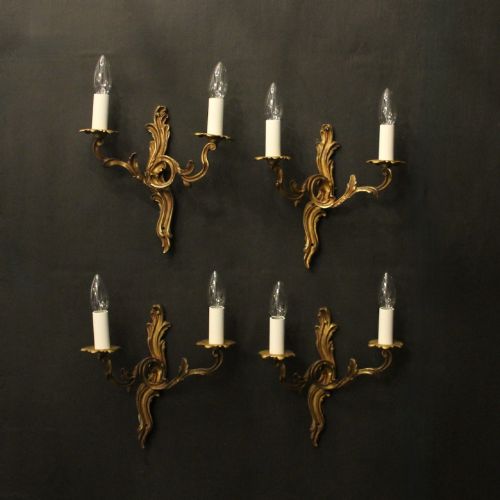
The integrity of matching sets - particularly larger groupings of four or six twin-arm fixtures - elevates a piece above single items or mismatched pairs. Original gilding surfaces and structurally sound arms demonstrate superior historic preservation.
The Classical Gilded Sconces Glossary
- Ormolu
- Gilded bronze produced by applying a mercury and gold amalgam to a bronze base and heating it until the mercury vaporised. This technique creates a rich, durable golden finish characteristic of fine French lighting.
- Giltwood
- Timber, often lime or pine, that has been coated in gesso and covered with thin sheets of gold leaf. It forms the foundation of carved wall brackets and mirrors.
- Girandole
- A branched wall light featuring a reflective mirror backplate. The glass multiplies the candlelight within the room.
- Caryatid
- A sculpted female figure serving as an architectural support or pillar. These figures appear on nineteenth-century Grand Tour bronze candlesticks.
- Gesso
- A plaster mixture applied to wood surfaces to provide a smooth base for gilding. It allows carvers to achieve sharp decorative profiles.
Classical Gilded Sconces: Frequently Asked Questions
How were classical gilded sconces used?
These fixtures were mounted on drawing room and salon walls to reflect candlelight and illuminate interior spaces. They positioned illumination around mirrors, doorways and fireplaces to maximise the glow of evening gatherings.
Many pieces were later adapted for electricity while retaining their original wall-mounting brackets and decorative arms.
How do I tell Neoclassical from Rococo sconces?
Neoclassical pieces feature symmetrical lines, strict geometric balance, urns, flaming torches and classical architectural motifs. They reflect an eighteenth- and nineteenth-century revival of ancient Greek and Roman design.
By contrast, Rococo sconces display asymmetrical scrolling foliage, C-scrolls and exuberant, organic curves without the rigid symmetry found in classical works.
What is the difference between ormolu and gilded brass?
Ormolu specifically denotes high-status gilt bronze created through mercury amalgamation during the eighteenth and nineteenth centuries. The underlying metal is a copper-zinc-tin alloy.
Gilded brass utilises a less costly base metal with gold leaf or modern plating, often appearing in twentieth-century production pieces.
How do I clean gilded wall lights?
Gilded surfaces require gentle dusting with a soft, dry brush to remove particles without disturbing the gold leaf or ormolu. Moisture and chemical cleaners should be avoided entirely to protect historic finishes.
Professional restoration is recommended if structural or surface repairs become necessary on antique bronze or giltwood.