
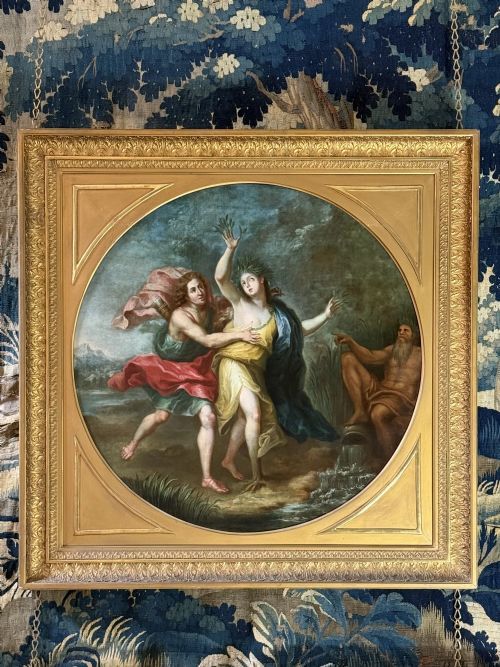
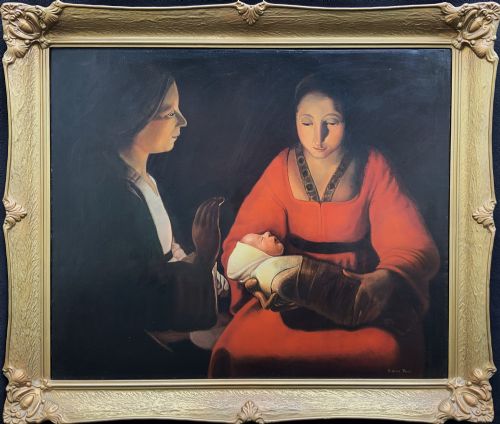
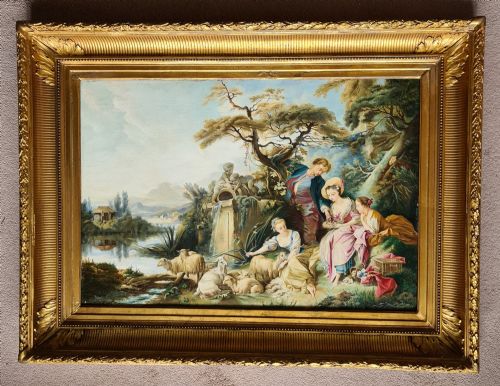
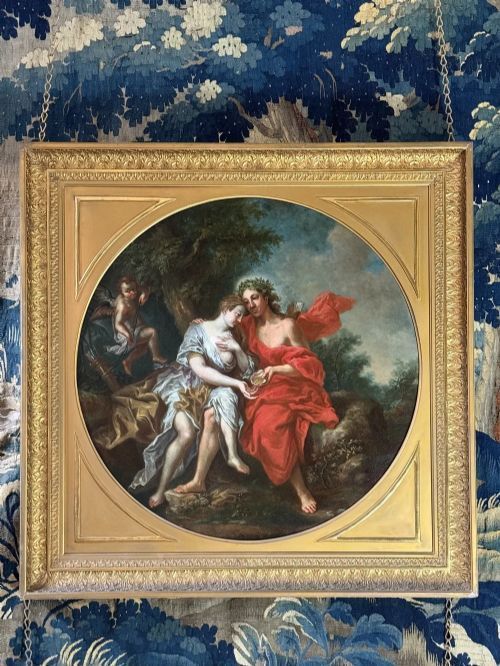





Classical French Oil Artwork
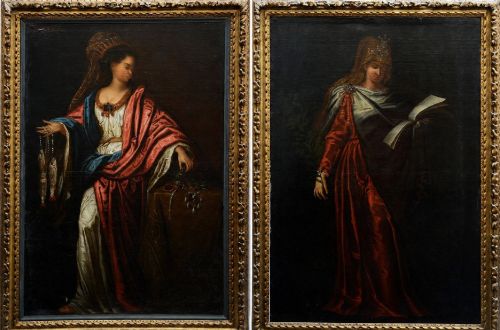
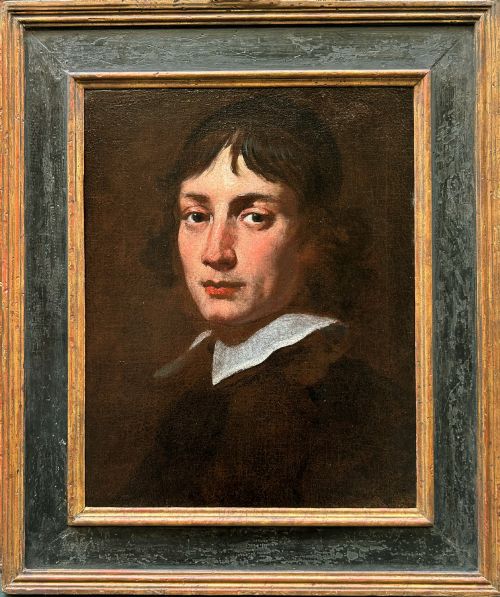
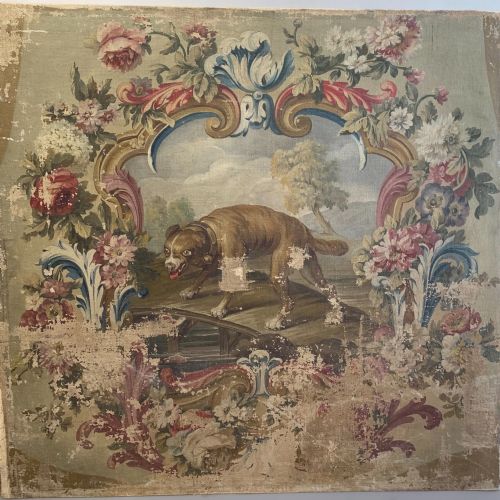
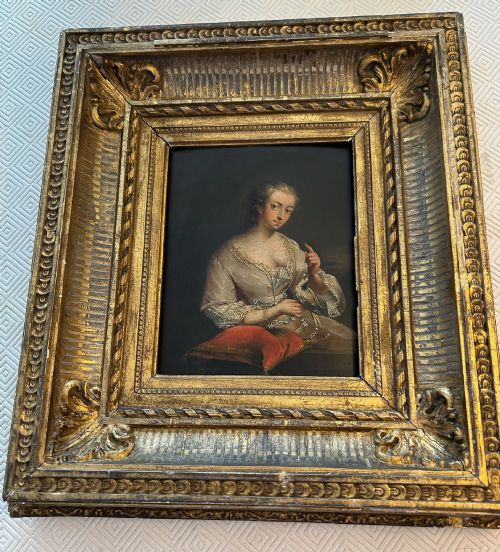
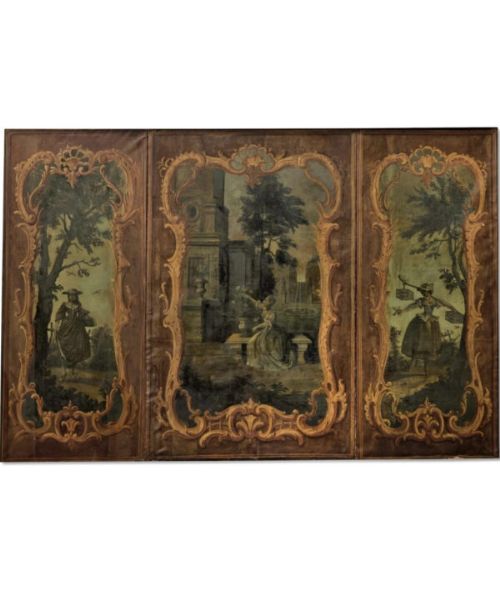
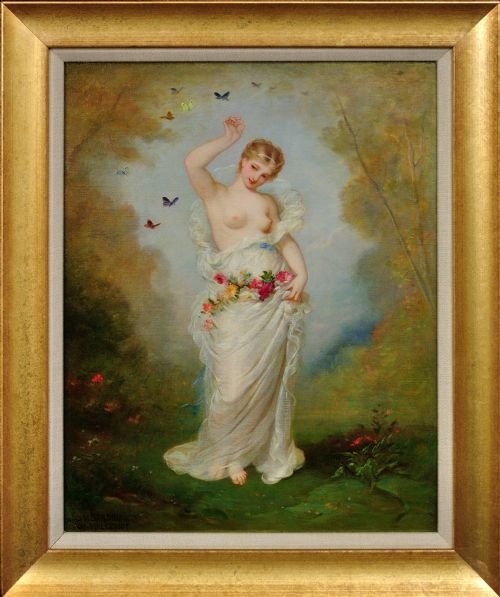
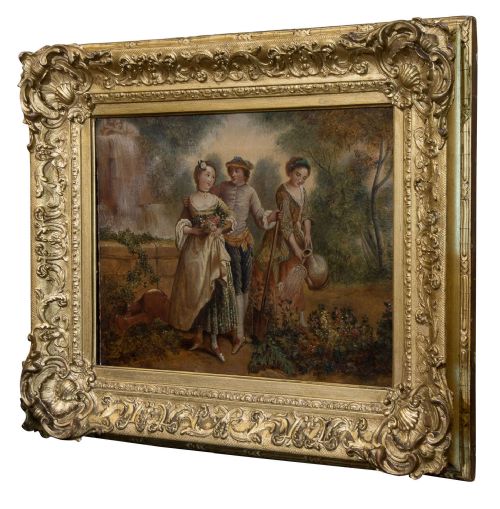
Classical french oil artwork brings centuries of mythological and courtly subjects into your interior through oil paint on canvas, copper, and panel.
Classical French Oil Artwork
Classical french oil artwork encompasses fine art paintings, wall art, and grand grisailles spanning from the seventeenth century through the mid-twentieth century. Buyers searching this phrase encounter historical genre scenes, mythological subjects, trompe l'oeil compositions, and portraits after masters like Francois Boucher and Georges de La Tour.
The selection ranges from eighteenth-century works executed in camaieu bleu to nineteenth-century academic and rococo revival canvases. Framed pieces often display ornate gesso and gilt wood surrounds that reflect the decorative ambition of their periods.
What distinguishes quality in these works
Quality rests in the handling of brushwork, anatomical proportion, and the depth of the pigment layers. Superior examples display confident draughtsmanship and subtle tonal gradations, particularly in facial expressions and fabric folds.
The integration between the painting and its original gilt wood or gesso frame influences the overall integrity of the piece. Works executed by documented artists or identified followers tend to exhibit higher finesse in composition than anonymous studio productions.
Several cherubs manage to look perpetually mischievous while trapped in eighteenth-century gilt wood frames.
Charles-Antoine Coypel·Georges de La Tour·Francois Boucher·Guillaume Courtois·Jean-Baptiste van Loo·Andre Charles Voillemot·Antoine Calbet·Jean-baptiste Joseph Pater·Jean-Marc Nattier·Jean Baptiste Isabey·Fernand Jean Barbier·Paul Viry·Jules Girardet·Auguste Renoir·Alexandre Decamps·Pierre-Louis Bouchard·Martin Pierre Denis·Jean-Baptiste Santerre
The Classical French Oil Artwork Glossary
- Grisaille
- A painting executed entirely in shades of grey or neutral monochromatic tones. This technique often simulates the appearance of stone sculpture or bas-relief.
- Camaieu
- A monochrome painting method utilising a single colour other than grey, such as blue in camaieu bleu. It creates a unified tonal effect across the canvas.
- Gesso
- A plaster-like mixture applied to wood or canvas as a base for painting or as a foundation for gilding. It allows artisans to carve intricate decorative details onto frames.
- Trompe l'oeil
- An artistic illusionistic technique that tricks the eye into perceiving a painted two-dimensional object as three-dimensional. It frequently appears in depictions of architectural elements and cherubs.
- Academic style
- A style of painting produced under the influence of European academies of art. It emphasises conventional forms, mythological subjects, and polished technique.
Classical French Oil Artwork: Frequently Asked Questions
What subjects appear in classical french oil artwork?
These paintings depict mythological narratives, pastoral landscapes, historical genre scenes, and formal portraits. Common motifs include cherubs, courtly gatherings, and classical deities.
Many compositions draw inspiration from earlier masters or theatrical settings, reflecting the artistic tastes of the seventeenth, eighteenth, and nineteenth centuries.
How do I identify the period of a painting?
Period identification relies upon examining the canvas preparation, stretcher construction, framing materials, and stylistic conventions. Seventeenth and eighteenth-century works often feature distinct academic or rococo handling.
Signatures, artist attributions, and subject matter also provide indicators, though many surviving pieces remain unsigned or attributed to followers.
Were these works meant for domestic display?
Many oil paintings and wall hangings served as decorative fixtures within period drawing rooms, salons, and country houses. Large grisailles and framed canvases were commissioned to complement architectural interiors.
Smaller pieces on copper or panel offered portable displays for intimate spaces and private cabinets.
How should I care for an antique oil painting?
Protect the canvas and wooden supports by maintaining stable humidity and temperature levels away from direct sunlight. Dust frames and surfaces gently with a soft, dry brush without applying moisture or cleaning agents.
Professional conservation should be sought for any structural repairs to the gesso frame or stabilisation of the paint layer.