
Classical French Bronze Urn
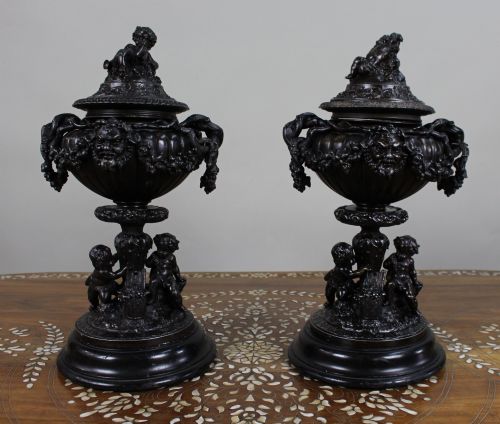
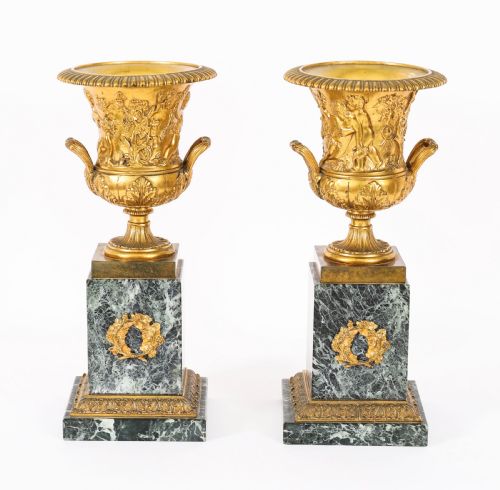
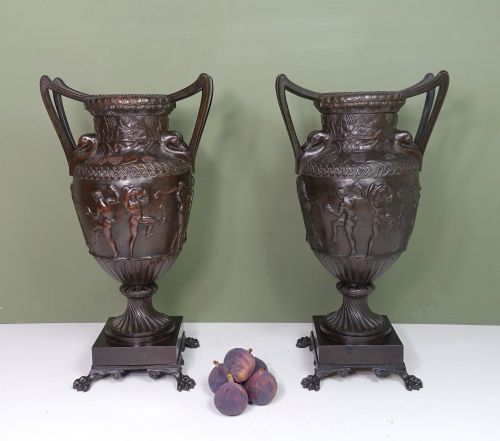
A classical french bronze urn brings academic gravity and sculptural presence to a room, combining patinated metal with classical revival ornament.
Classical French Bronze Urn
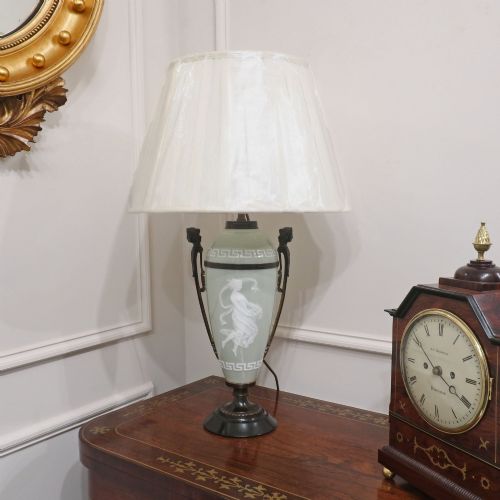
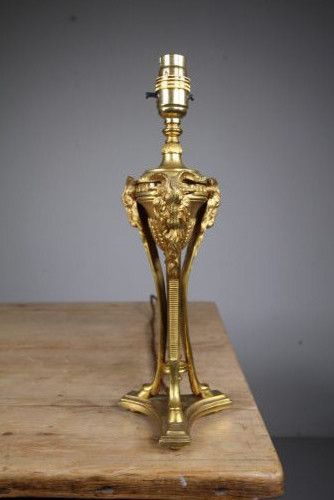
A classical french bronze urn typically takes its visual cues from antiquity, drawing on archaeological discoveries popularised by nineteenth-century Grand Tour travels. These objects manifest as decorative vessels, mantel ornaments, or bodies subsequently converted to table lamps.
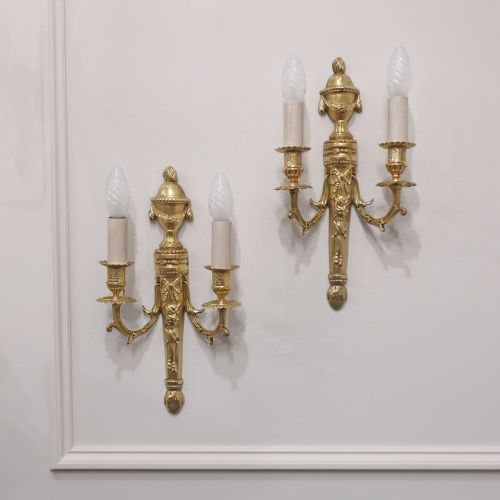
Most examples encountered on this page date from the nineteenth century, ranging through the eighteen-fifties, eighteen-eighties, and eighteen-nineties. Makers and designers looked back to Louis the Sixteenth, Empire, and neoclassical vocabularies to shape their bronze and marble compositions.
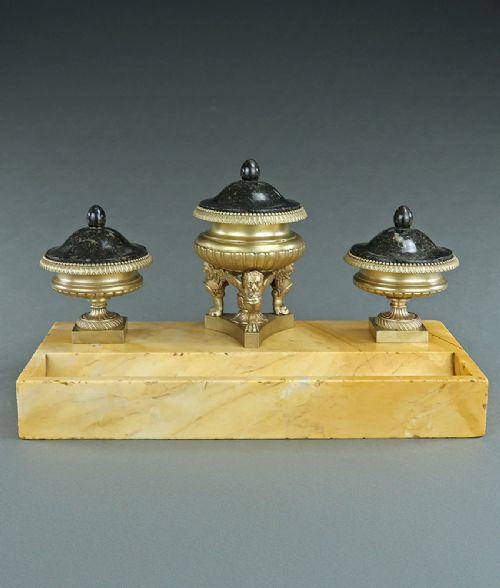
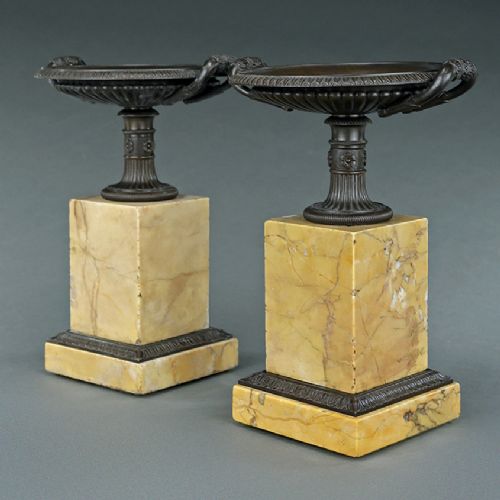
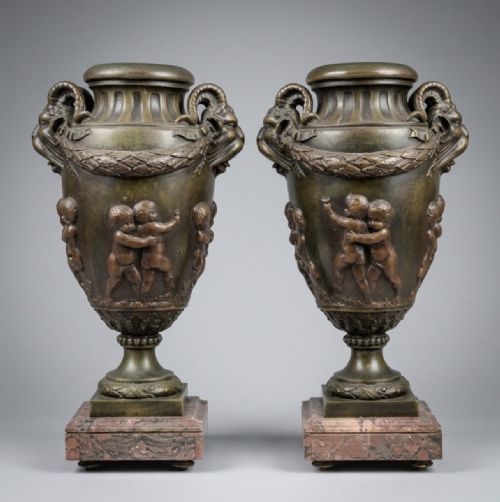
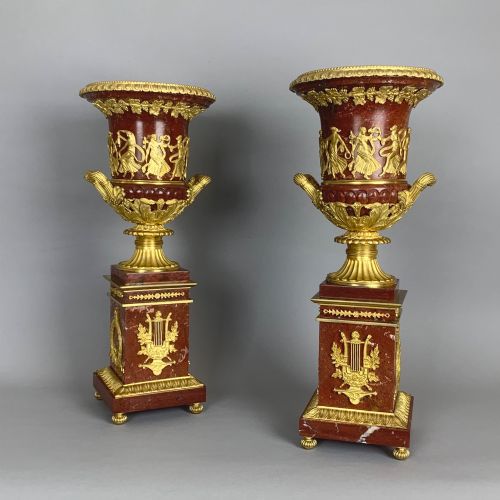
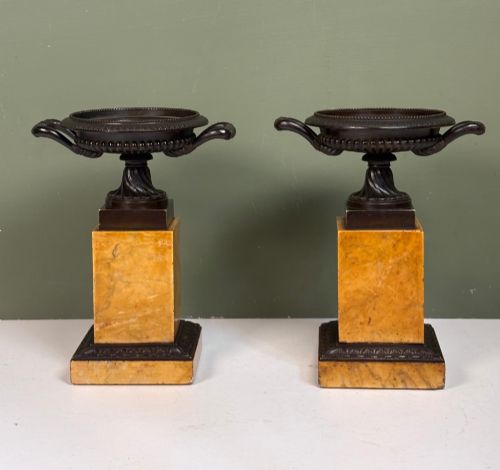
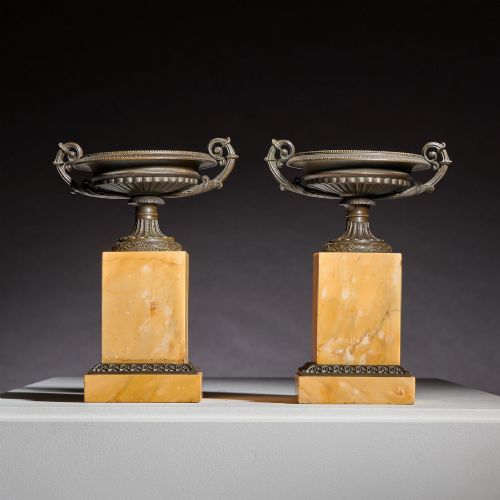
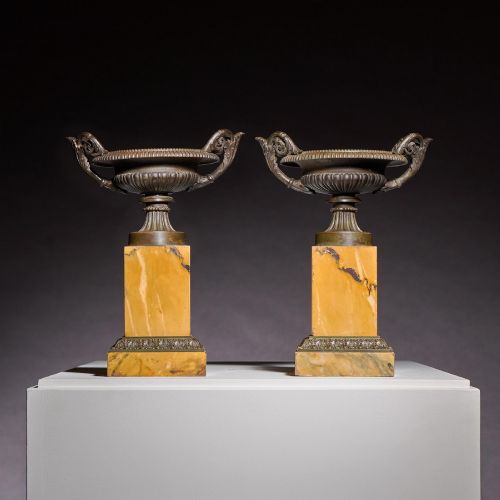
The forms vary from campana-shaped vessels and tazzas to cassolettes and twin-handled urns fitted with covers. Many incorporate figurative elements such as putti, bacchic masks, or ram heads integrated into the metal mounts.
Materials and Construction
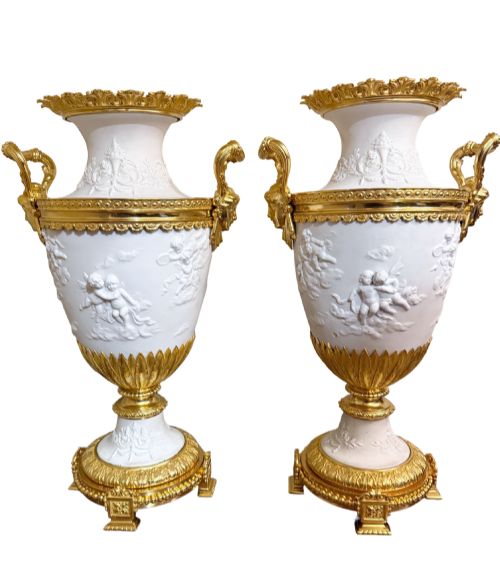
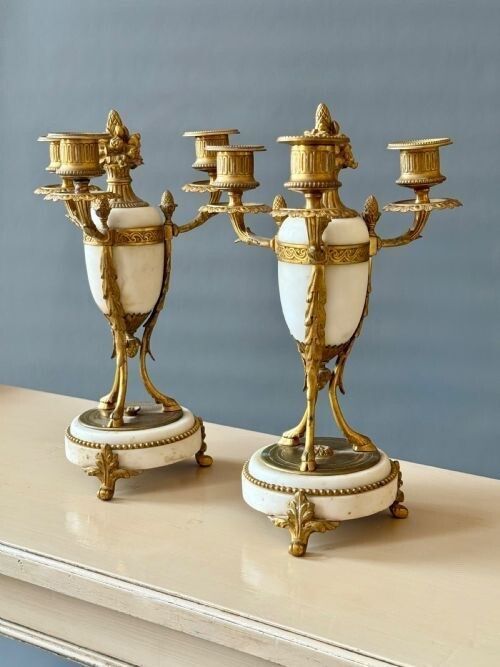
Foundries utilised cast bronze, patinated bronze, and gilded brass or ormolu, frequently pairing the metalwork with contrasting carved marble bases in white, siena, or rouge varieties. The juxtaposition of dark patinated surfaces against bright fire-gilt mounts creates the characteristic visual tension expected in these works.
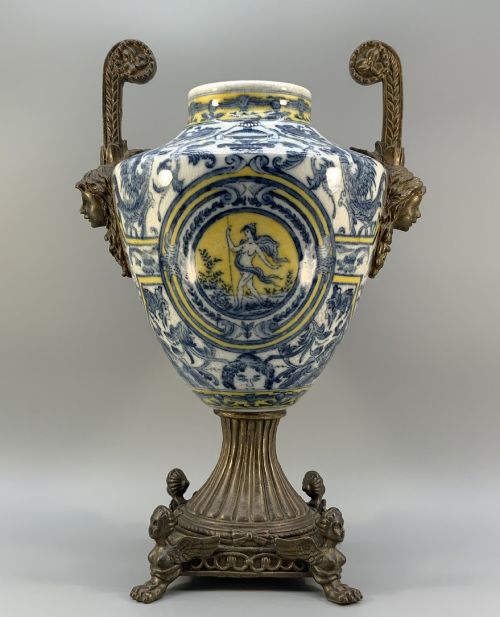
Porcelain and faience components occasionally form the central body of the vessel, held within intricate bronze frames or collar mounts. Detail work relied on chased and engraved finishing by hand after the initial casting cooled.
Listings feature nineteenth-century materials including patinated bronze, ormolu, siena marble, and white porcelain.
Judging Quality and Execution
The integration of the materials dictates visual success, particularly how neatly the bronze mounts seat against the stone or porcelain body. Heavier, more substantial marble plinths and thicker gauge ormolu mark out the better productions from mass-market alternatives.
Casier·Lerolle Fres
The Classical French Bronze Urn Glossary
- Ormolu
- Gilt bronze produced by applying a mercury and gold amalgam to a bronze base and heating it to drive off the mercury. This technique yields a durable, matte-golden finish characteristic of fine antique metalwork.
- Grand Tour
- A cultural journey undertaken by wealthy young Europeans through France and Italy to study classical antiquities. Souvenirs brought back included small bronzes, marble fragments, and decorative urns.
- Cassolette
- A decorative vessel designed with a reversible lid that functions either as a closed urn or an incense burner. They often feature in neoclassical interiors mounted on marble plinths.
- Tazza
- A shallow saucer-like cup mounted on a stem and foot, originating in ancient drinking vessels. Nineteenth-century examples served purely decorative functions on libraries and mantelpieces.
- Patinated Bronze
- Bronze treated with chemical solutions to produce an aged surface colour ranging from warm brown to deep green. This treatment protects the metal while enhancing sculptural definition.
Classical French Bronze Urn: Frequently Asked Questions
Were these urns always used as lamps?
Most pieces started life as decorative mantel ornaments, centrepieces, or garniture sets intended purely for visual display.
Electrical conversion usually occurred during the twentieth century when owners adapted the decorative vessels for domestic lighting.
How do I identify a Grand Tour piece?
Grand Tour items often combine classical bronze castings with specific Mediterranean marble varieties such as siena or rosso antico. Their scale suited traveller transport and private study display.
These works typically date from the nineteenth century and reflect direct academic interest in ancient Roman and Greek archaeology.
What is the difference between bronze and spelter?
Bronze is a copper and tin alloy that accepts fine chiselling and holds a durable patina over centuries. Spelter is a softer zinc-based metal used as a cheaper substitute.
Spelter pieces are noticeably lighter and often show painted or bronzed surface finishes rather than true metallic patination.
How should I clean marble bases?
Marble surfaces require gentle dusting with a dry, soft cloth to prevent abrasive particles from scratching the polished stone. Water and chemical cleaning agents can damage porous marble or stain old mortar joints.
Professional restoration is recommended if deep staining or structural chips affect the stone plinth.