


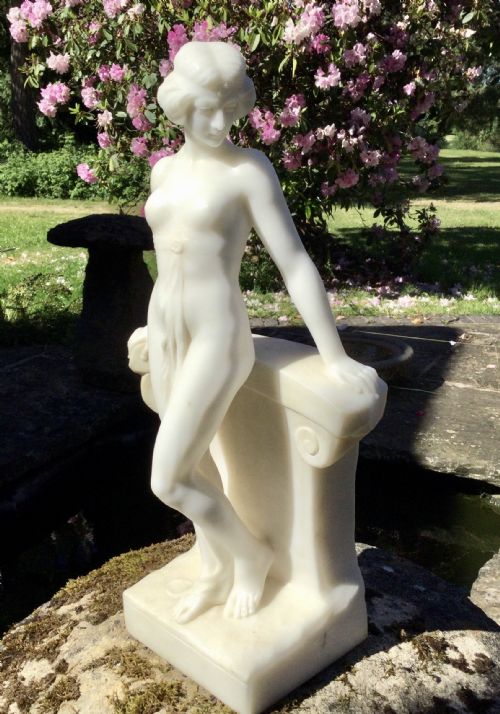


Classical Female Nude Statue
A classical female nude statue brings mythology and elegance into a room through enduring forms.
Classical Female Nude Statue
A classical female nude statue represents the human form drawn from antique sculpture, mythological figures, and allegorical subjects. These works take the shape of standing maidens, reclining bathers, and dancers cast in metal or carved in stone.
The versions most commonly met on this page date from the nineteenth century through the art deco period. French founders and European workshops produced these pieces as cabinet bronzes, grand tour souvenirs, and large salon sculptures.
Materials and Technique
Foundries employed the lost-wax casting method for bronze statues to capture fine muscular detail and drapery. Patination was applied chemically to the metal surface to produce varying shades of brown, green, and dark tones.
Carvers shaped white marble and translucent alabaster using hand chisels and rasps to achieve smooth flesh textures. Terracotta and porcelain pieces required precise kiln firing before receiving hand-painted enamels or biscuit finishes.
Several figures are caught in moments of minor distress, including a maiden bitten by a snake and a bather surprised.
Distinctions in Quality
Stone and marble works reveal quality through the depth of the carving and the absence of natural flaws in the material. Superior terracotta and porcelain figures display balanced proportions and careful attention to anatomical accuracy.
Ferdinand Barbedienne·Fritz Kochendorfer·Hector Lemaire·S Kinsburger·Aristide Maillol·Hans Müller·Edmond Leveque·Eugène Désiré Piron·James Pradier·Jean Jacques Pradier·Ferdinando de Luca·Mario Korbel·Falconnet
The Classical Female Nude Statue Glossary
- Patinated bronze
- A metal sculpture treated with acids and heat to alter its surface colour. This process protects the bronze and adds depth to the shadows of the casting.
- Grand tour
- A nineteenth-century travel tradition where wealthy tourists acquired small bronze reductions of ancient sculptures. These souvenirs served as portable representations of classical antiquities.
- Lost-wax casting
- A metal-working method where a wax model is melted out of a mould to receive molten bronze. This technique allows for complex undercuts and intricate surface details.
- Biscuit porcelain
- Unglazed ceramic fired to a matte finish that resembles fine marble. It captures soft light and highlights subtle contours on figurative pieces.
- Neoclassical
- An artistic movement reviving the aesthetics of ancient Greece and Rome. Works in this style emphasise restrained emotion, balance, and classical proportions.
Classical Female Nude Statue: Frequently Asked Questions
How were these statues displayed originally?
Nineteenth-century interiors featured these sculptures on pedestals, mantelpieces, and library tables where guests could admire them at close quarters. Larger bronzes stood in entrance halls while smaller figurines rested in private studies.
Bookends and functional ornaments also appeared on desks to hold bound volumes in place. Collectors integrated these figures into domestic spaces to signal an appreciation for classical learning and refined taste.
How do I identify a grand tour bronze?
Grand tour pieces are typically smaller reductions of famous ancient monuments such as the Venus de Milo or crouching figures. They were manufactured in Italy or France during the nineteenth century as portable souvenirs for travellers.
These bronzes often exhibit dark patination and are mounted on simple marble bases. Their secondary status as travel keepsakes means they prioritised recognizable classical forms over original artistic invention.
What is the difference between terracotta and bronze figures?
Terracotta statues are modelled in clay and fired in a kiln, resulting in a porous, earthy material with a matte surface. This medium allows the artist's direct hand to remain visible in the soft contours of the clay.
Bronze sculptures involve a multi-step foundry process that translates an original model into durable metal. Bronze permits greater tensile strength, allowing for dynamic poses and thinner appendages like outstretched arms or dancing limbs.
How do I care for an antique marble nude?
Marble surfaces require dusting with a soft, dry cloth to prevent airborne grit from settling into the stone pores. Moisture and commercial cleaning agents should be avoided because they can stain or etch the delicate polished finish.
Placement away from direct heat sources and sunlight protects the stone from thermal shock and discoloration. Gentle handling prevents chipping on projecting limbs and draped garments.