
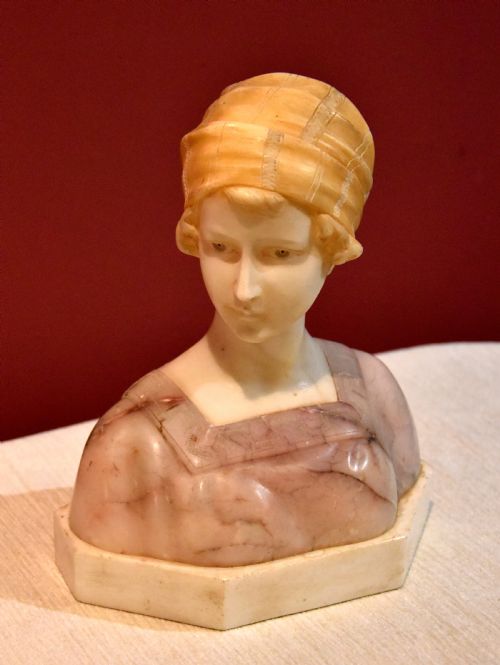
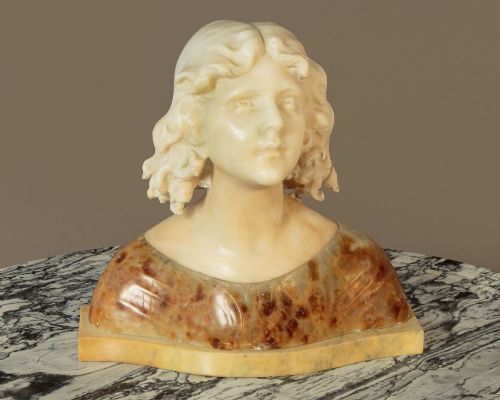


Art Nouveau Alabaster Sculpture
Art nouveau alabaster sculpture captures feminine grace and botanical fluidity, offering collectors a striking centrepiece carved from soft, translucent stone.
Art Nouveau Alabaster Sculpture
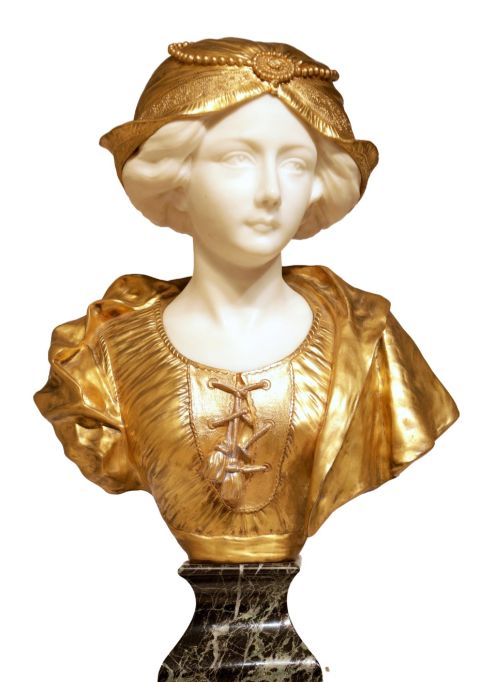
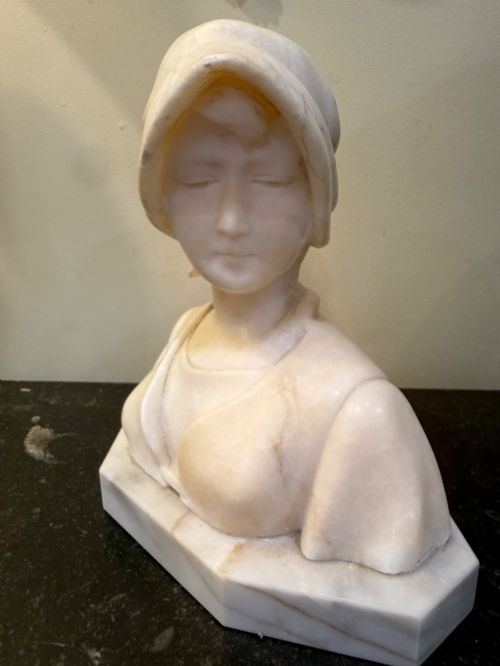
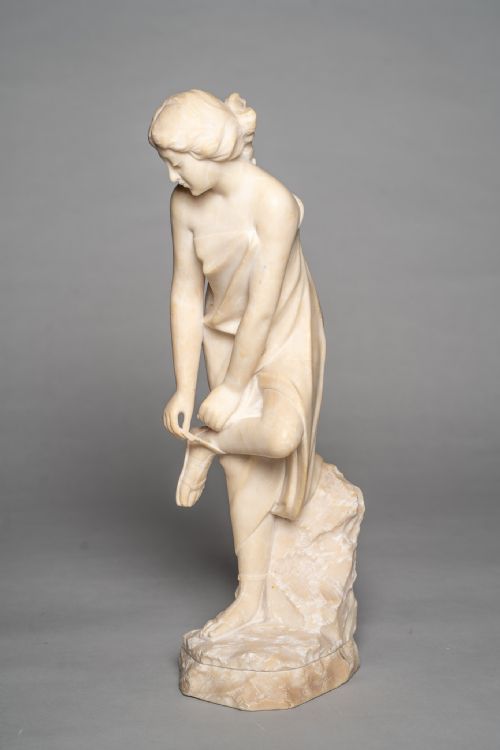
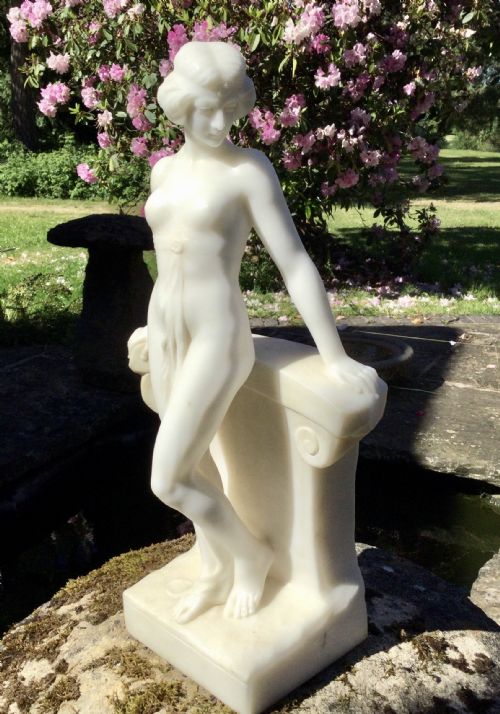
An art nouveau alabaster sculpture typically portrays female figures, busts, and reclining nudes framed by the flowing lines of the turn of the twentieth century. These pieces emerge predominantly from French and Italian workshops dating between the late nineteenth century and the early decades of the nineteen-hundreds. A buyer browsing this selection most frequently encounters carved busts of young women and girls produced around nineteen-hundred.
The aesthetic bridges several overlapping traditions, incorporating elements of French classical revival, arts and crafts, and belle epoque design alongside organic sculptural forms. The makers often combined the pale, translucent mineral with contrasting media such as marble, gilt bronze, or bronze finish to heighten the visual impact. These works function primarily as interior decorative art, capturing the romantic and naturalistic ideals of the period.
Distinctions in craftsmanship and design
The standard of carving defines the upper tier of these sculptures, separating nuanced hand-finished anatomical details from simpler, mass-produced commercial outputs. Superior examples display subtle shifts in stone density and colour, with master carvers using the natural translucency of the material to illuminate skin and drapery. The integration of mixed materials, such as gilt bronze or marble accents, also reflects the ambition of the original workshop.
The presence of a clear signature by a known sculptor elevates a piece from standard decorative work to an identifiable artistic creation. Condition plays a role, as the softness of alabaster makes it susceptible to surface wear, but the original crispness of the chisel work remains the primary indicator of execution quality.
Several ladies hold instruments or garden produce, proving that turn-of-the-century stone maidens doubled as musicians and fruit vendors.
Affortunato Gory·Auguste Henri Carli·George Van Der Straeten·Gugielmo Pugi·A. Cipriani
The Art Nouveau Alabaster Sculpture Glossary
- Alabaster
- A soft, fine-grained stone prized for its milky translucency and suitability for detailed hand-carving. It was widely utilised across European sculpture during the nineteenth and early twentieth centuries.
- Spelter
- A zinc alloy frequently used as a cost-effective substitute for bronze, often treated with a bronze finish to mimic heavier metalwork. It appears alongside stone elements in decorative figures of the period.
- Ormolu
- Gilded bronze applied as mounts or decorative highlights on sculptural bases. The technique adds a metallic warmth that contrasts with white marble and pale stone.
- Belle Epoque
- A period of European social and artistic optimism spanning the late nineteenth century up to the First World War. This era heavily influenced the ornate and fluid styling of figurative sculpture.
- Patination
- The surface finish or natural ageing acquired by bronze and metal elements over time. It provides visual depth and protects the underlying alloy.
Art Nouveau Alabaster Sculpture: Frequently Asked Questions
How should I clean alabaster sculpture?
Alabaster is water-soluble and relatively soft, meaning moisture can permanently damage the porous surface. Dust the piece gently with a dry, soft brush rather than using liquid cleaners.
Keep these sculptures away from direct sunlight and damp environments to preserve the natural tone of the stone.
Were these pieces signed by artists?
Many sculptures feature artist signatures, foundry marks, or titles incised directly into the stone or cast onto the metal base. Signatures help attribute works to specific European studios and sculptors active around nineteen-hundred.
Unsigned pieces remain common and were often produced by anonymous workshops catering to the broader turn-of-the-century market.
What is the difference between alabaster and marble?
Alabaster is a softer, gypsum-based stone with a high degree of natural translucency that allows light to penetrate the surface. Marble is a harder metamorphic rock with distinct crystalline structures and veining patterns.
Sculptors often combined both materials within a single bust to create textural and tonal contrast.
Where were these sculptures originally displayed?
These figurative works served as parlour ornaments, mantelpiece decorations, and cabinet centerpieces in middle- and upper-class European homes. They were designed for indoor display where the delicate carved details could be viewed at close range.
Today, they function as decorative focal points on tabletops, desks, and dedicated display stands.