
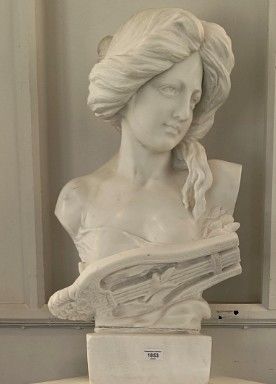
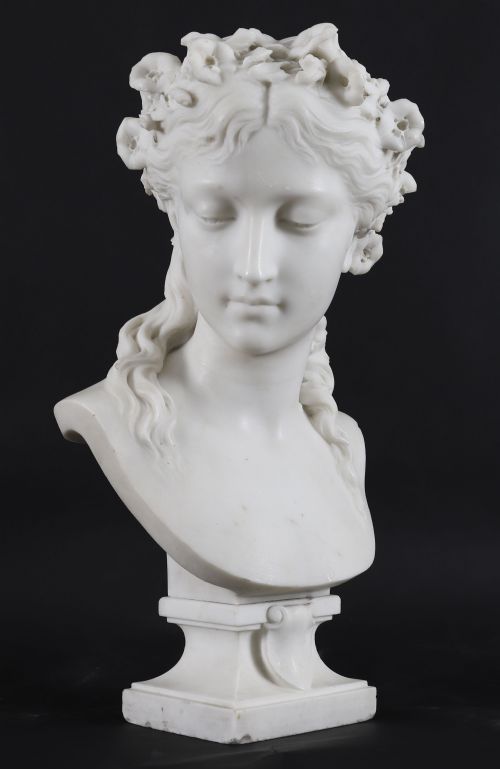
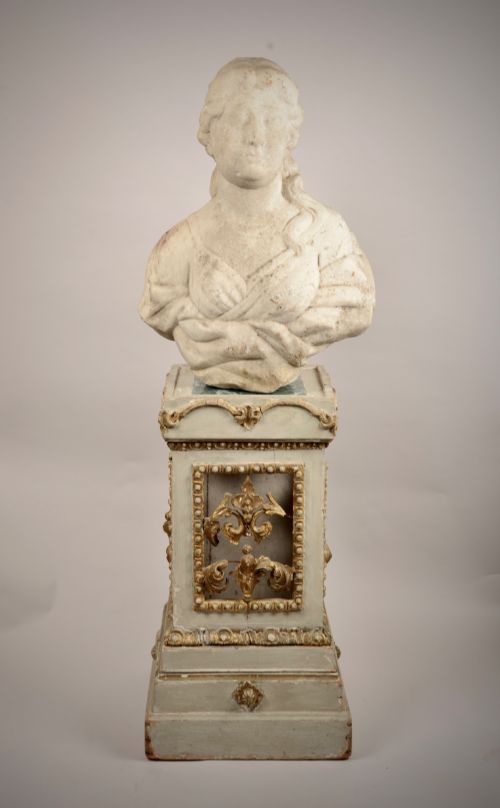


Classical Female Marble Head
A classical female marble head brings sculptural weight and quiet presence to a room, capturing mythological figures and idealized portraits carved from stone.
Classical Female Marble Head
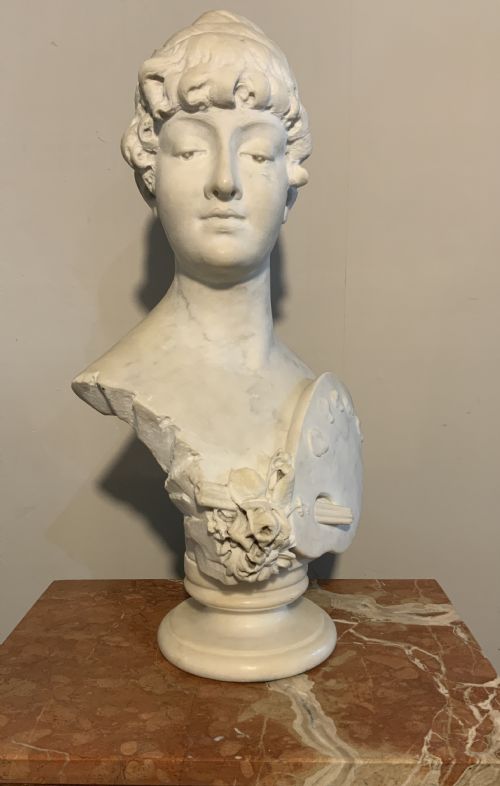
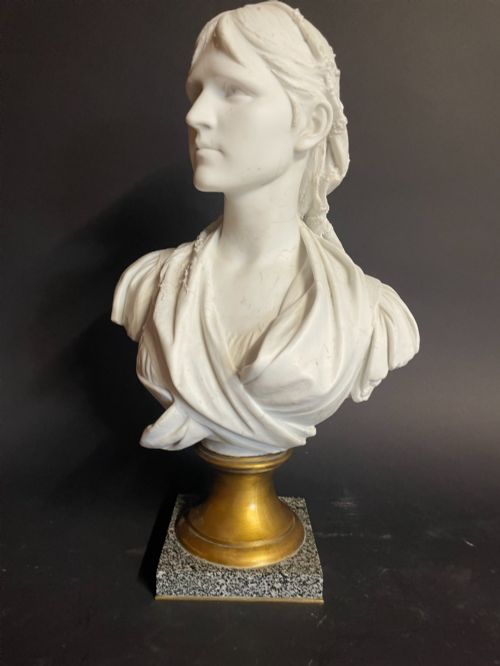
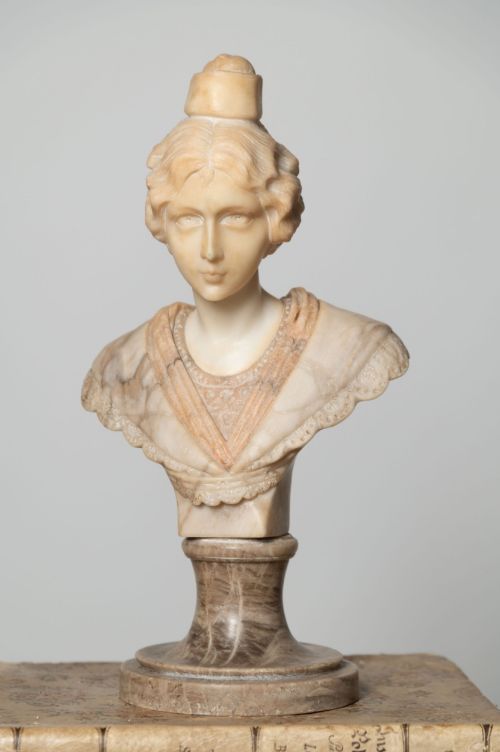
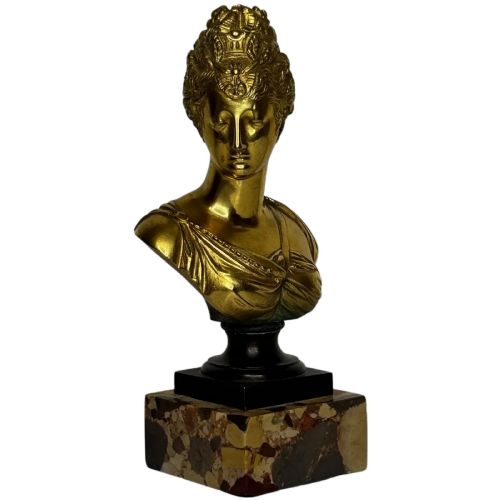
A classical female marble head represents carved sculptural forms derived from antique traditions, appearing primarily as busts and portrait heads of women, goddesses, and muses.
The pieces on this page span several centuries, with the nineteenth century supplying the largest share of Neoclassical and Victorian interpretations alongside earlier seventeenth-century Italian works.
Makers and sculptors draw upon classical mythology and historical subjects, translating figures such as Diana de Poitiers, Erato, Juno, and veiled ladies into solid carved stone and mixed media.
Materials and construction
Carvers work primarily in marble, utilising specific varieties such as white Carrara and mixed stones alongside alabaster, granite, and occasional bronze or ormolu mounts.
Sculptors shape the material using traditional chiselling and carving techniques, often mounting the finished heads onto contrasting bases like Vert de Mer marble.
Several ladies arrive permanently veiled in solid stone, keeping their expressions hidden from the room.
Judging quality and execution
Quality rests in the sensitivity of the carving, where facial expressions, drapery folds, and hair texture display fluent handling rather than stiff mechanical precision.
The choice of material dictates part of the distinction, with fine-grained Carrara marble and well-chosen supportive bases contributing to the overall visual balance of the sculpture.
Eugene Aizelin·Emmanuel Villanis·Eutrope Bouret·Auguste Moreau
The Classical Female Marble Head Glossary
- Carrara marble
- A type of white or blue-grey marble quarried in the city of Carrara in Tuscany, widely favored by sculptors for its fine and uniform grain.
- Neoclassical
- A Western cultural movement drawing on the art and culture of classical antiquity, prevalent in sculpture and architecture during the eighteenth and nineteenth centuries.
- Alabaster
- A fine-grained, translucent stone used as an alternative to marble for softer sculptural details and lighter-toned portrait busts.
- Ormolu
- Gilded bronze applications often used for mounts, collars, and decorative bases accompanying marble and stone sculptures.
- Bust
- A sculpted or cast representation of a person's head, shoulders, and upper chest.
Classical Female Marble Head: Frequently Asked Questions
How do I clean a marble head?
Dust the stone regularly with a soft, dry cloth to prevent dirt from settling into the porous grain or carved crevices.
Avoid using household detergents or excess water, which can stain or damage vulnerable marble and alabaster surfaces.
How can I tell the period of a marble sculpture?
Examine the tooling marks, the style of the dress or hair, and the type of base material used to mount the head.
Nineteenth-century Neoclassical pieces often feature distinct romanticism, whereas seventeenth-century Italian works display heavier Baroque influences.
Are these sculptures made from solid stone?
Most pieces consist of carved solid marble, alabaster, or stone, sometimes paired with bronze elements or mounted on contrasting marble bases.
Makers frequently combined materials, utilising ormolu collars or mixed marble varieties to add decorative contrast.