





Classical Female Lamp
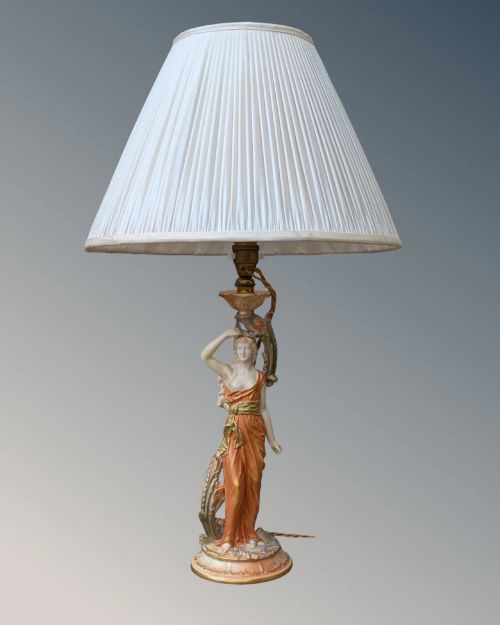
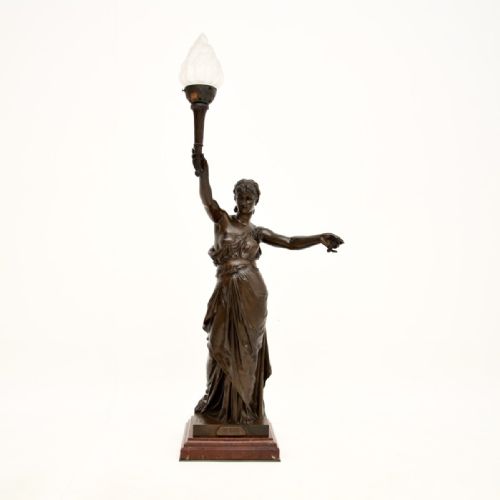
A classical female lamp brings ancient sculptural form into domestic lighting through bronze, spelter, and marble figures.
Classical Female Lamp
A classical female lamp combines figural sculpture with a functional light source, drawing on historical motifs from the seventeenth century through to the twentieth century. These pieces take the form of table lamps, floor lamps, torcheres, wall lights, and standalone statues.
The figures frequently depict classical allegories, mythological subjects, or robed female forms holding torches and lamps. Works range from monumental nineteenth-century French bronzes to early twentieth-century spelter and porcelain table lamps.
Neoclassical, Art Nouveau, and Regency styles dominate the selection, showing how different eras reinterpreted ancient female iconography. A buyer searching for a classical female lamp will encounter both grand signed sculptures and more modest domestic lighting.
How they were made
Maker's workshops cast figures primarily in bronze, gilt bronze, and spelter, often mounting them on marble bases. Surface treatments vary from silvered finishes and painted details to rich patination.
Classical Female Lamp Retail Price Guide 2026
Typical asking prices for classical female lamp among the pieces listed under this phrase on Sellingantiques today, from the lower quarter to the upper quarter. They describe what is for sale here now, not the wider market.
Some figures hold their lamps aloft so steadily they have stood lighting empty rooms for over a century.
What varies in quality
Sculptural fidelity and the crispness of the casting define the upper tier of these pieces, where facial expressions, drapery folds, and anatomical proportions are rendered with precision. Lesser examples in spelter or painted metal often show softer detailing and simpler surface finishes.
The presence of signatures from noted sculptors and foundries elevates a piece, as does the integration of original mounting materials like marble bases and period torcheres.
Royal Worcester·F. De Luca·Humphrey Hopper·Jean-Jules Cambos·Coutan·Henri Honore Ple·Auguste Moreau
The Classical Female Lamp Glossary
- Torchere
- A tall stand or floor lamp designed to carry a light source, frequently held aloft by a figural carving. These pieces often stand several feet tall.
- Spelter
- A zinc-based alloy used as a cost-effective alternative to bronze in nineteenth and twentieth-century manufacturing. It accepts various metallic paints and silvered finishes.
- Caryatid
- A sculpted female figure serving as an architectural support taking the place of a column or pier. They appear in seventeenth-century woodwork and later lighting supports.
- Gilt bronze
- Bronze coated with a thin layer of gold or gold leaf to create a lustrous decorative surface. This technique protects the metal underneath while adding visual warmth.
Classical Female Lamp: Frequently Asked Questions
What periods do these lamps come from?
The selection spans from the seventeenth century up through the Regency era and into the late nineteenth and early twentieth centuries. Neoclassical and Art Nouveau revivals heavily influence the design language across these periods.
Earlier pieces often feature hand-carved wood, whilst later nineteenth and twentieth-century examples lean into cast bronze, spelter, and porcelain.
How were figural lamps used originally?
Grand torcheres and floor lamps illuminated large reception rooms and hallways in period townhouses and country estates. Smaller table lamps and wall lights provided task and ambient lighting in private chambers.
Figures holding torches naturally transitioned into lighting supports as gas and electric wiring were adopted into homes.
Are these lamps wired for modern use?
Many antique lamps have been adapted for contemporary electrical standards over time. Buyers should inspect the internal wiring and consult a qualified electrician before use.
Original fittings are sometimes retained for display purposes rather than functional illumination.
How do I distinguish bronze from spelter?
Bronze is a heavy, copper-alloy metal that takes a deep, stable patina and allows for sharp, crisp sculptural details. Spelter is a softer, lighter zinc alloy that was widely used as a cheaper substitute in the nineteenth century.
Spelter often shows painted or silvered surface treatments that can flake or wear away differently than true bronze patination.