
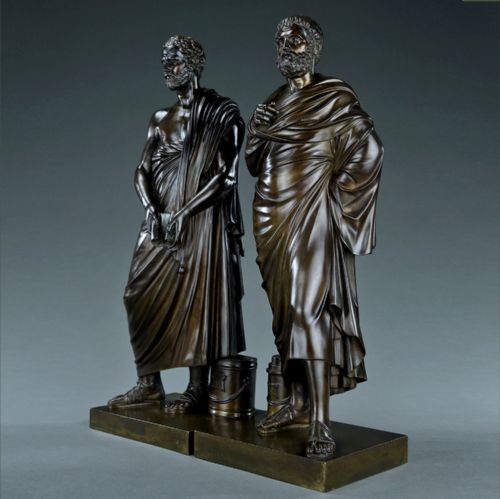


Classical Draped Figure Bronze
A classical draped figure bronze brings ancient myth and sculptural elegance straight into your drawing room, offering timeless form cast in heavy metal.
Classical Draped Figure Bronze
When you search for classical draped figure bronze pieces, you encounter sculptures and figural objects depicting mythological or allegorical characters draped in flowing robes. These works span the 19th Century, Regency period, and early 20th Century, drawing heavily on Neoclassical, Art Nouveau, and French Baroque traditions.
The most likely version you will meet on this page is a 19th Century bronze casting, often capturing figures like Venus, Hebe, or mythological orators. Alongside pure sculptures, the selection includes torcheres, table lamps, and plaster alternatives that echo the same antique aesthetic.
Origins stretch from grand Grand Tour souvenirs to signed works by renowned French founders and sculptors. Whether depicting a reclining lady or personified nature, each piece relies on classical drapery to create movement and shadow across the metal surface.
How these figures were cast and finished
These pieces are primarily realised in bronze, patinated bronze, parcel-gilt bronze, and gilded bronze, occasionally complemented by brass, marble, glass, or china bases. Molten metal was poured into moulds using traditional foundry methods before artisans refined the surface by hand.
The finish often involves a rich dark patination or selective gilding to highlight the folds of the garments and the contours of the body. In some instances, alternate materials such as plaster or china form the core support or secondary medium for the sculptural composition.
Several figures hold up lamps or stand ready as torcheres, effectively moonlighting as your evening reading light.
What separates standard castings from exceptional works
The sophistication of the patination and the presence of signatures or foundry marks elevate certain works significantly. Heavier metal gauge, harmonious proportions, and integrated bases of marble or fine china further distinguish master foundry production from commercial output.
Barbedienne·Humphrey Hopper·Ernst Barrias·Auguste Moreau·Antoine Coysevox
The Classical Draped Figure Bronze Glossary
- Bronze
- An alloy of copper and tin traditionally used for durable and detailed sculpture casting. It develops a rich surface patination over time.
- Patination
- The chemical or natural treatment applied to the metal surface to alter its colour and depth. This finish protects the bronze while enhancing sculptural contours.
- Grand Tour
- A cultural journey undertaken by wealthy young Europeans in the 18th and 19th centuries. Travellers frequently collected small bronzes of classical statues as souvenirs.
- Torchere
- A tall ornamental stand or floor lamp designed to hold a light source. In antique metalwork, these often incorporate figural shafts.
- Neoclassical
- An artistic style inspired by the art and culture of classical antiquity. It prioritises restraint, proportion, and mythological subject matter.
Classical Draped Figure Bronze: Frequently Asked Questions
What is a classical draped figure bronze?
It is a metal sculpture depicting a human figure, typically a goddess or mythological subject, wearing traditional flowing garments.
These pieces reflect historic sculptural movements from the Regency era through to the late 19th Century.
How were these bronzes originally displayed?
In the 19th Century, collectors placed them on mantelpieces, desks, or specialised pedestals within refined drawing rooms.
Some examples also served functional roles as torcheres or table lamps mounted on sturdy bases.
How do I identify a Grand Tour bronze?
Grand Tour pieces are typically smaller-scale reductions of famous classical statues acquired during European travels.
They often feature dark patination and precise detailing intended to replicate ancient museum marbles.
Are all these pieces solid bronze?
While many are cast in bronze or patinated bronze, the category also includes parcel-gilt variations and mixed media elements.
Certain items incorporate marble, glass, or china bases, and occasionally alternative materials like plaster.