

Classical Corinthian Lamp
These classical corinthian lamp pieces bring architectural dignity to a room, channelling ancient temple forms through nineteenth and early twentieth century lighting.
Classical Corinthian Lamp
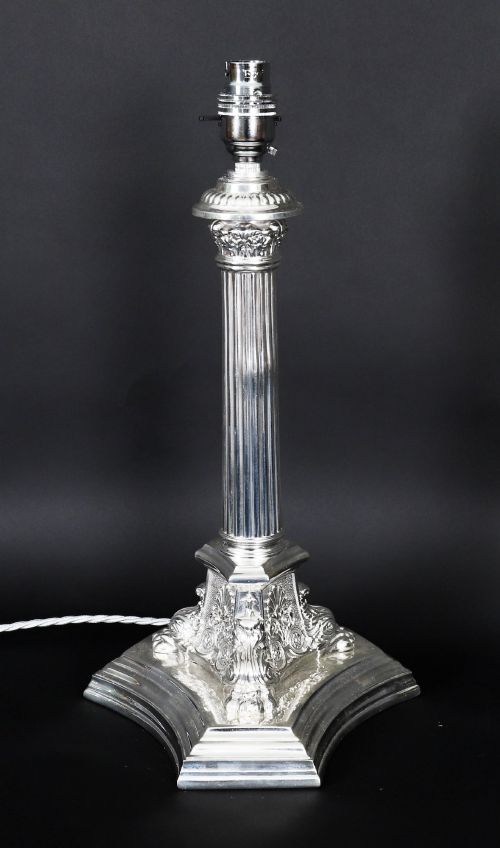
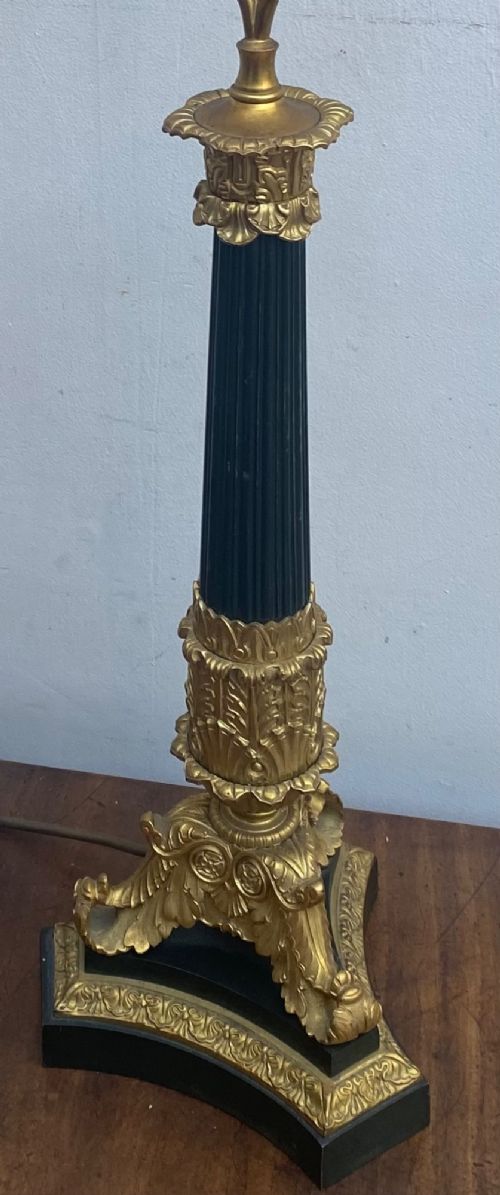
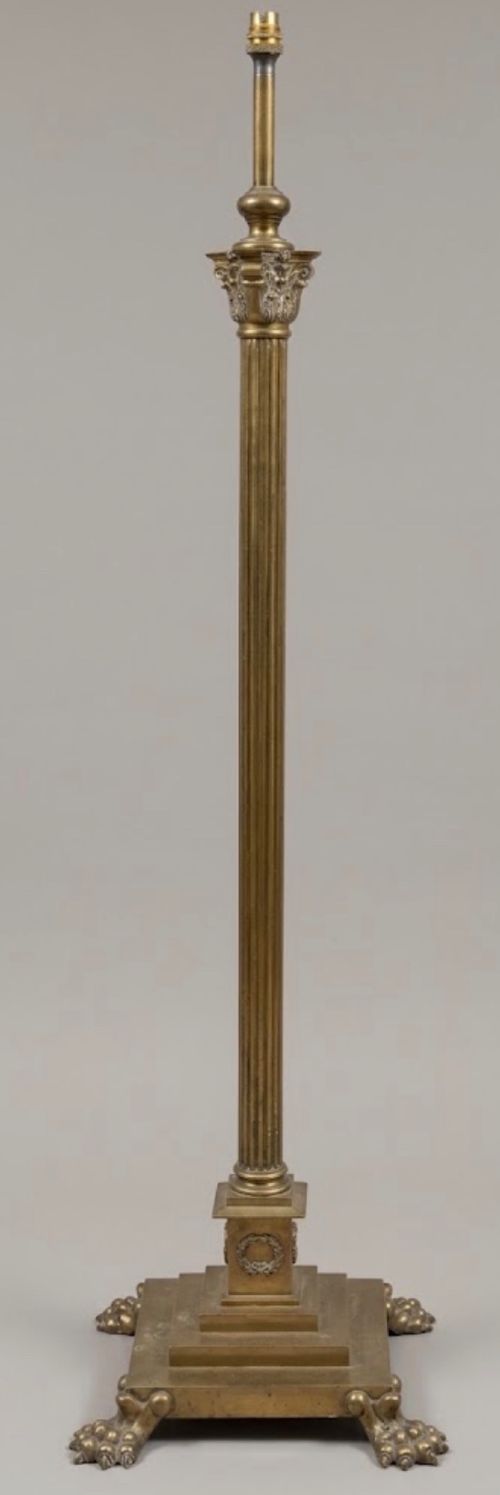
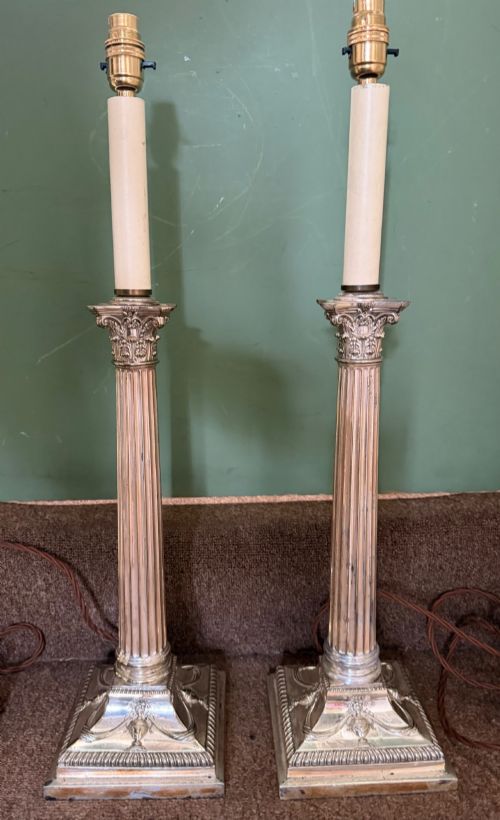
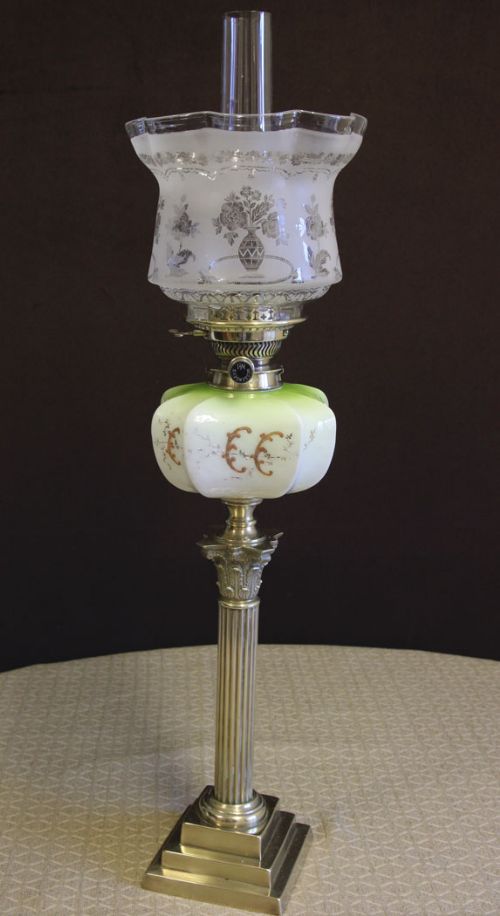
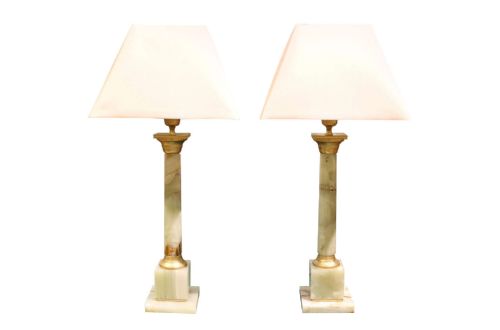
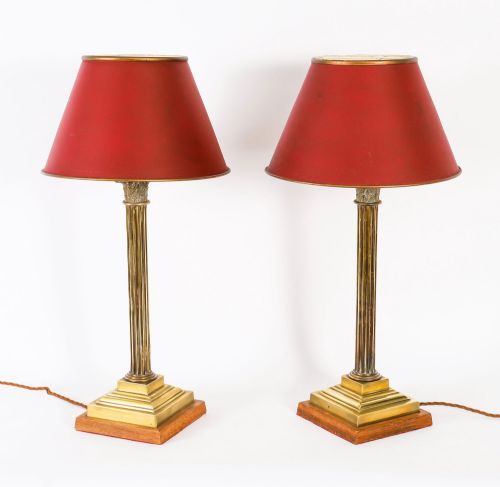
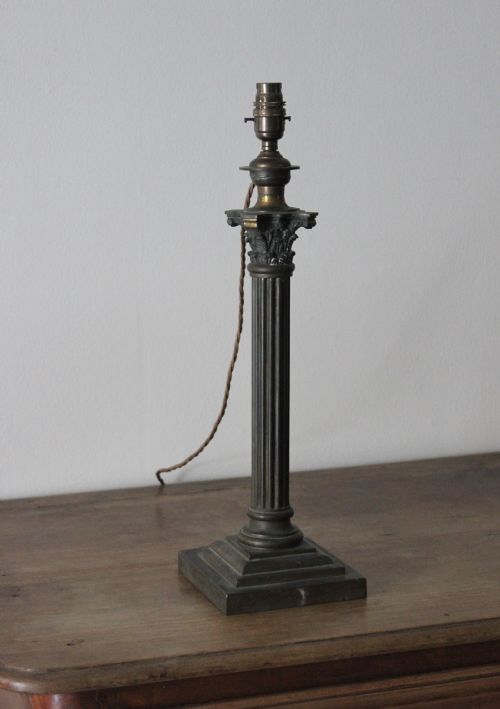
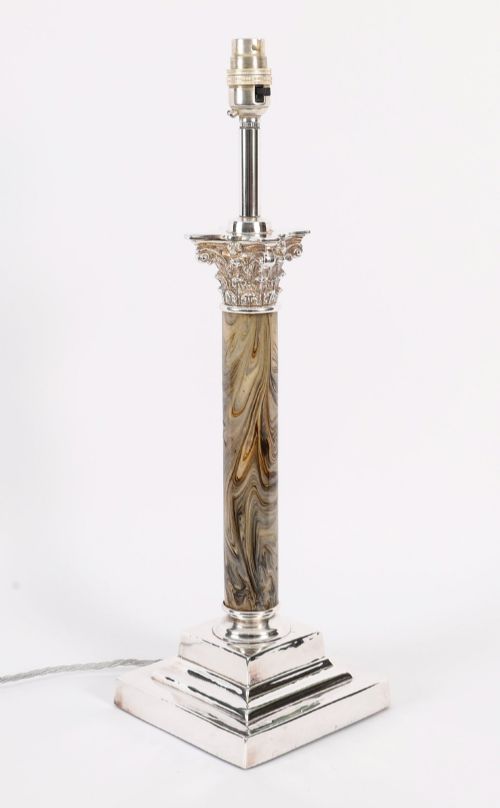
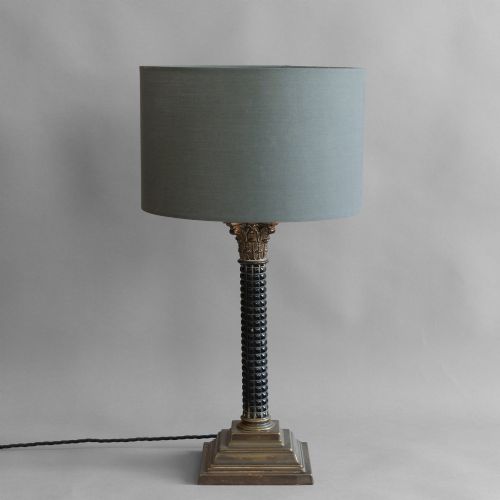
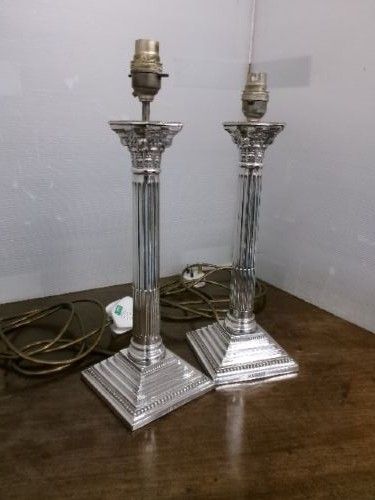
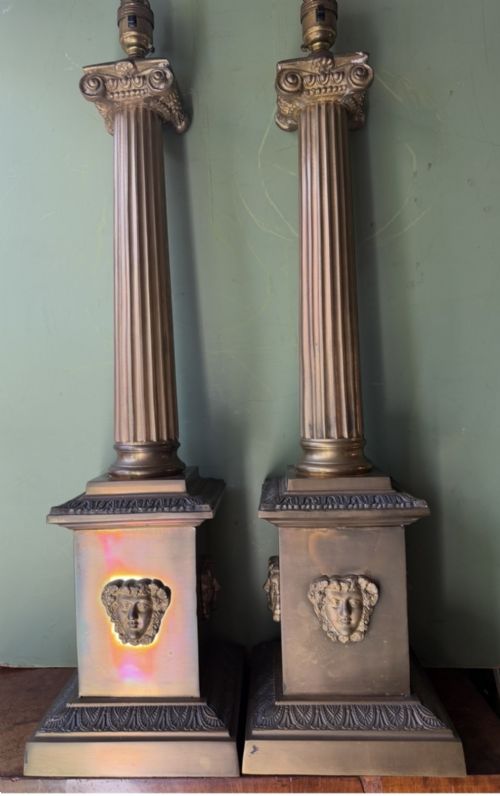
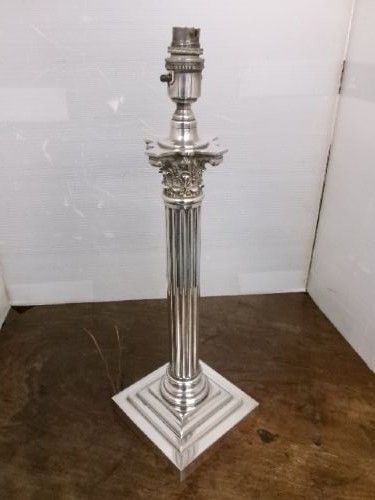
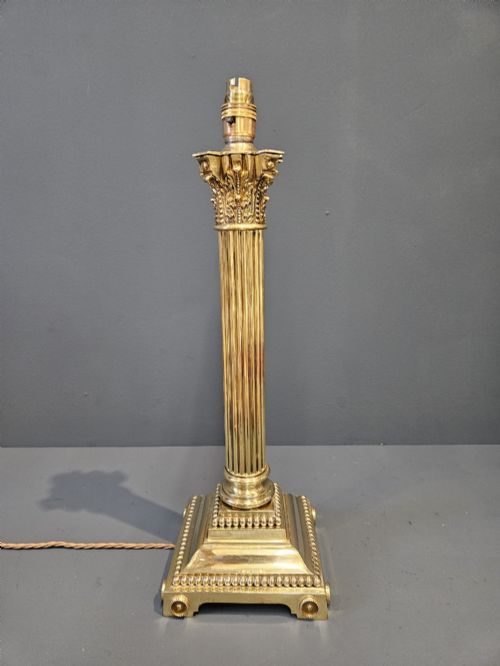
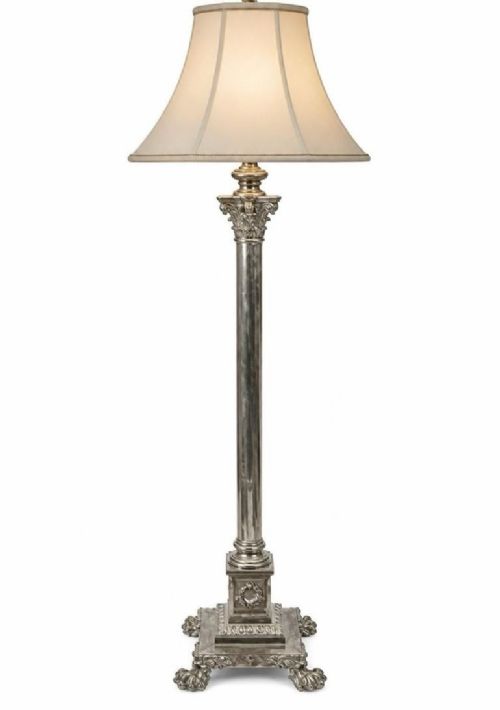
A classical corinthian lamp takes the fluted column and acanthus-leaf capital of ancient architecture and adapts it for interior illumination. You will most commonly encounter table lamps and standard lamps shaped as tall columns, often standing on stepped square bases or lion's paw feet.
The materials reflect domestic ambitions from the Victorian and Edwardian eras, combining metal shafts with heavy mineral plinths. Brass and silver plate dominate the column shafts, while bases frequently utilise marble, onyx or cast metal to provide stability for the height of the piece.
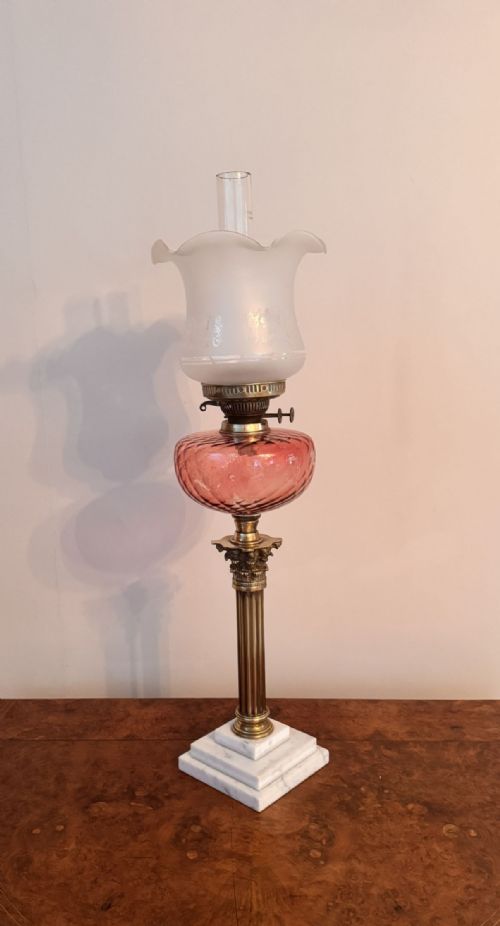
Many examples began life as oil lamps before later conversion to electricity, retaining original burners or reservoirs alongside modern wiring. You will also find standard lamps designed to stand directly on the floor, offering a commanding vertical presence in a study or drawing room.
How they were made
Foundries cast the column shafts in brass or formed them from sheet metal over a core, soldering the detailed acanthus capitals onto the top. Silver plating was applied over base metals using early electroplating methods, bonding a thin layer of silver to the brass body.
Bases incorporated heavy natural stones such as marble and onyx, turned on lathes and drilled to accept the central weighted rod that held the column together. Glass components, including font reservoirs and shades, were blown and sometimes coloured with minerals, such as cranberry glass.
Classical Corinthian Lamp Retail Price Guide 2026
Typical asking prices for classical corinthian lamp among the pieces listed under this phrase on Sellingantiques today, from the lower quarter to the upper quarter. They describe what is for sale here now, not the wider market.
Some heavy columns conceal old weighted sand inside their bases to keep a tall lamp from toppling over during lively Victorian tea parties.
What varies in quality
The crispness of the casting in the capital distinguishes finer examples from simpler production pieces, particularly the depth and undercut of the acanthus leaves. Sharp, well-defined foliage indicates skilled chasing and finishing after the metal left the mould.
Substance and proportion dictate the presence of a better lamp, evident in the gauge of the metal and the weight of the stone base. Heavier silver plating or solid brass construction provides durability and a deeper lustre that resists wear over generations.
Walker & Hall·Hinks of Birmingham·Goldsmiths and Silversmiths Company·Walter Latham & Son
The Classical Corinthian Lamp Glossary
- Capital
- The decorative uppermost member of a column, carved with acanthus leaves and scrolls in the Corinthian order. It forms the immediate support beneath the lamp fitting.
- Column
- A vertical structural element with a cylindrical shaft, fluted along its length to catch the light. In these lamps, the column houses the internal wiring or oil channel.
- Silver plate
- A thin layer of silver bonded to a base metal such as brass or copper. It was widely used during the Victorian period to give the appearance of solid silver.
- Onyx
- A banded variety of chalcedony or calcite used for the plinths and bases of lamps. Its translucent layers provide a polished, variegated stone foundation.
- Standard lamp
- A tall floor-standing lamp designed to illuminate a room from a vertical post. These pieces share the same architectural column design as the smaller table versions.
Classical Corinthian Lamp: Frequently Asked Questions
Were these lamps originally electric?
Most pieces originated as oil lamps or paraffin burners during the Victorian and Edwardian periods. They were subsequently converted to electricity during the twentieth century to suit modern homes.
Original burners and glass reservoirs are occasionally preserved alongside the electrical wiring. This dual heritage means components may show adaptations from different decades of use.
How do I date a brass column lamp?
Dating relies on combining the stylistic clues of the base, the weight of the metal and any maker's marks stamped onto the foot. Victorian examples often feature heavier castings and lion's paw feet.
Later Edwardian and 1920s pieces tended toward simplified casting methods and standardised fittings. Examining the threaded screws and internal rod construction also helps narrow the period of manufacture.
Where should I place a standard lamp?
A standard floor lamp suits corners of reception rooms or beside heavy seating where its height balances large pieces of furniture. The vertical column draws the eye upward, adding a sense of architectural proportion to the space.
Because these lamps have substantial marble or metal bases, they require a stable floor surface. Placing them away from main foot traffic protects both the silk shade and the slender shaft.
What is the difference between brass and silver plate?
Brass lamps display a warm golden alloy of copper and zinc that can be polished or left with a patinated surface. Silver plate applies a lustrous white coating over a brass or copper base metal.
Silver-plated versions were marketed as luxury items by prominent nineteenth-century retailers. Over time, polishing may reveal hints of the warm brass base beneath thin areas of silver.