
Classical Column Table Light
A classical column table light brings architectural proportion and steady illumination to a room, drawing on centuries of revival design.
Classical Column Table Light
A classical column table light adopts the vocabulary of ancient architecture, translating stone orders into domestic metalwork and ceramic forms. These pieces often originate as converted oil lamps or standard candlesticks adapted for modern wiring across the Victorian and Edwardian eras.
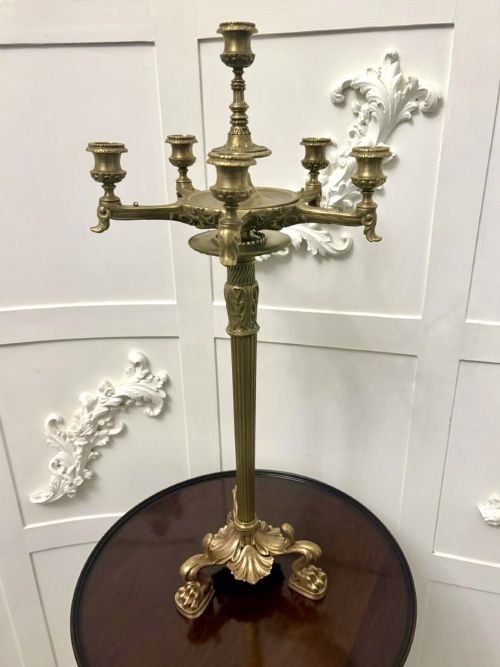
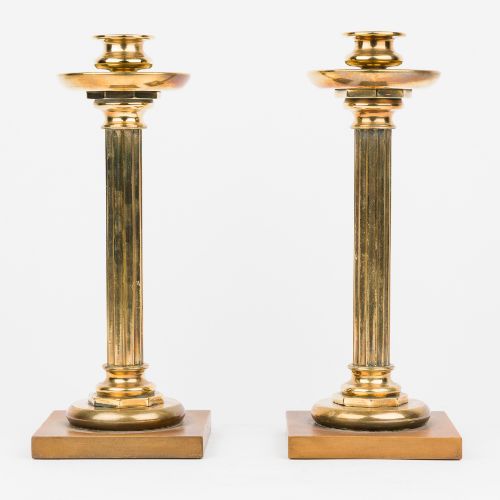
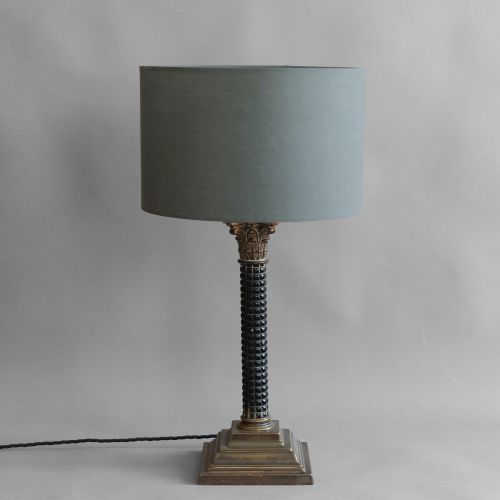
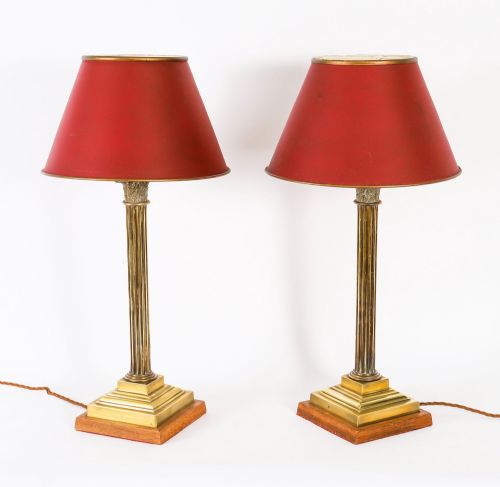
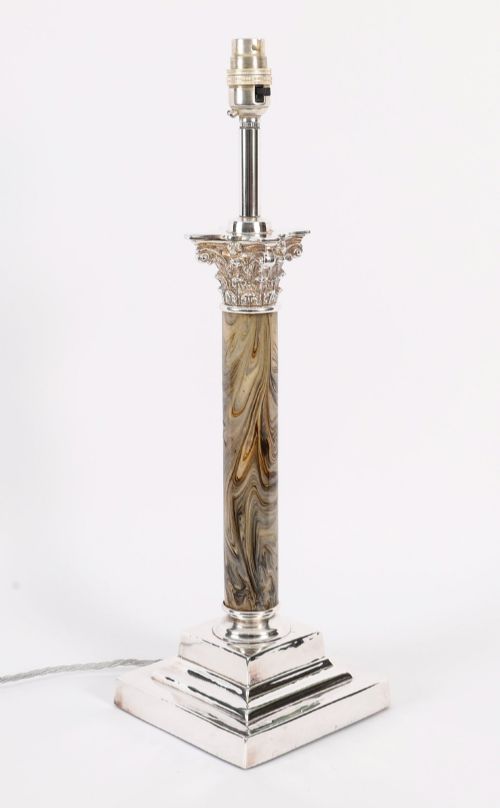
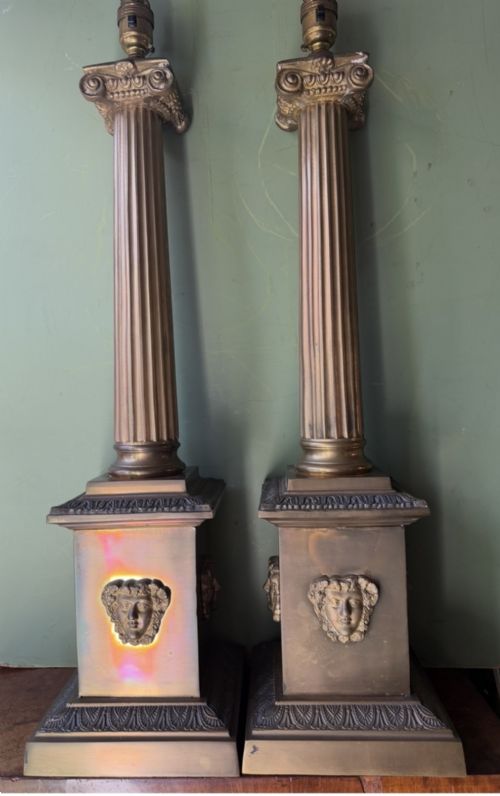
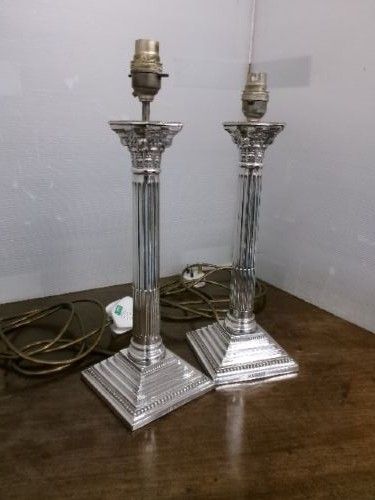
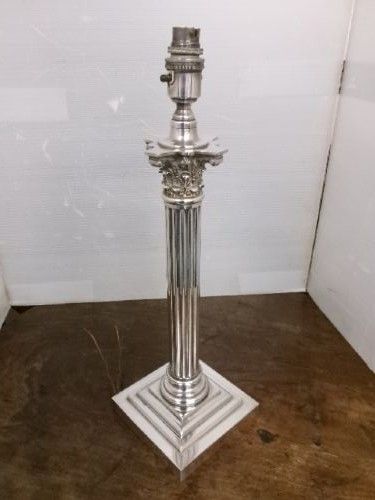
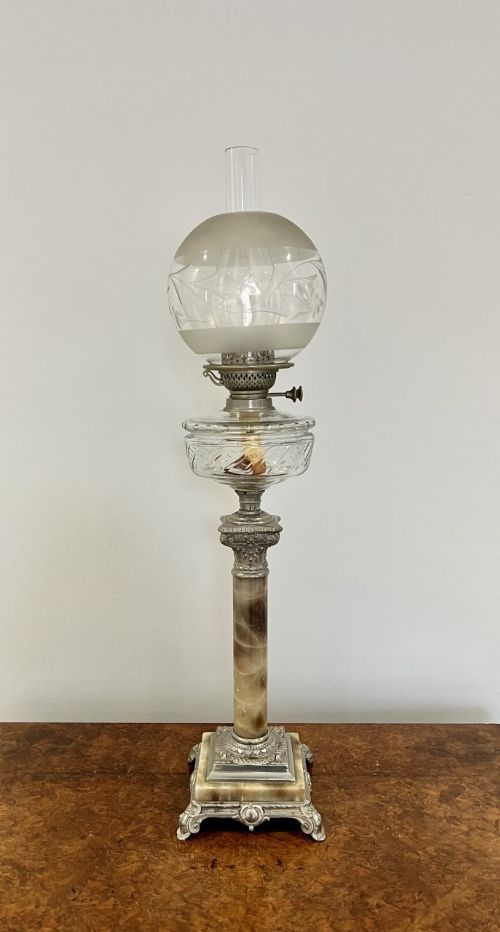
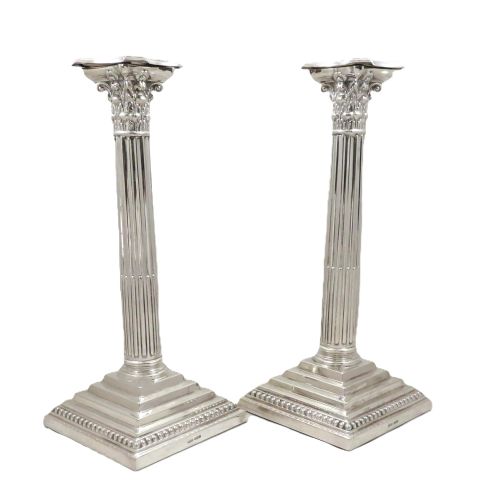
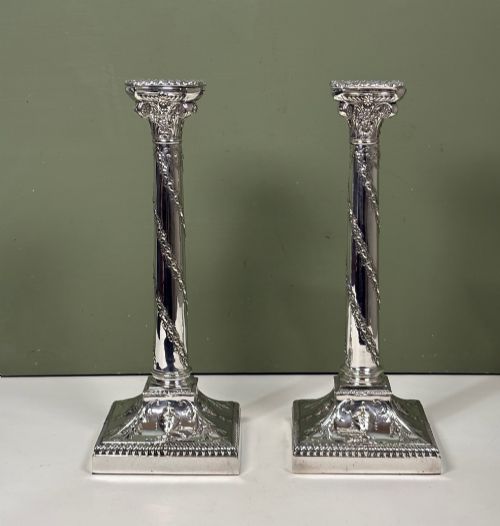
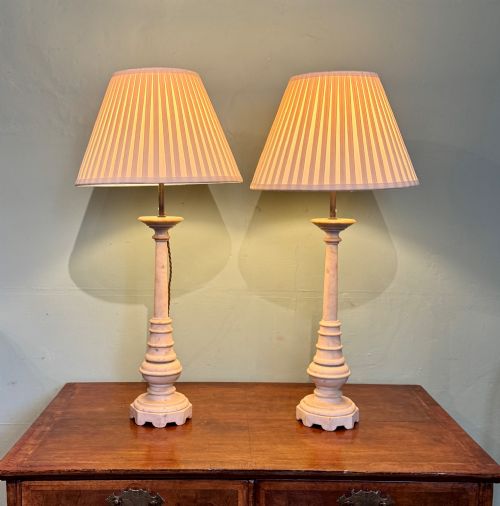
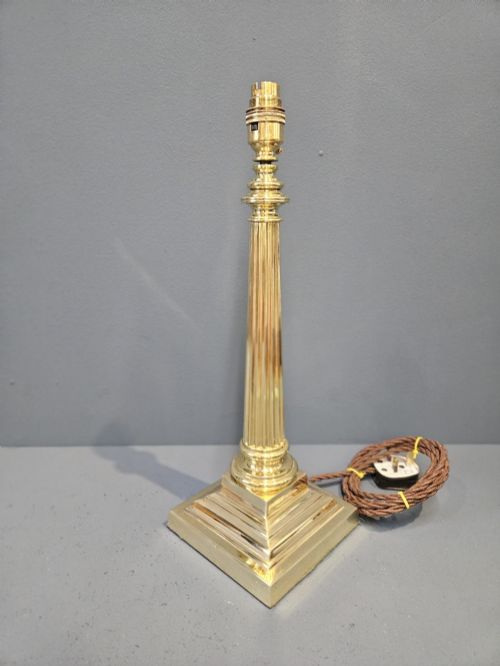
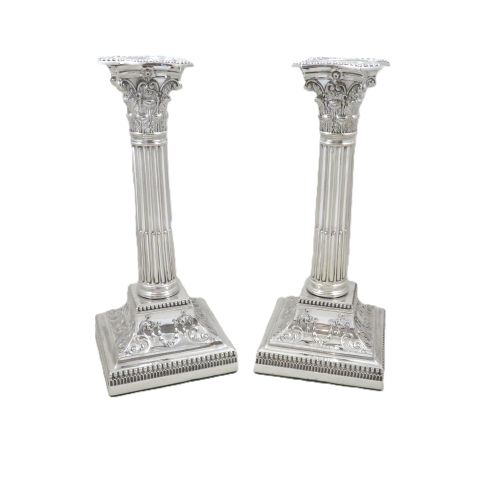
The most common version met on this page is the Corinthian column, cast in brass or coated in silver plate with detailed acanthus leaf capitals. Alongside these stand simpler Ionic designs and occasional marble or alabaster shafts mounted on stepped or lion-paw bases.
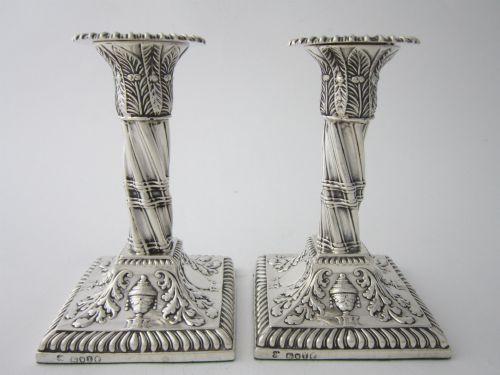
The materials span heavy cast brass, polished silver plate, sterling silver, and carved stone such as marble or alabaster. Many examples retain proportions suited to sideboards and desks, while taller pairs serve as substantial lighting for larger reception rooms.
Materials and construction
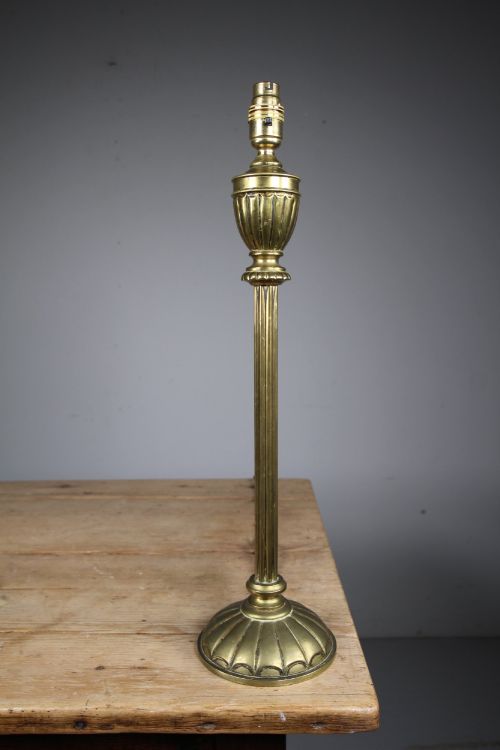
Metal columns are typically cast in sections, using brass or base metals finished with silver plate, then mounted on weighted bases for stability. Capitals and stepped plinths require careful chasing to render the delicate volutes and foliage of classical orders.
Stone variants utilise turned marble, onyx, or alabaster shafts paired with cast metal mounts and galleries. These components demand precise lathe work to achieve smooth, straight columns that align correctly with their metallic capitals and bases.
Listings feature brass, silver plate, sterling silver, and marble materials across Victorian and Edwardian periods.
Factors of quality
The crispness of the casting separates standard production from finer examples, visible in the depth and undercut detail of the acanthus leaves on a Corinthian capital. Sharply defined moulding and substantial metal gauge indicate superior craftsmanship.
Proportion and material weight also determine distinction, with heavier cast components and genuine silver plating or solid sterling silver marking out the better workshop outputs. The integration of original burner mechanisms or well-fitted collars distinguishes high-grade conversions.
The Classical Column Table Light Glossary
- Corinthian capital
- The uppermost decorative part of a column featuring carved or cast acanthus leaves and small volutes. It represents the most ornate of the classical orders seen on these lamps.
- Ionic column
- A classical architectural column style distinguished by scroll-shaped ornaments known as volutes on its capital. This design offers a slightly more restrained silhouette than the Corinthian variant.
- Silver plate
- A thin layer of silver fused to a base metal core such as brass or copper. This technique allowed makers to achieve the appearance of solid silver at a lower cost.
- Oil lamp
- A domestic lighting vessel that burned fuel through a wick before electricity became common. Many surviving examples later underwent conversion into table lamps.
Classical Column Table Light: Frequently Asked Questions
How do I date a brass column lamp?
Dating relies on stylistic details, manufacturing marks, and the method of construction used on the base and capital. Victorian examples often display heavier cast components and specific burner types compared to later Edwardian production.
Examining the wiring path and interior components also helps determine whether the conversion happened during the period of manufacture or at a later date.
Are these lamps converted from oil lamps?
Many of the brass and silver-plated examples began life as domestic oil lamps before receiving electrical fittings. Makers often retained the original burner galleries and reservoirs during the conversion process.
This heritage accounts for the substantial weight and proportions found in many tall column lamps from the nineteenth century.
What materials were used for the columns?
Makers utilised cast brass, silver plate on base metal, and sterling silver for metallic columns. Stone varieties incorporate carved marble, onyx, and alabaster paired with metal mounts.
Each material influences the overall weight and visual presence of the lamp on a piece of furniture.
How do I choose the right shade?
Selecting a shade involves balancing the height and diameter of the column with a proportionate fabric or silk cover. Traditional pairings often use neutral pleated shades that complement the classical metalwork without overwhelming it.
The fitter type on the lamp gallery will dictate which shade carriers or frames are required.