
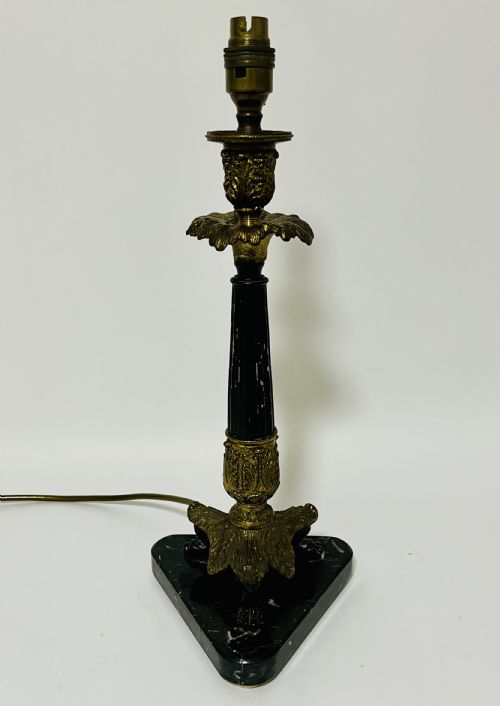


Classical Column Side Lamps
Classical column side lamps bring architectural proportion to a room, cast in heavy metal or marble and finished with fabric shades.
Classical Column Side Lamps
Classical column side lamps draw upon architectural motifs, taking the form of fluted shafts and Corinthian capitals adapted for domestic lighting. They emerge across the nineteenth and twentieth centuries in periods spanning the Victorian era, Edwardian years, and the Art Deco decades.
How they were made
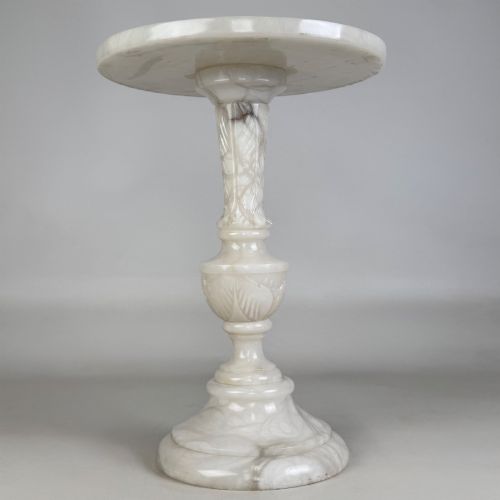
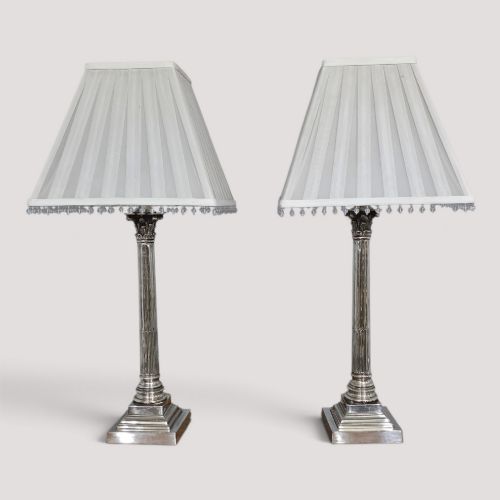
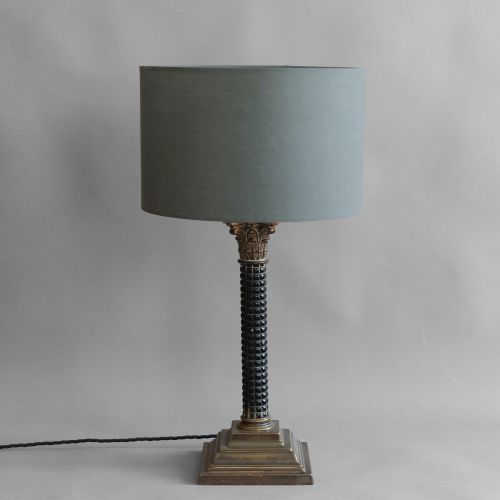
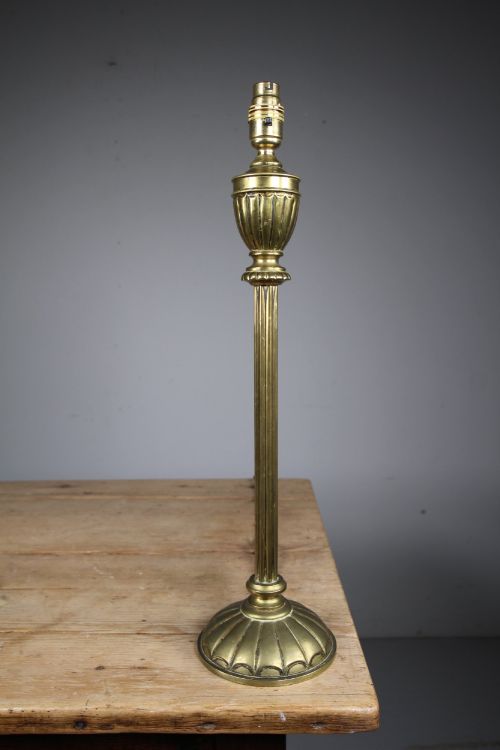
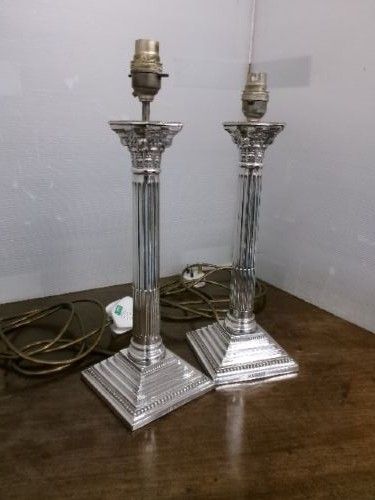
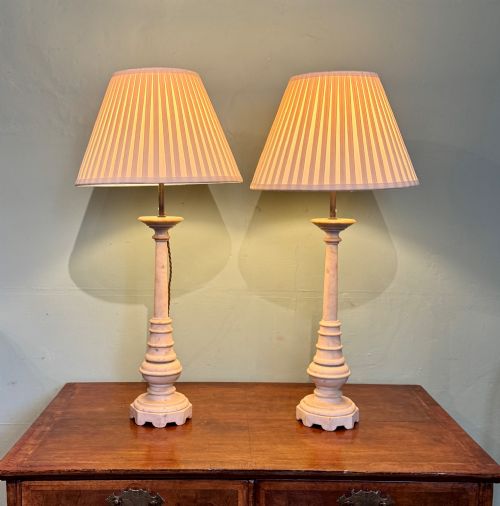
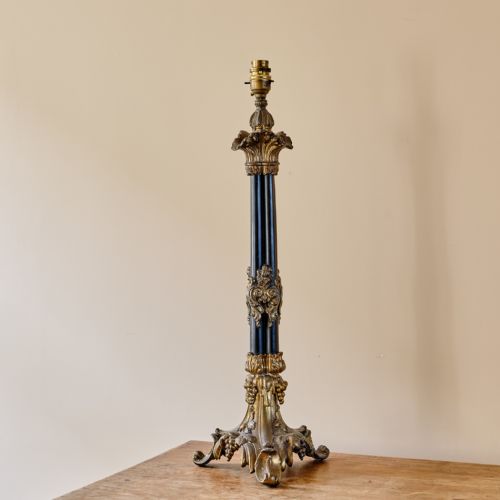
Makers constructed these pieces using solid brass, bronze, and ormolu, frequently applying silver plating over a base metal. Stone elements such as white marble and Italian alabaster provide heavy bases or shafts, anchoring the vertical form.
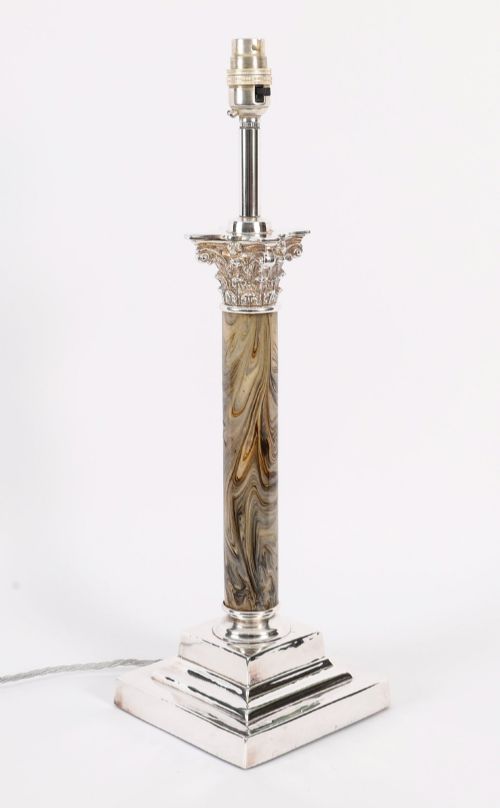
Ornamentation relies on cast details, including acanthus leaves on capitals and stepped plinths. Wiring is threaded through the central shaft, adapting earlier candlesticks or purpose-built lamp bodies for electrical use.
Some columns hide their electrical wiring so well they look like they were built by a Roman architect who discovered electricity.
What varies in quality
Quality rests upon the crispness of the casting in the capitals and the weight of the materials used. Heavy brass and thick silver plating demonstrate superior substance compared to lighter constructions.
Proportion and balance dictate the presence of quality, where the relationship between the column shaft, the capital, and the base exhibits deliberate design. The integration of contrasting materials, such as bronze paired with ormolu or white marble, marks the standard of the execution.
The Classical Column Side Lamps Glossary
- Corinthian column
- An architectural order featuring an ornate capital decorated with rows of acanthus leaves. This form serves as the primary shaft design for many lamps on this page.
- Ormolu
- Finely ground high-carat gold applied to a bronze base through a mercury amalgamation process. It provides a bright golden surface on French Empire and neoclassical pieces.
- Neoclassical
- A style reviving classical Roman and Greek motifs, visible in the symmetry and architectural columns of these lamps. It influences designs across the nineteenth and twentieth centuries.
- Alabaster
- A fine-grained, translucent stone used for lamp bodies and bases. It allows subtle light diffusion when placed near a bulb.
Classical Column Side Lamps: Frequently Asked Questions
What periods do these lamps come from?
The pieces span the nineteenth and twentieth centuries, encompassing Victorian, Edwardian, and Art Deco periods.
Craftsmen also produced designs referencing earlier Regency and French Empire styles during the 1900s and 1920s.
Are these lamps sold as pairs?
Many listings comprise matched pairs of silver-plated or brass Corinthian column lamps. Single table lamps also appear alongside pairs of bronze and ormolu examples.
Pairs typically originate from formal reception rooms where symmetrical lighting was placed on side tables.
What materials are used in the bases?
Bases incorporate heavy brass, silver plate, bronze, and ormolu. White marble and Italian alabaster frequently form the structural blocks or circular platforms.
These dense materials ensure the tall columns remain stable when fitted with fabric shades.
How do I identify a neoclassical design?
Neoclassical lamps display straight fluted columns, stepped square bases, and capitals derived from ancient temples. They avoid excessive curves in favour of strict symmetry and proportion.
This aesthetic links nineteenth-century revival pieces directly to classical architecture.