


Pair Silver Column Lights
Pair silver column lights bring architectural dignity and warm illumination to a room, spanning periods from the eighteenth century to the mid twentieth.
Pair Silver Column Lights
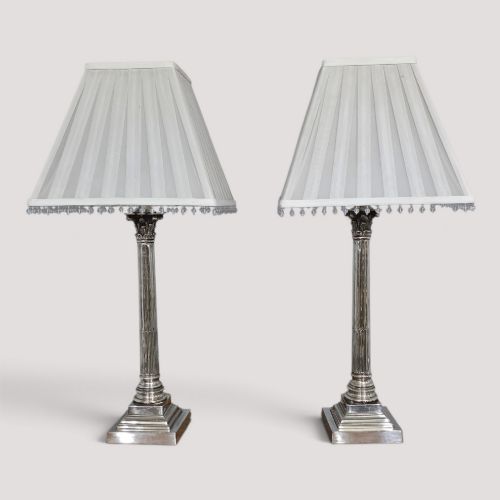
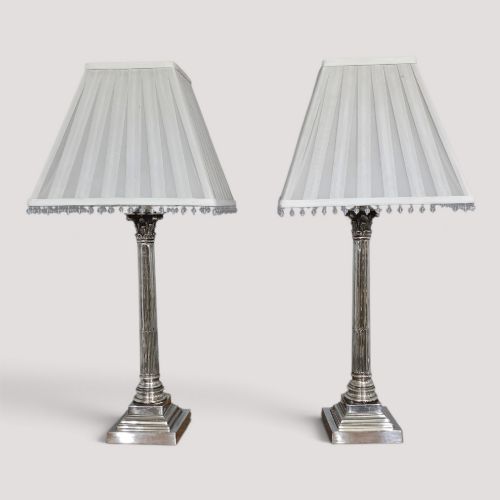
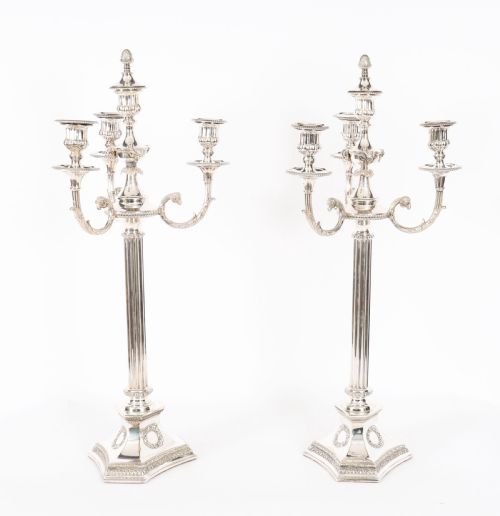
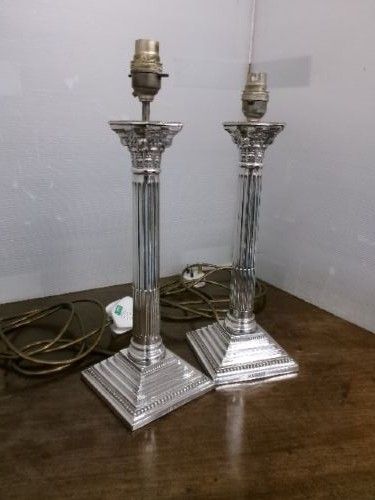
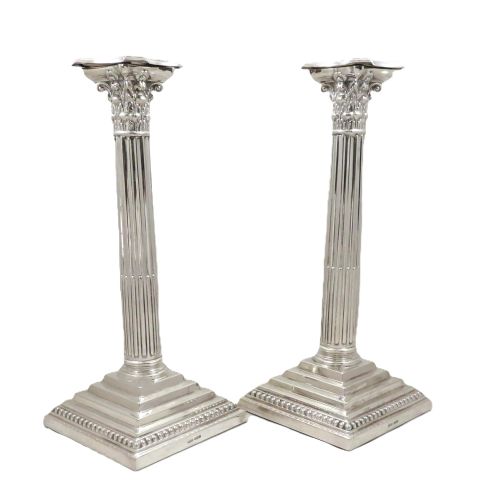
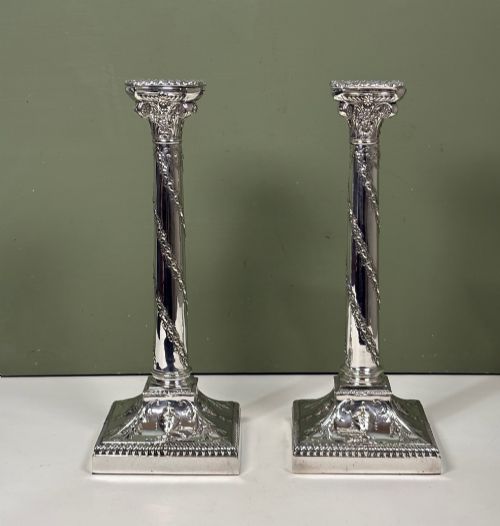
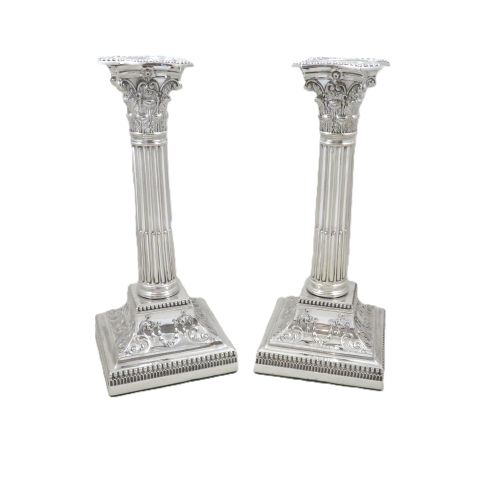
Pair silver column lights encompass candlesticks, candelabra, and converted table lamps modelled upon classical architectural orders. These pieces derive their form from ancient stone columns, translating masonry into gleaming metal for the domestic interior.
The most common examples encountered here take the form of silver plated Corinthian column table lamps and traditional candlesticks dating from the Victorian and early twentieth century eras. Georgian and eighteenth-century specimens appear alongside later revivals, offering choices from monumental proportions down to mantlepiece sizes.
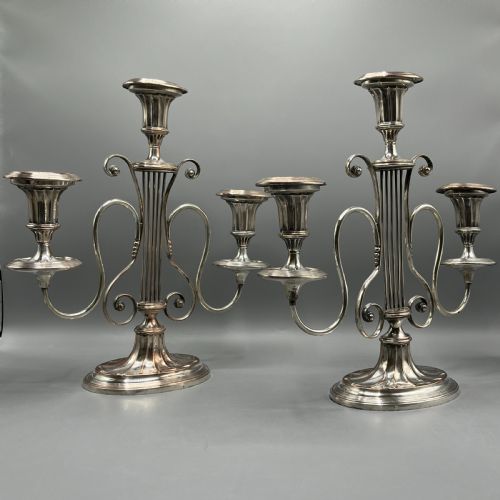
Makers utilised various forms including multi-light candelabra and single-stem sticks, sometimes incorporating fabric shades or prism drops. Each pair reflects the prevailing neoclassical taste of its period, whether Georgian, Victorian, or Art Deco.
How they were made
Construction relies primarily upon sterling silver, silver plate, and Old Sheffield plate over a supporting base of metal or copper. Silversmiths formed the fluted columns and detailed capitals through casting, stamping, or spinning metal sheet.
Older pieces utilise Old Sheffield plate, fusing a thin layer of silver to a copper core, while later items employ electroplating or solid sterling silver. Bases are often weighted with internal materials such as resin or wood to provide stability for the vertical shaft.
Some towering two-foot column lamps were originally designed to cast light across grand Victorian dining tables without blocking guests' view.
What varies in quality
Quality reveals itself in the crispness of the capital detailing, such as the acanthus leaves on a Corinthian order, and the proportional harmony of the column and base. Finer examples display sharp, hand-chased enrichment rather than soft, mass-produced stamping.
The integrity of the metal surface distinguishes superior items, where plating remains thick and even without exposing the underlying base metal. Weight, balance, and substantial gauge silver or plate further separate masterwork lighting from lighter commercial production.
Thomas Bradbury & Sons Ltd·William Hutton & Sons·Ferdinand Barbedienne
The Pair Silver Column Lights Glossary
- Corinthian column
- A classical architectural column style featuring ornate capitals decorated with rows of acanthus leaves. This form appears frequently on nineteenth and twentieth century candlesticks.
- Old Sheffield plate
- An early composite material made by fusing a sheet of silver to a thicker copper ingot before rolling. This technique was largely superseded by electroplating in the nineteenth century.
- Candelabra
- A branched lighting fixture designed to hold multiple candles upon a single central stem and base. They range from small mantlepiece pairs to large monumental table pieces.
- Sterling silver
- A silver alloy containing ninety-two point five percent silver by mass and seven point five percent other metals, usually copper. Hallmarks stamped into the metal verify this standard.
- Pricket candlestick
- A style of candlestick featuring a sharp central spike to secure the base of a candle rather than a socket. They often appear in ecclesiastical or revival designs.
Pair Silver Column Lights: Frequently Asked Questions
How do I date pair silver column lights?
Dating relies upon hallmarks stamped into sterling silver pieces, which indicate assay offices and specific years of production. Stylistic clues, such as the proportions of the column and the manufacturing method of the plating, help determine age when marks are absent.
Silver plate and Old Sheffield plate items often lack standard hallmarks, requiring visual examination of the seams, base construction, and wear patterns. Comparing the capital design to known neoclassical revival periods narrows down the decade of manufacture.
Were these converted into table lamps?
Many column lights originally designed for candles underwent conversion to electricity during the twentieth century. This process typically involved running wiring through the central core and mounting lamp fittings to the top.
Original candlesticks often retain their removable nozzles, whereas converted table lamps have fixed electrical components. Collectors assess whether conversions preserve the structural integrity of the antique metalwork.
How should I clean silver plated lights?
Cleaning requires a soft microfiber cloth and a mild silver polish formulated specifically for plated surfaces. Vigorous rubbing must be avoided to prevent wearing through thin silver plating to the base metal underneath.
Regular dusting with a dry cloth prevents tarnish accumulation in the deep flutes of the columns. Professional conservation is advisable for fragile Old Sheffield plate or items with delicate chased details.