


Corinthian Pillar Lamps
Corinthian pillar lamps bring classical dignity and stately height to a room, cast in heavy brass, silver plate, or carved wood.
Corinthian Pillar Lamps
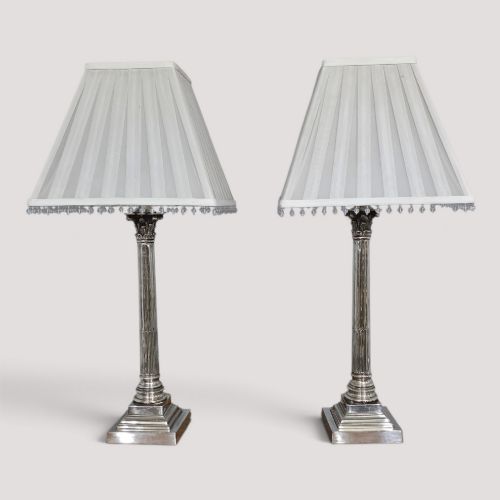
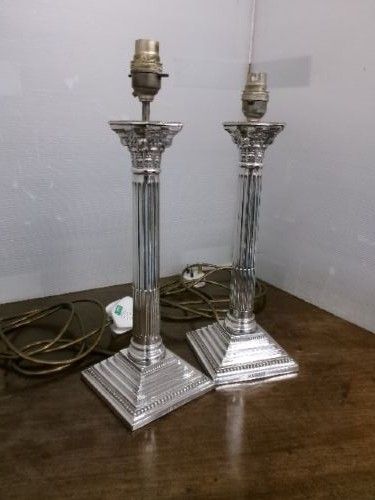
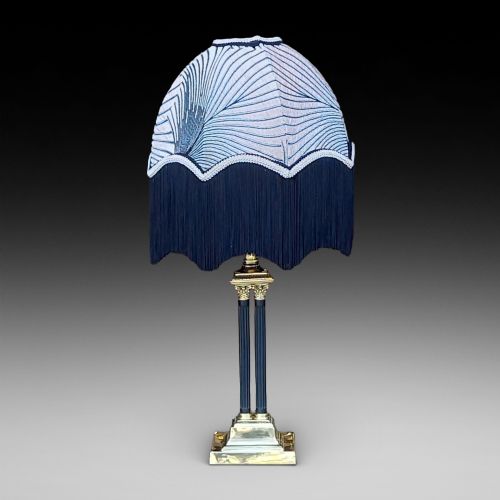
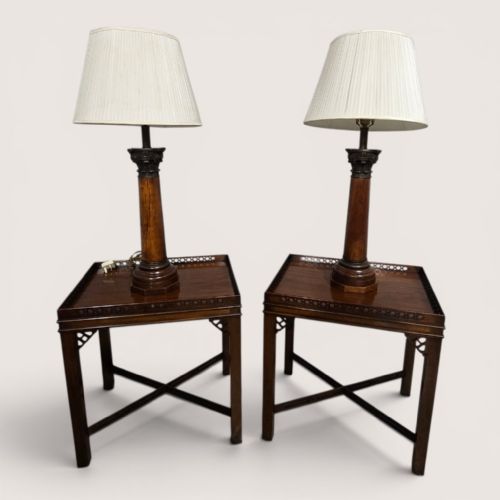
When you search for corinthian pillar lamps, you are looking at table lamps and lamp bases shaped like classical columns with ornamented capitals. These pieces borrow heavily from ancient architecture, translating stone orders into domestic lighting.
The versions you are most likely to meet on this page date from the nineteenth century and the early decades of the twentieth century. They appear in brass, silver plate, carved wood, and occasionally glass, spanning styles from Victorian neoclassicism to Edwardian and continental baroque.
Makers built these items to dominate a sideboard or desk, often pairing them as matching sets. Their proportions rely on strict architectural ratios, which gives them a commanding presence regardless of their specific decade of manufacture.
How they were made
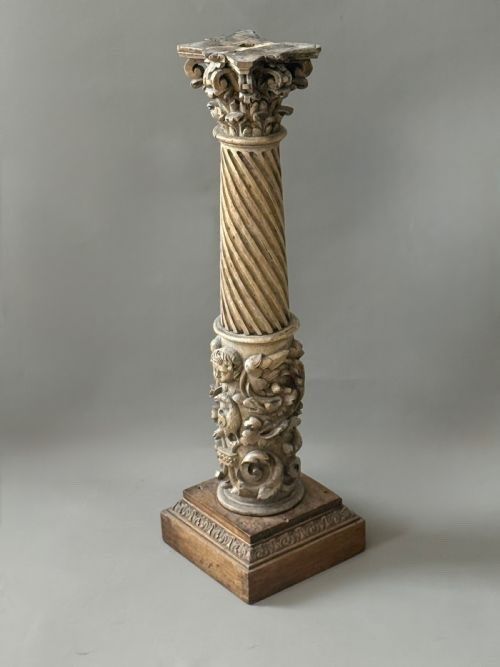
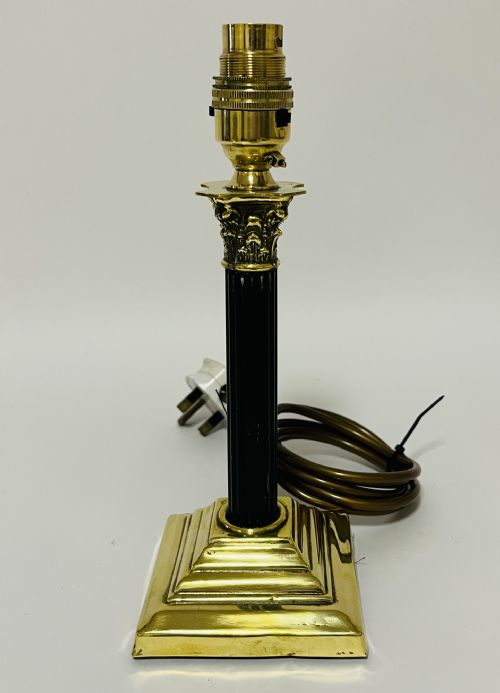
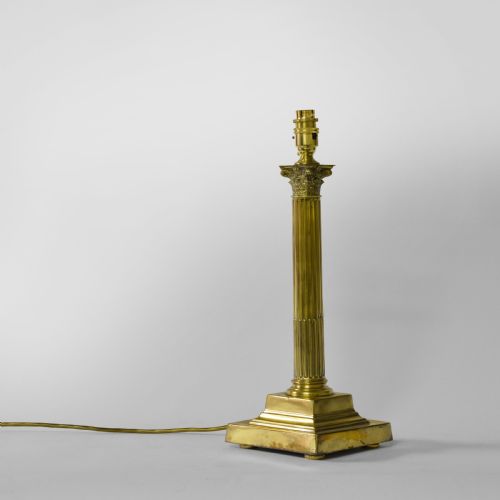
Makers constructed these bases using cast brass, patinated brass, or heavy silver plate over a base metal, frequently mounting them on stepped square plinths. Some examples incorporate carved oak or other carved wood to achieve their substantial weight and architectural silhouette.
The capital displays the characteristic acanthus leaves and volutes of the classical Corinthian order, cast with varying degrees of sharpness and relief. Assembly involved joining the column shaft to the base and capital using threaded internal rods, securing the heavy components together.
Some seventeenth-century wooden pillars began life supporting entirely different domestic structures before finding a second career as towering table lamps.
What varies in quality
Quality rests primarily on the crispness of the casting in the acanthus leaf capitals and the weight of the underlying metal or wood. Superior examples maintain sharp detail in the foliate decoration without blurring or softness from worn production moulds.
Proportion and scale separate standard domestic lighting from monumental pieces, with heavier gauge metals and thicker silver plating indicating higher grade manufacture. The integrity of the stepped plinth and the alignment of the column shaft further distinguish finer workshop output.
Walter Latham & Son
The Corinthian Pillar Lamps Glossary
- Capital
- The uppermost member of a column, decorated here with acanthus leaves and scrolls in the Corinthian manner. It forms the visual crown of the lamp base.
- Plinth
- The flat, stepped block at the base of the column that provides stability and grounds the architectural form. It is often weighted to support the height of the shaft.
- Silver plate
- A thin layer of silver bonded to a base metal such as brass or copper, providing a bright reflective finish. It requires careful cleaning to preserve the underlying metal.
- Neoclassical
- A revival style drawing inspiration from the classical art and architecture of ancient Greece and Rome. This aesthetic governs the proportion and ornament of these pillars.
- Volute
- The spiral scroll ornament found on the capital corners of a Corinthian column. It adds sculptural movement to the top of the lamp.
Corinthian Pillar Lamps: Frequently Asked Questions
How do I date a corinthian pillar lamp?
Dating relies on material composition, switch mechanisms, and the style of the base plinth. Victorian and nineteenth century examples often feature heavier brass castings and simpler stepped wooden or metal bases.
Later pieces from the nineteen-twenties and thirties can show lighter construction or different plating techniques. Examining the wiring channels and construction screws also helps determine the manufacturing period.
Are these lamps usually found in pairs?
Many examples survive as matched pairs, particularly those finished in silver plate or cast brass. Makers originally produced them to flank a fireplace or sit at opposite ends of a long sideboard.
Single lamps are also common, having been separated over decades of domestic use. Pairs tend to command stronger interest for formal interior settings.
What metals were used for these bases?
The primary metals include cast brass, patinated brass, and silver plate over a supportive base core. Some exceptional variations incorporate sterling silver or carved wood to achieve their distinctive form.
Each metal creates a different visual weight and reacts distinctively to light in a room. Brass offers a warm metallic tone, while silver plate provides a brighter reflective surface.
How do I fit a shade to a pillar lamp?
Selecting a shade requires balancing the substantial height and weight of the column. Traditional pleated fabric shades complement the classical proportions without overwhelming the capital detail.
Fittings usually require a standard shade carrier or harp secured beneath the bulb holder. The diameter of the shade should match the footprint of the base plinth for visual harmony.