




Classical Cast Iron Planters
Classical cast iron planters bring architectural presence to garden terraces, offering durable utility rooted in nineteenth-century designs.
Classical Cast Iron Planters
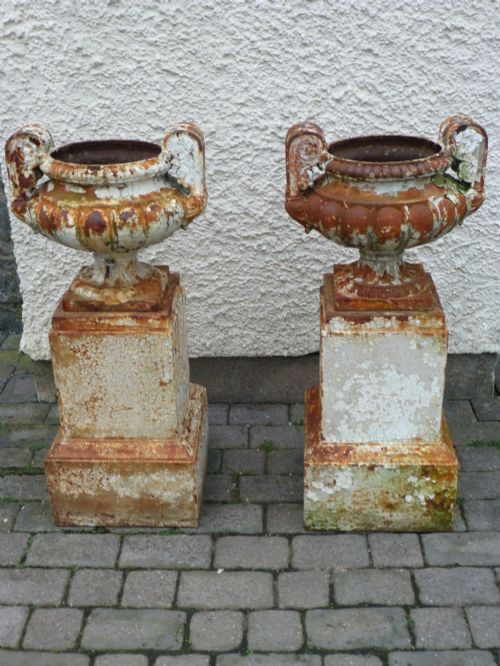
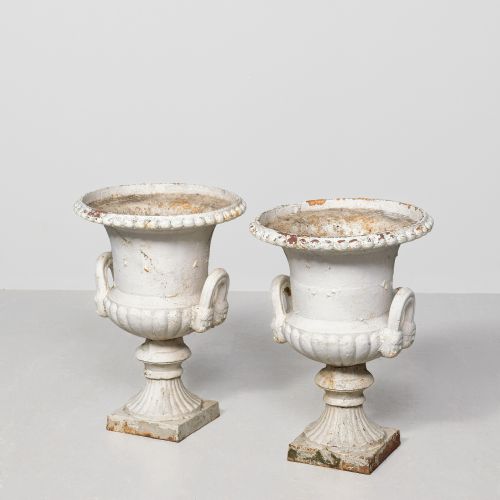
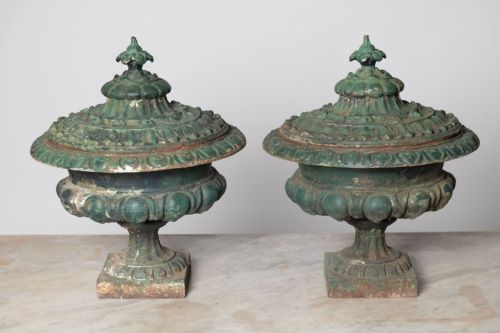
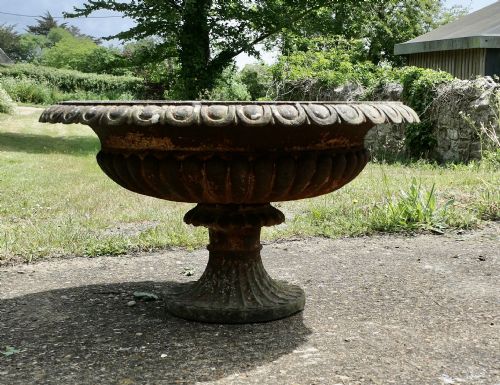
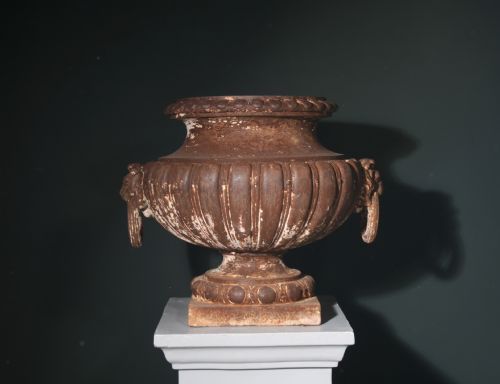
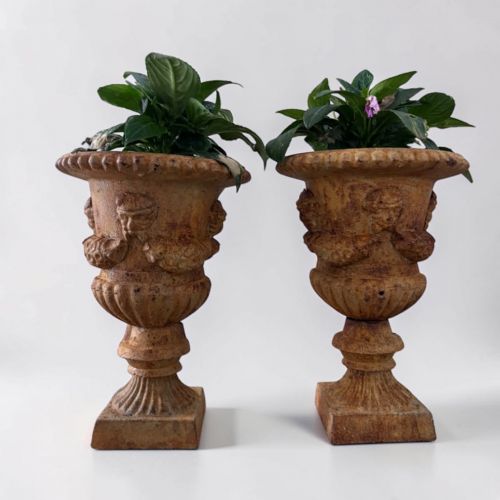
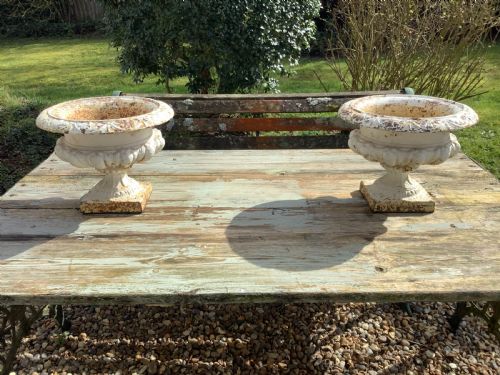
These classical cast iron planters span garden urns, tazza urns, and jardinieres, frequently paired with matching plinth bases or stone pedestals. Such vessels originate predominantly from the nineteenth century, including Victorian, Regency, and Edwardian periods.
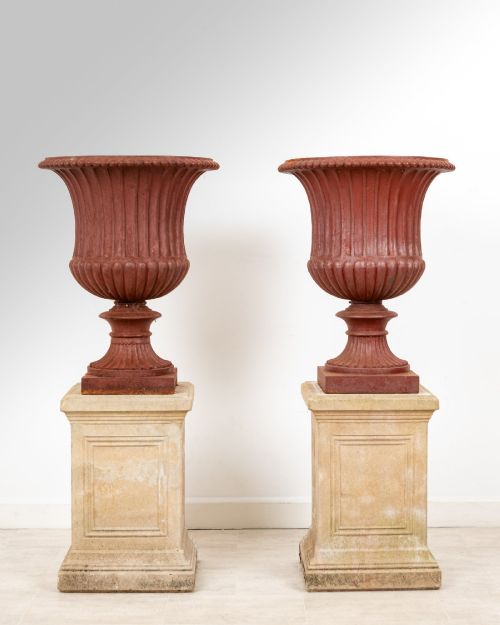
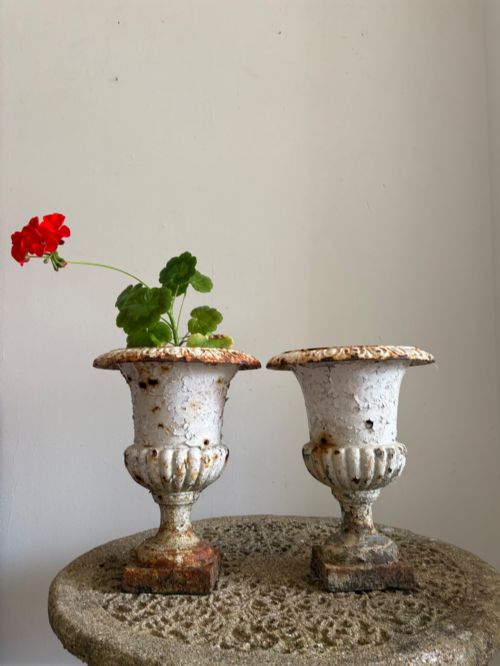
The campana shape dominates current selections, appearing alongside gadrooned bodies and acanthus leaf ornamentation. Buyers commonly encounter matching pairs designed to anchor garden pathways, porticos, or terrace steps.
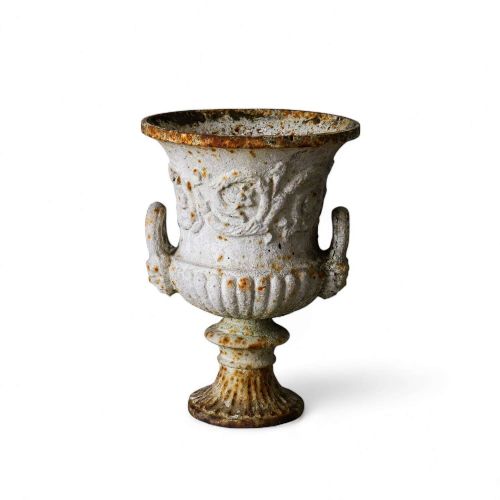
French and English foundries produced these decorative vessels to withstand outdoor elements while displaying formal classical revival motifs. The inventory balances substantial garden statuary with smaller table-top urn variations.
Manufacturing materials and techniques
Foundries utilised heavy cast iron poured into intricate sand moulds to achieve crisp classical relief work, such as acanthus leaves and gadrooning. This durable metal often carries layers of historic paint, ranging from weathered surfaces to original distressed coatings.
Many heavy garden urns sit upon integrated plinth bases or separate stone pedestals, combining cast metal with stone or hardwood elements. The casting process allowed workshops to replicate monumental stone forms in robust iron.
Even heavy garden urns occasionally double as table-top conversation pieces, proving that nineteenth-century foundries catered to both grand lawns and compact parlours.
Assessing quality and craftsmanship
Superior examples exhibit sharp, deep casting definition in classical details like foliage and fluting, whereas lesser pieces show softened edges from worn moulds. The presence of original matching lids, bases, or stone pedestals elevates a pair significantly.
Foundry attribution heavily influences desirability, with documented pieces from notable makers commanding stronger interest than unmarked domestic castings. Original paint surfaces and balanced weathering add character without compromising the structural integrity of the heavy iron.
Falkirk Carron foundry·Coalbrookdale·Andrew Handyside·Val d'Osne Foundry
The Classical Cast Iron Planters Glossary
- Campana
- A bell-shaped garden urn with a flared rim, frequently mounted on a short stem and square foot. This classical silhouette forms the basis of many nineteenth-century garden vessels.
- Tazza
- A shallow cup or bowl-shaped vessel elevated on a high stem and base. Victorian examples often served as ornamental garden planters.
- Gadrooned
- Decorated with a series of convex vertical curves or flutes. This ornamental carving appears frequently around the bodies of classical iron urns.
- Plinth base
- A heavy rectangular or square block supporting an urn or statue. These raise garden planters off the ground for better visual balance.
- Jardiniere
- An ornamental pot or stand designed to hold growing plants or flowers. These vessels mirror the classical motifs seen on larger garden urns.
Classical Cast Iron Planters: Frequently Asked Questions
How do I date an iron urn?
Dating relies on stylistic clues, foundry marks, and construction methods. Nineteenth-century pieces often display registration numbers, maker stamps, or distinct classical revival proportions.
Heavier sand-castings and original lead-based paint layers further indicate nineteenth-century production before twentieth-century mass manufacturing.
Can these planters stay outside?
Cast iron withstands outdoor weathering remarkably well when properly maintained. Many nineteenth-century examples spent their entire lives exposed to garden elements.
Protecting the interior with suitable lining helps prevent moisture accumulation and preserves the structural integrity of the metal.
Are original pedestals necessary?
Original plinths and stone pedestals complete the architectural composition intended by the foundry. Matching pairs retain higher interest when they keep their original mounting bases.
However, many urns adapt successfully to alternative stone or masonry pedestals in contemporary garden settings.