


Classical Carved Relief Panel
A classical carved relief panel brings myth and history into a room through sculpted timber and stone.
Classical Carved Relief Panel
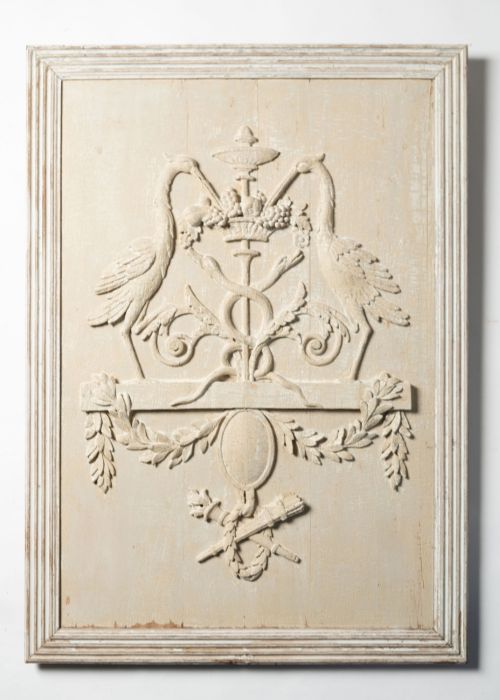
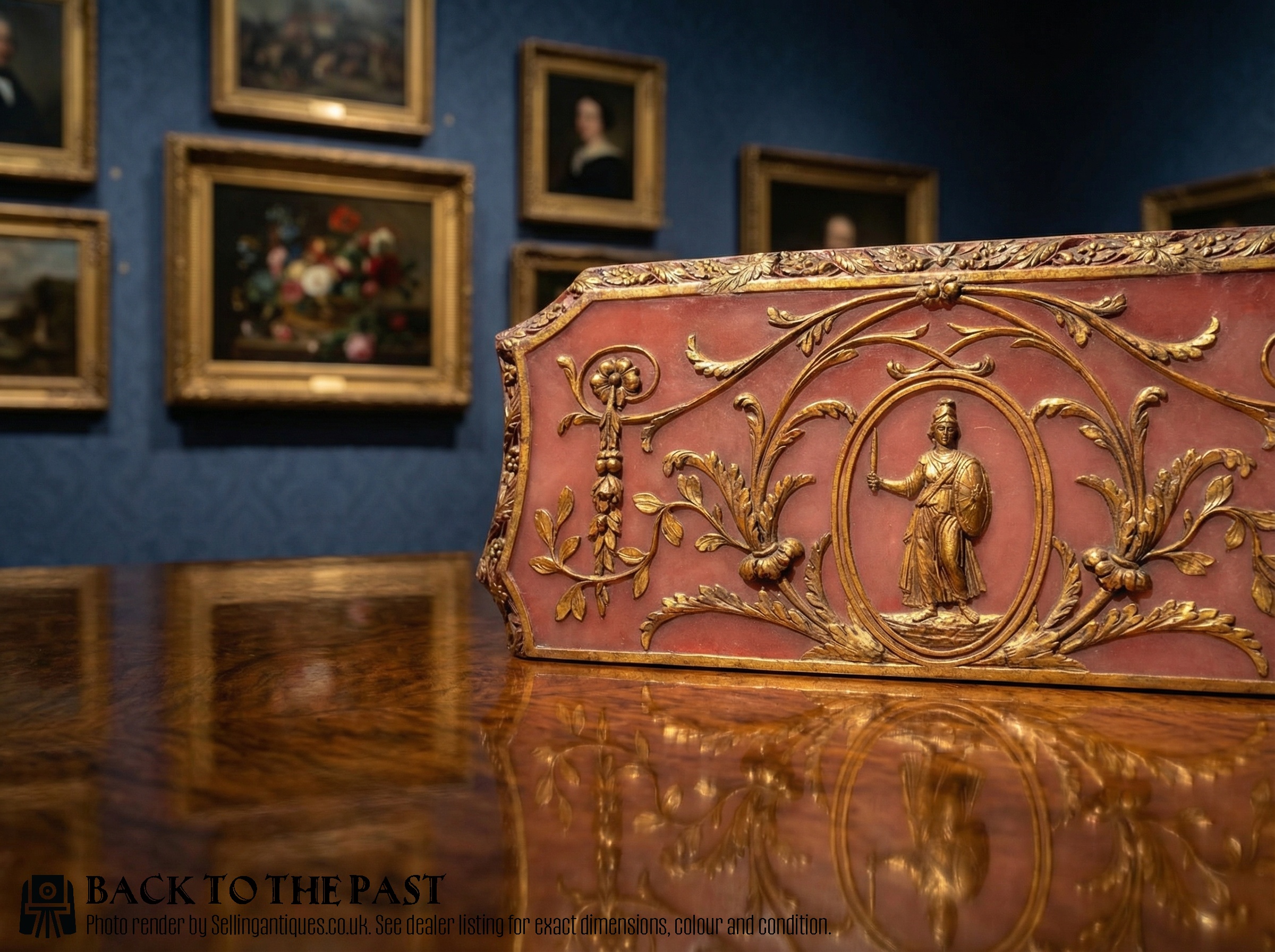
A classical carved relief panel takes many sculptural forms on this page, including wall plaques, framed griffin sculptures, and over-door panels depicting figures and scenes. These works draw directly on antique motifs, emerging in walnut, oak, painted wood, and white marble.
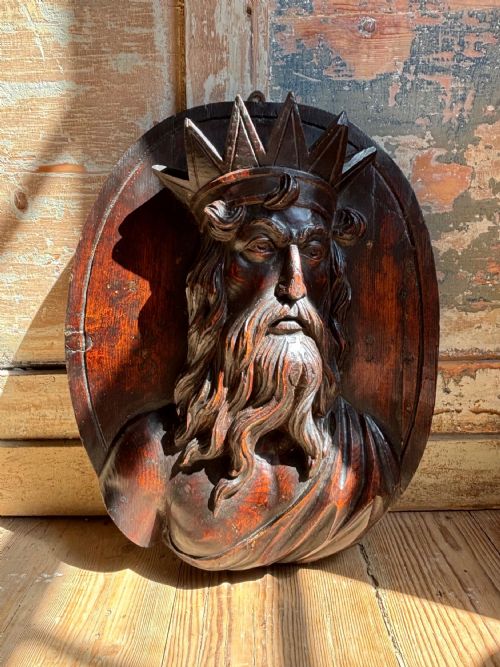
Most examples hail from the eighteenth and nineteenth centuries, spanning neoclassical, renaissance revival, baroque, and Victorian classical revival styles. Buyers encounter everything from large seventeenth-century plaques depicting deities like Neptune to nineteenth-century Italian walnut cabinets and terracotta friezes of dancing maidens.
Makers ranged from anonymous provincial workshops to signed individual sculptors such as Kasper Hendrik Roskam. Their creations functioned as standalone wall art, cabinet doors, and architectural over-doors designed to elevate domestic interiors.
Materials and construction methods
Carvers worked primarily in dense hardwoods like walnut and oak, alongside softer timbers that accepted intricate chisel work for architectural over-doors and wall panels. Gilded wood and painted finishes frequently highlighted the relief work, adding depth and contrast to the sculpted surfaces.
Sculptors also utilised white marble, carved stone, and terracotta to execute high-relief figures of nudes, classical scenes, and mythological beasts. These stone and clay pieces required precise modeling and hand-chiseling before being set into frames or integrated directly into furniture such as cabinets on stands.
Neptune glowers from an eighteenth-century wooden plaque while stone nudes and dancing maidens cavort nearby.
Judging the quality of carved relief panels
The distinction between ordinary and superior pieces rests on the depth of the carving and the anatomical understanding of the figures. Master carvers achieved crisp undulations in drapery and lifelike musculature in human and mythological subjects, whereas lesser workshops produced flat, repetitive contours.
Material selection also dictates distinction, with finely grained Italian walnut and unblemished white marble commanding greater visual presence than softer painted woods. Original integration into period furniture like large cabinets further separates bespoke architectural components from later adaptations.
Kasper Hendrik Roskam
The Classical Carved Relief Panel Glossary
- Relief sculpture
- A sculptural technique where the sculpted elements remain attached to a solid background of the same material. High relief projects boldly from the background, while low relief sits much closer to the plane.
- Neoclassical
- A Western cultural movement drawing on the art and culture of ancient Greece and Rome. This style dominates many nineteenth-century panels and plaques.
- Terracotta
- Unglazed, fired clay used for sculptural friezes and reliefs. It allows the artist to capture rapid, fluid modelling before the firing process hardens the material.
- Over-door
- An architectural panel, painting, or relief sculpture positioned directly above a doorway. These pieces often feature horizontal classical scenes or mythological figures.
Classical Carved Relief Panel: Frequently Asked Questions
How were these panels originally displayed?
Many of these pieces functioned as architectural over-doors, wall plaques, or decorative elements mounted directly into large cabinets on stands.
Others were framed simply as standalone wall art to bring sculptural myth and history into formal rooms.
What is the difference between marble and wood reliefs?
Marble and terracotta reliefs utilise stone and clay to capture crisp details in figures and classical scenes, often associated with nineteenth-century Italian and Victorian workshops.
Wood reliefs rely on walnut and oak, showing the grain and chisel marks left by eighteenth and nineteenth-century carvers.
Are these panels from the eighteenth or nineteenth century?
The selection includes substantial pieces dated to the eighteenth century, such as large wooden panels and plaques depicting figures like Neptune.
A large portion of the inventory spans the nineteenth century, reflecting revival styles from neoclassical to baroque.
How do I identify neoclassical style in these carvings?
Neoclassical pieces draw heavily on ancient Greek and Roman motifs, featuring subjects such as dancing maidens, nudes, and mythological creatures.
The carving prioritises symmetry, balanced composition, and classical drapery over the more flamboyant curves of earlier baroque work.