





Classical Campana Planter
A classical campana planter brings enduring neoclassical symmetry to a garden or terrace, offering an inverted bell silhouette designed to showcase trailing foliage.
Classical Campana Planter
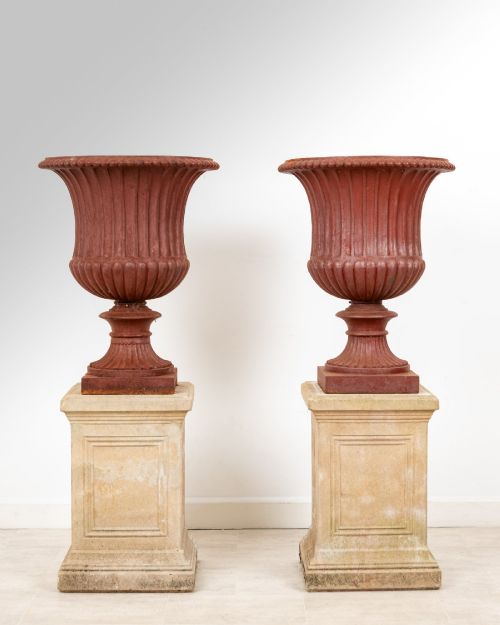
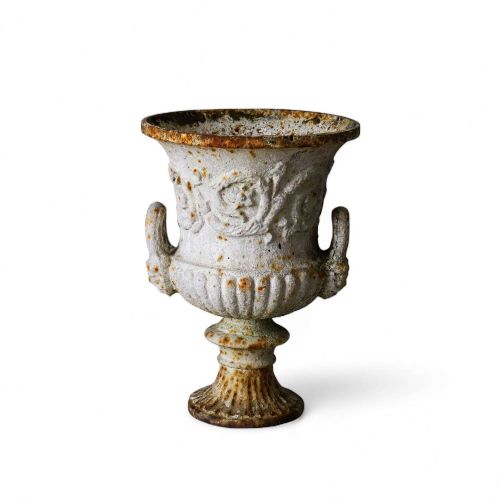
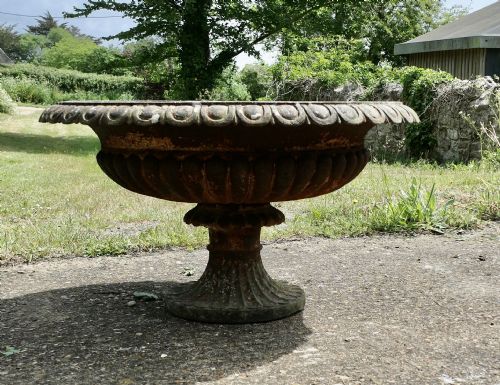
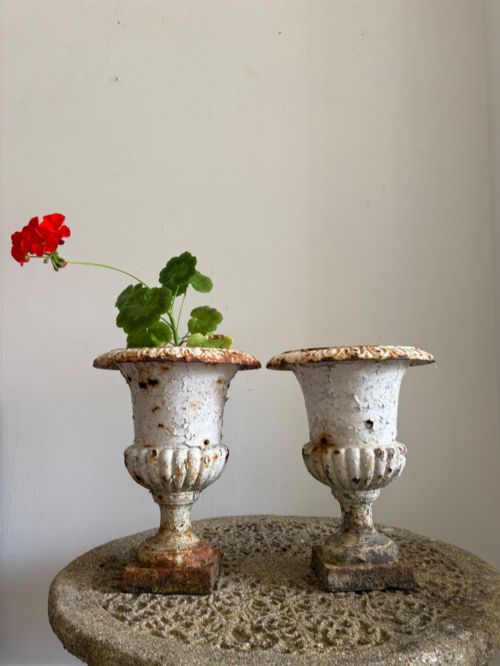
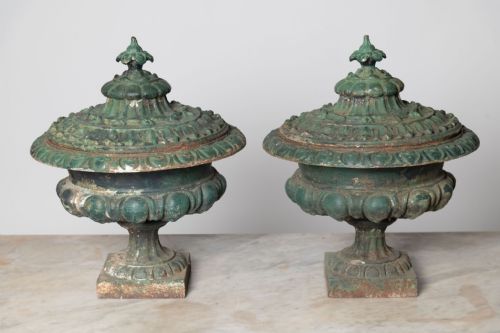
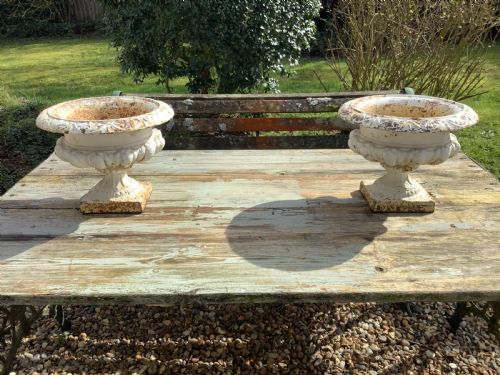
A classical campana planter follows the traditional inverted bell profile rooted in antique form, appearing frequently in cast iron, terracotta, and stone across this selection. These vessels range from small table urns to large garden jardinieres mounted on plinths.
The pieces on this page span the Regency, Victorian, and later nineteenth and twentieth centuries, encompassing styles such as Classical Revival and French nineteenth century. Makers like Andrew Handyside emerge alongside Grand Tour bronzes and marble examples.
Buyers encounter single vessels, matched pairs, and versions retaining original painted surfaces or lids. The forms function as garden urns, decorative vases, and wine coolers.
How they were made
Cast iron production dominates the selection, utilising durable metal casting techniques suited for heavy garden ornaments and architectural planters. Foundries also employed cast bronze for smaller decorative vases.
Masons and carvers worked in natural materials including stone, limestone, terracotta, and white or Italian marble. Reconstituted stone and plaster offered alternative sculptural mediums for neoclassical shapes.
Classical Campana Planter Retail Price Guide 2026
Typical asking prices for classical campana planter among the pieces listed under this phrase on Sellingantiques today, from the lower quarter to the upper quarter. They describe what is for sale here now, not the wider market.
Some nineteenth-century terracotta planters feature carved heads on their handles, watching over the garden herbs.
What varies in quality
The definition and crispness of cast relief ornamentation, such as gadrooning or carved heads on handles, distinguish finer examples from simpler production. Superior handling of the classical proportions determines the visual weight of the urn.
Material integrity and surface survival play a significant part in the distinction between pieces, particularly where original distressed paint or natural weathering remains undisturbed over iron and terracotta.
Andrew Handyside
The Classical Campana Planter Glossary
- Campana
- A vessel shaped like an inverted bell, characteristic of classical antiquity and later revival styles. This profile underpins the design of the planters listed here.
- Gadrooned
- Decorated with a series of convex curves or flutes, often seen radiating along the lower body of an urn. This ornamental moulding adds texture to neoclassical forms.
- Grand Tour
- A cultural journey undertaken by nineteenth-century travellers who collected small bronzes and classical antiquities as souvenirs. Such items inspired miniature and decorative table urns.
- Jardiniere
- An ornamental pot or stand designed to hold growing plants or flowers. These garden vessels function similarly to traditional urns on this page.
- Neoclassical
- A style reviving the architectural and decorative forms of ancient Greece and Rome. It guides the symmetrical lines and decorative motifs seen across these pieces.
Classical Campana Planter: Frequently Asked Questions
What is a campana planter?
A campana planter is a garden urn or vessel shaped like an inverted bell, designed in the classical style to hold plants.
These pieces draw on ancient Greek and Roman forms, utilising materials like cast iron, terracotta, and marble.
Where do these planters go?
These vessels suit gardens, terraces, and interior spaces, often displayed on stone pedestals or plinths.
Larger iron and stone examples anchor outdoor landscaping, while smaller table urns sit inside rooms.
How do I identify a nineteenth-century piece?
Nineteenth-century examples frequently show heavy cast iron construction, traditional foundry marks, or periods associated with the Victorian and Regency eras.
Distressed original paint and weathering also point to older manufacture.
Are these planters frost-proof?
Cast iron and stone planters generally withstand outdoor weather, though material durability depends on the specific medium used.
Terracotta and marble require consideration during freezing conditions to protect the carved or fired structure.