




Classical Campana Garden Urn
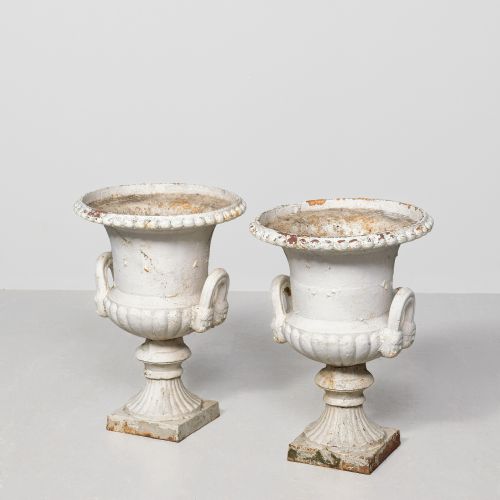
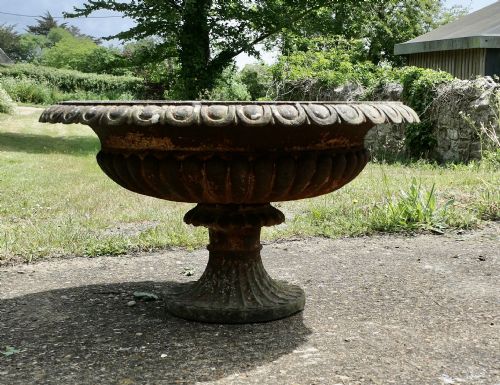
A classical campana garden urn brings architectural dignity to a terrace, taking the form of an inverted bell shaped vessel.
Classical Campana Garden Urn
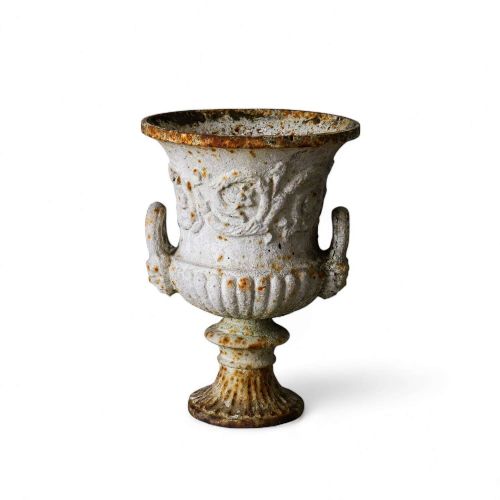
When searching for a classical campana garden urn, a buyer encounters architectural vessels designed to hold planting schemes or anchor a landscape composition. These pieces take their inspiration from antiquity, featuring the characteristic flared profile of an inverted bell.
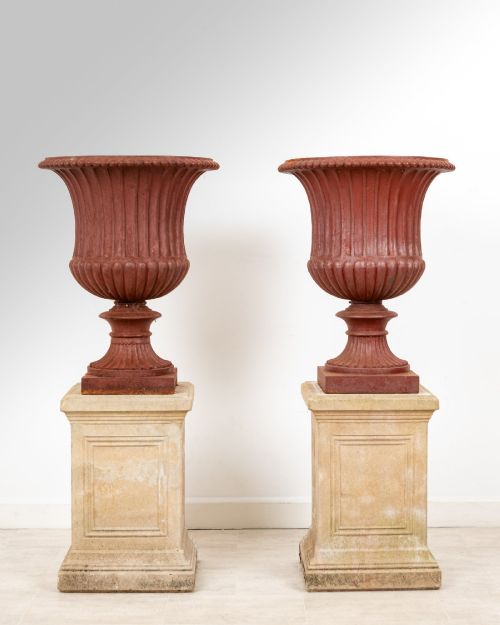
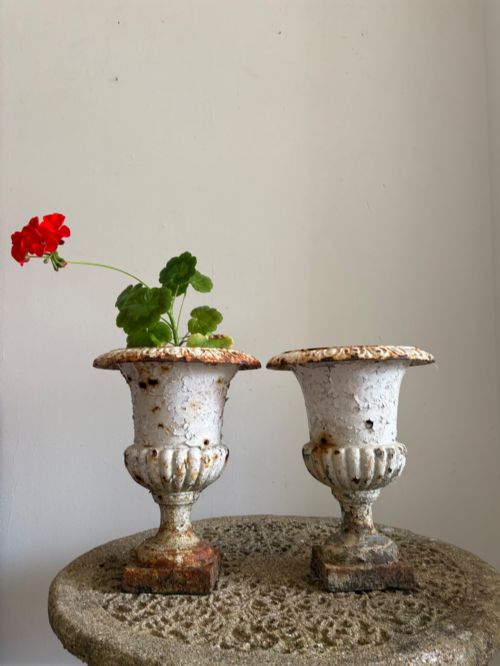
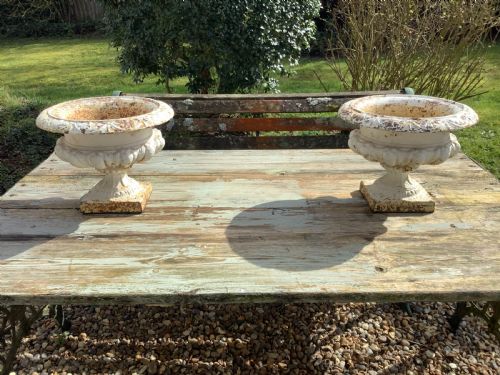
The selections available here lean heavily toward nineteenth century examples, with cast iron standing out as a dominant medium alongside stone, terracotta, marble, and limestone. Buyers frequently meet pairs mounted on matching plinths or pedestals, often finished with original painted surfaces or shaped handles.
Stylistically, the objects span neoclassical, Victorian classical revival, and French nineteenth century aesthetics. Forms range from large garden jardiniere vessels down to smaller table urns and gadrooned designs.
How classical campana garden urn pieces were made
Makers utilised durable outdoor materials suited to weathering, pouring molten metal into sand moulds to produce robust cast iron bodies. Foundry work often incorporated distinct decorative motifs such as carved heads on handles or gadrooned lower bowls.
Masonry items emerged from blocks of white marble, limestone, and reconstituted stone, shaped through hand carving and chisel work. Terracotta variants were moulded from clay and fired in kilns to achieve a rigid porous structure.
Surfaces received protective or decorative treatments, including layers of paint that weather over decades of exposure to the elements. Plaster versions relied on internal armatures to support neoclassical profiles before finishing.
Materials recorded across the inventory include cast iron, white marble, limestone, terracotta, and reconstituted stone.
What varies in quality in classical campana garden urn pieces
The refinement of the casting defines the upper tier of metalwork, where crisp relief ornament on the rim and handles shows true foundry skill. Lesser examples display softer edges and shallower detail from worn or repeated moulds.
Stone and marble pieces diverge in the depth of their hand carving and the selection of raw mineral blocks free from internal flaws. Superior proportions in the stem, bowl, and foot create a balanced silhouette that lesser utilitarian vessels miss.
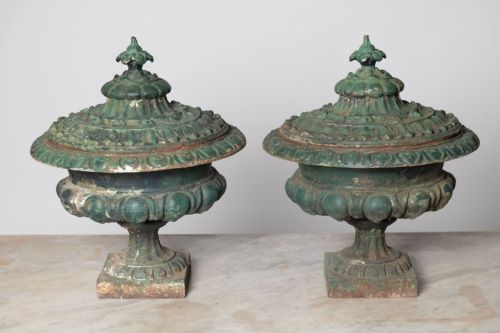
Integrity of the material over time separates standard outdoor ornaments from exceptional survivals, particularly when original components like matching lids or stone pedestals remain intact.
Andrew Handyside
The Classical Campana Garden Urn Glossary
- Campana
- A vessel shaped like an inverted bell with a flared rim, narrow stem, and footed base. This silhouette originates from ancient metal and pottery drinking vessels.
- Gadrooned
- Decorated with a series of convex vertical curves or flutes around the lower body of the bowl. This ornamental moulding adds texture and visual weight to the design.
- Jardiniere
- An ornamental pot or stand intended for holding plants or floral arrangements. These pieces function as decorative garden containers rather than utility vessels.
- Neoclassical
- A style reviving classical Roman and Greek architectural and decorative motifs during the eighteenth and nineteenth centuries. It relies on symmetry, restraint, and classical proportions.
- Reconstituted stone
- A manufactured material made from crushed natural stone aggregate bound with cement. It offers the appearance of carved stone while allowing moulded production.
- Plinth
- A heavy flat base or pedestal that supports an urn aloft. Raising the vessel improves sightlines and protects the base from ground moisture.
Classical Campana Garden Urn: Frequently Asked Questions
How were these urns used in gardens?
These vessels functioned primarily as focal points on terraces, flanking entrances, or terminating garden vistas. Gardeners planted them with trailing foliage or seasonal blooms to soften the rigid architectural lines.
Larger iron and stone examples remained in situ year round due to their considerable weight. Smaller table versions often decorated interior or sheltered garden room settings.
Are original lids common on these pieces?
Original lids are exceptionally scarce because many were lost or discarded during centuries of garden use. Most surviving vessels function solely as open planters.
When a lid does survive with the body, it completes the original silhouette intended by the maker.
How do I care for a cast iron urn?
Cast iron withstands outdoor elements well, though ongoing exposure leads to surface oxidation and flaking paint. Regular monitoring helps preserve the remaining finish.
Applying specialised protective coatings prevents deep corrosion while maintaining the weathered patina valued by collectors.
How do I distinguish stone from reconstituted stone?
Natural stone exhibits organic veining, crystalline structure, and tool marks unique to hand carving. Under magnification, natural mineral composition differs visibly from aggregate mixtures.
Reconstituted stone reveals a uniform matrix of small crushed stone particles bound within cement when inspected closely.