

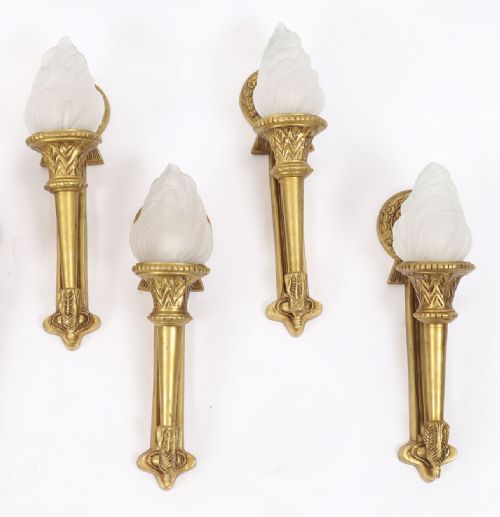


Classical Bronze Torchere
A classical bronze torchere brings architectural dignity and sculptural presence to an interior, channelling ancient forms through nineteenth-century craftsmanship.
Classical Bronze Torchere
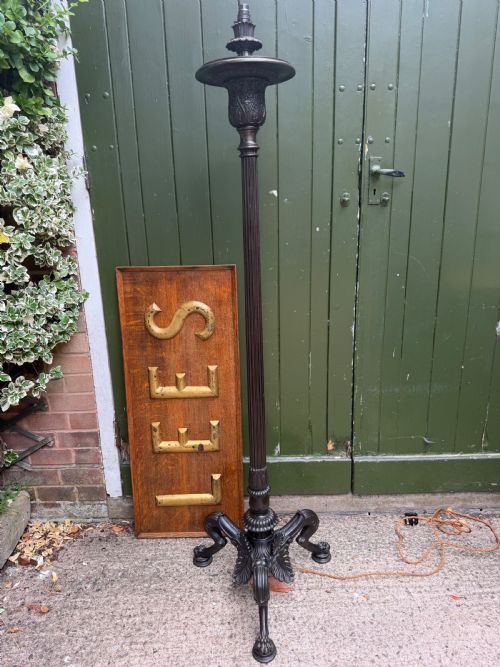
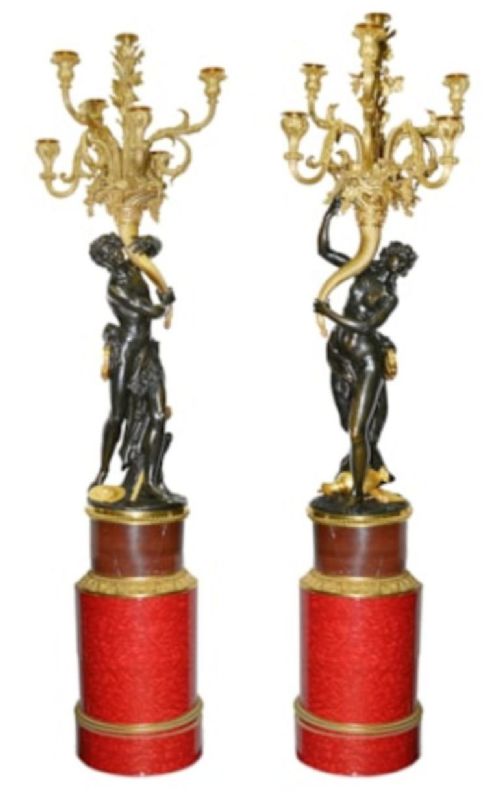
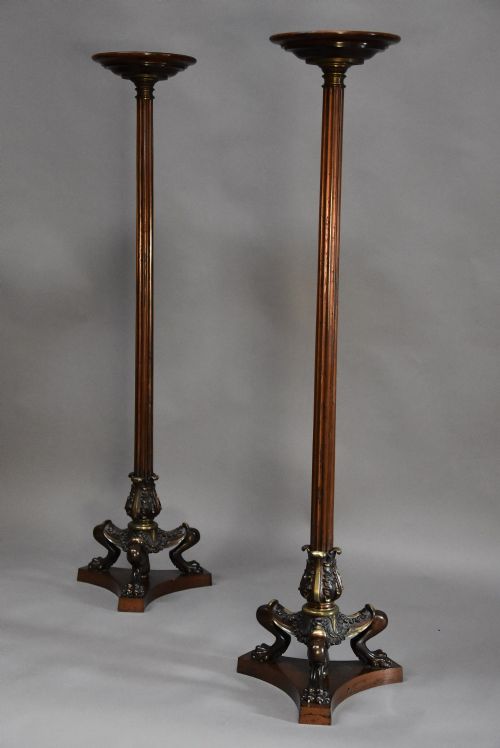
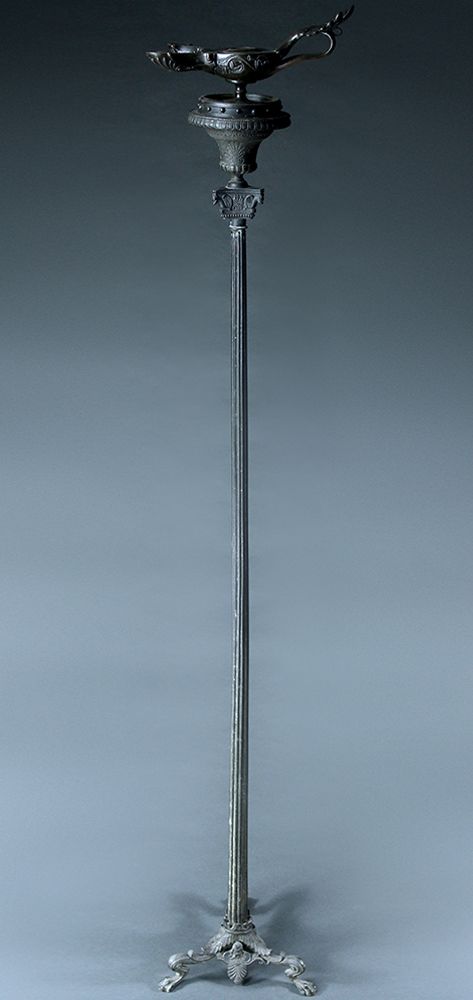
A classical bronze torchere is a tall stand, pedestal, floor lamp or wall light rooted in antiquity and most frequently encountered in nineteenth-century interpretations. These pieces draw heavily on Neo-Classical, Regency, and Louis XVI vocabularies, often taking the form of figural standards bearing lights.
The selection ranges from grand pairs of figural torcheres and candelabra to single floor-standing lamps and wall lights. Originating largely from French and English workshops, they merge functional illumination with classical sculpture.
Buyers seeking this phrase will find works spanning the Georgian era through to the early twentieth century. Materials stretch beyond pure metal to incorporate marble, onyx, glass and mahogany.
How they were made
The construction relies heavily on patinated and gilt bronze, often paired with ormolu mounts and cast-iron elements for structural support. Artisans utilised sophisticated foundry techniques to cast figures, columns and bases with intricate surface detail.
Many designs incorporate contrasting materials such as onyx, marble, rock crystal or mahogany to form the central columns and plinths. Hand-finishing brought out the subtleties of patination and the gleam of gilded highlights on figural subjects.
Classical Bronze Torchere Retail Price Guide 2026
Typical asking prices for classical bronze torchere among the pieces listed under this phrase on Sellingantiques today, from the lower quarter to the upper quarter. They describe what is for sale here now, not the wider market.
Materials recorded across the inventory include bronze, gilt bronze, ormolu, brass, patinated bronze, glass, frosted glass, onyx, marble and mahogany.
What varies in quality
The choice of materials significantly shapes the grade of the piece, distinguishing standard foundry production from signed works by notable sculptors and makers. Integration of high-grade stones, rock crystal and fire-gilt ormolu elevates the overall sculptural integrity.
George Smith·Thomas Hope·F. De Luca·Emile Picault·Humphrey Hopper·Jean-Jules Cambos·François-Christophe-Armand Toussaint·Coutan·Moreau
The Classical Bronze Torchere Glossary
- Torchere
- A tall ornamental stand or floor lamp originally designed to carry a torch or candle. These pieces now frequently serve as sophisticated electric floor lamps or pedestals.
- Ormolu
- Gilded bronze produced by applying a mixture of gold and mercury to a bronze base and firing it. This technique creates a durable, warm metallic finish characteristic of fine French pieces.
- Patinated Bronze
- Bronze treated with chemical solutions to produce a darkened or aged surface colour. This finish highlights the underlying sculptural contours.
- Grand Tour
- A cultural journey undertaken by wealthy young Europeans through France and Italy to collect art and antiquities. Many pieces from this context replicate classical sculpture.
- Neo-Classical
- A style spanning the eighteenth and nineteenth centuries that revives the balanced, restrained forms of ancient Greece and Rome. It dominates the design vocabulary of these lamps.
Classical Bronze Torchere: Frequently Asked Questions
What is a classical bronze torchere?
A classical bronze torchere is a tall sculptural stand or lamp designed with ancient Greek or Roman motifs. They frequently feature figural columns holding lights or serving as decorative pedestals.
Originating mostly in the nineteenth century, these pieces adapt antique architectural forms for period interiors. They function as both primary light sources and significant decorative sculptures.
How do I identify a nineteenth-century piece?
Nineteenth-century pieces often display specific revival styles such as Louis XVI, Regency or Neo-Grec. Examining the casting methods and the nature of the bronze patination helps determine the period.
Signatures from known sculptors or foundries stamped into the metal also point securely to nineteenth-century production dates. The incorporation of materials like onyx and ormolu is typical of this era.
Are these lamps still wired for modern use?
Many examples have been adapted over time to take modern electrical fittings while retaining their antique bronze and figural standards. Conversion methods vary depending on whether the piece began life as a candleholder or an oil lamp.
Buyers should inspect the internal wiring of any floor lamp or candelabra to ensure it meets current safety standards. Professional rewiring preserves the antique body while ensuring safe domestic operation.