


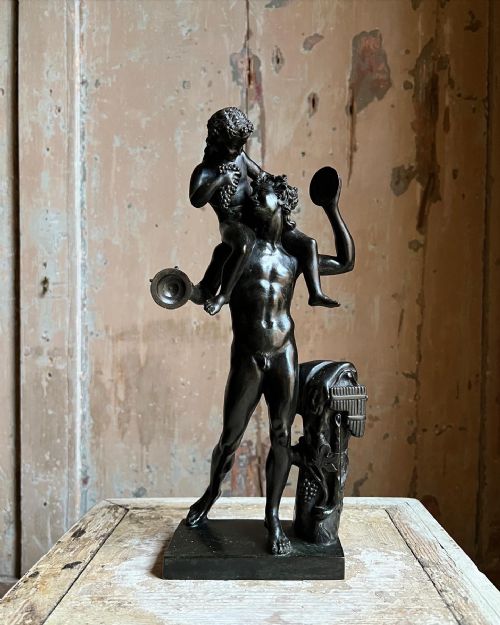


Classical Bronze Bacchus
These classical bronze bacchus figures bring ancient myth into the nineteenth-century interior with rich patination and classical forms.
Classical Bronze Bacchus
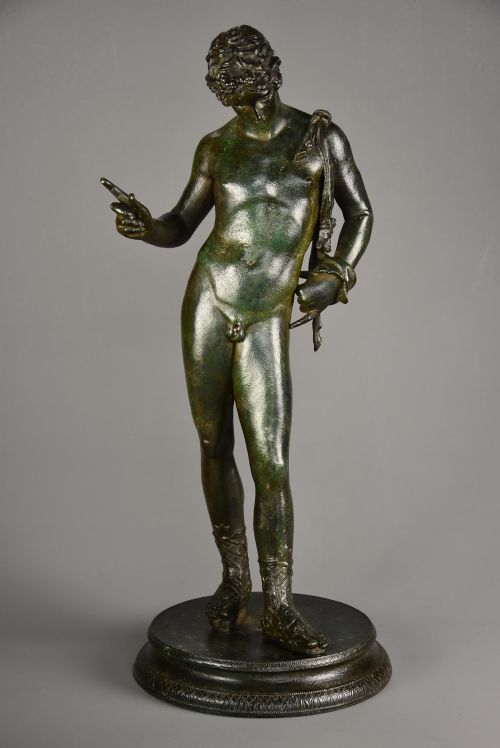
When you search for classical bronze bacchus, you encounter sculptural works depicting the Roman god of wine, alongside satyrs, fauns, and putti engaged in bacchanalian revelry. These pieces draw heavily on archaeological discoveries from Pompeii and classical antiquity, frequently created as Grand Tour souvenirs for travellers returning from Italy.
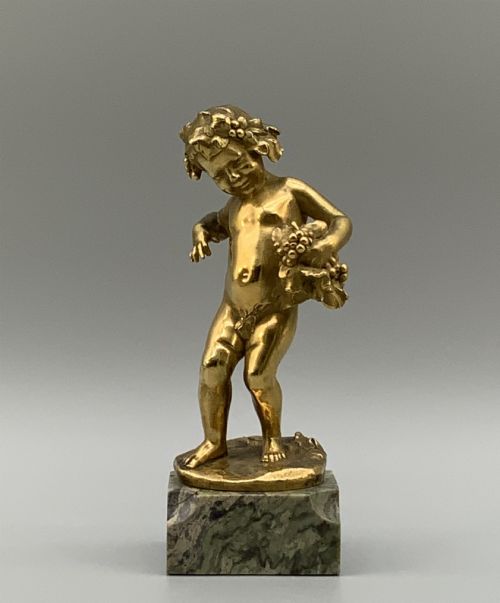
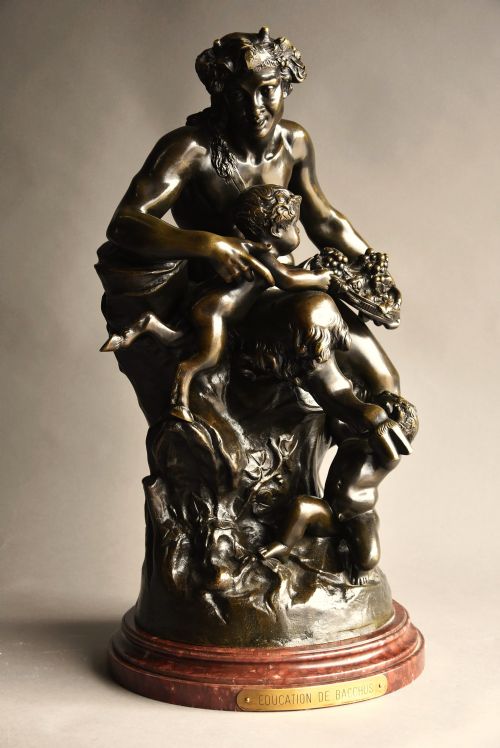
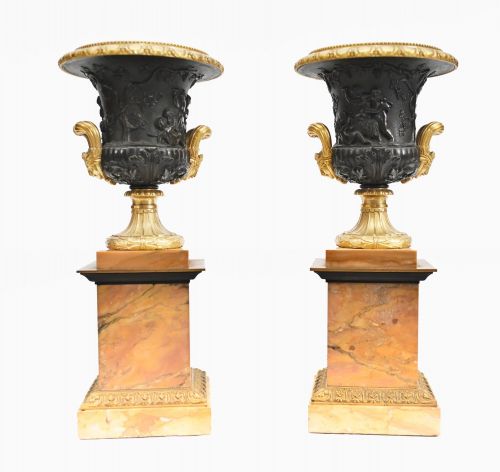
The selections on this page span the nineteenth century and the early twentieth century, taking the form of freestanding figures, decorative urns, ewers, and wall masks. You will find single depictions of Bacchus eating grapes alongside larger groups featuring maidens, satyrs, and playful putti.
Many of these bronzes replicate ancient statuary or follow the aesthetic of sculptors such as Claude Michel Clodion, utilising cast bronze with varied patination. They range from cabinet-sized figures to large sculptural groups designed for prominent display.
How they were made
Makers applied chemical patination to create deep green, brown, or dark tones that mimicked excavated antiquities, occasionally supplementing this with gilding or painted elements. Marble bases and plinths were frequently added to support the heavier figures and urns.
Several pieces capture Bacchus in his youth, assisted by remarkably small putti who appear entirely overwhelmed by oversized bunches of grapes.
What varies in quality
The refinement of the chasing and hand-finishing separates standard production from superior examples, visible in the sharpness of facial expressions, hair strands, and grape clusters. Master founders ensured that fingers, toes, and delicate accessories such as thyrsus staves retained crisp definition rather than soft edges.
The quality of the patination determines the visual depth of the bronze, with superior pieces displaying subtle tonal variations rather than a flat, uniform coat. Heavier, more substantial casting and well-fitted marble mounts also denote works from prominent foundries and skilled workshops.
Charles Louis Malric·Susse Frères
The Classical Bronze Bacchus Glossary
- Grand Tour
- A cultural journey undertaken by wealthy young Europeans through France and Italy during the eighteenth and nineteenth centuries to study classical art. This travel generated a vast demand for bronze reductions and antiquities.
- Patination
- The chemical treatment applied to the surface of bronze to alter its colour and simulate age. Green and dark brown patinas are typical of nineteenth-century bronzes styled after ancient finds.
- Campana
- A distinctive bell-shaped form of classical vase or urn popular in antiquity and revived during the neoclassical period. These vessels often feature handles rising from the lower body.
- Putto
- A motif depicting a plump, naked male child, frequently winged, appearing as a Cupid or attendant in classical art. In these bronzes, putti often accompany Bacchus in grape-harvesting scenes.
- Ewer
- A large jug with a wide spout and elaborate handle, designed for pouring liquids. In classical revivals, ewers were frequently cast with sculptural reliefs depicting mythological figures.
Classical Bronze Bacchus: Frequently Asked Questions
What is a classical bronze bacchus?
A classical bronze bacchus is a nineteenth-century sculpture or decorative object depicting the Roman god of wine, often accompanied by satyrs, fauns, or putti.
These pieces reflect the Victorian and Edwardian fascination with classical antiquity, frequently produced as Grand Tour souvenirs inspired by excavated statues from Pompeii and Rome.
How do I date a nineteenth-century bronze?
Dating relies on examining the casting technique, the depth and colour of the patination, and the style of the base or mount.
Nineteenth-century foundries often utilised specific patination methods and maker marks, while Grand Tour pieces generally align with the aesthetic standards of the 1850s to the early 1900s.
Where were these bronzes displayed?
In the nineteenth century, these sculptures and urns were displayed in libraries, studies, and drawing rooms as centrepieces on mantelpieces or tables.
They served as tactile reminders of classical learning and European travel, designed to be viewed closely from multiple angles.
What does green patination mean?
Green patination was intentionally applied by nineteenth-century founders to mimic the natural oxidation found on ancient bronze statues recovered from archaeological sites.
This finish enhanced the antique appearance of Grand Tour pieces, making newly cast works resemble genuine Roman artefacts.