

Classical Brass Desk Lamps
Classical brass desk lamps bring heavy cast columns and warm metallic lustre to a study, blending utility with formal architectural design.
Classical Brass Desk Lamps
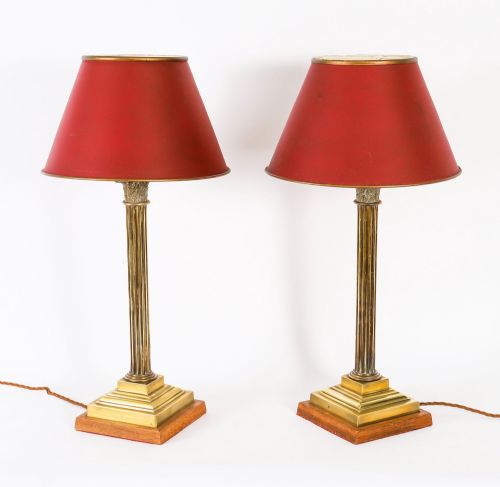
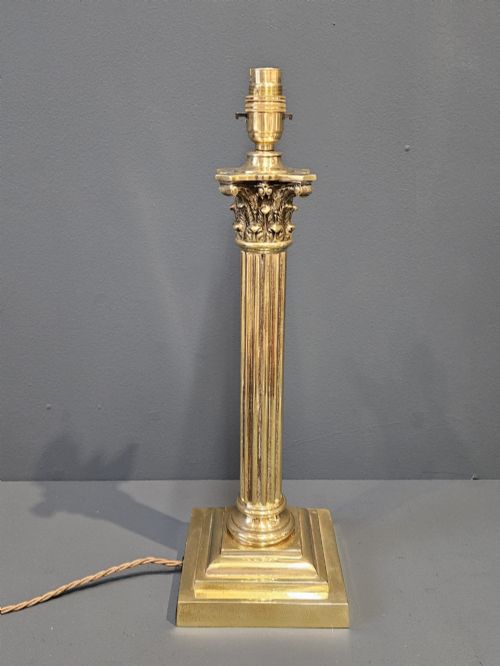
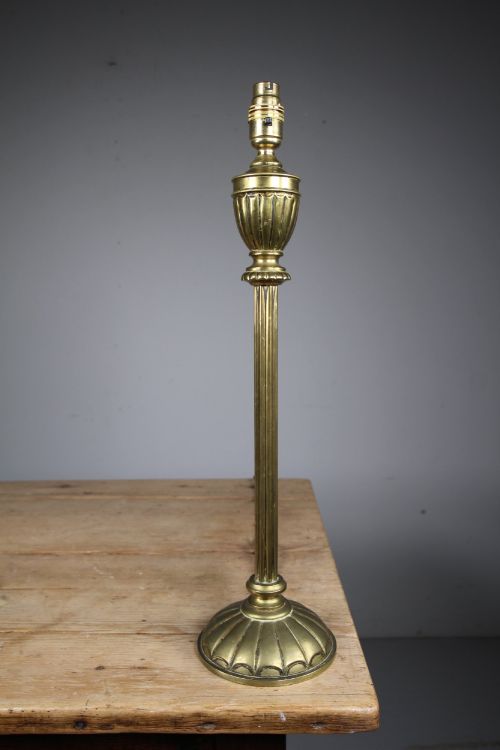
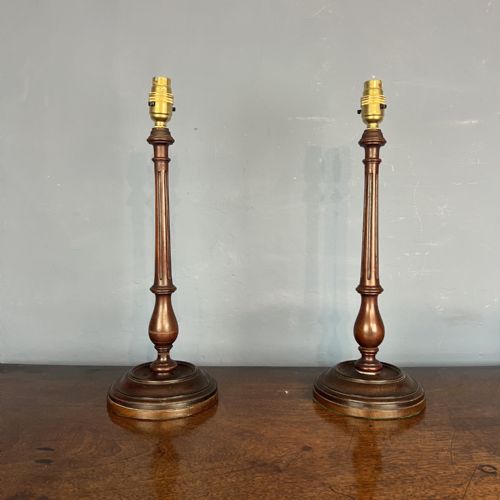
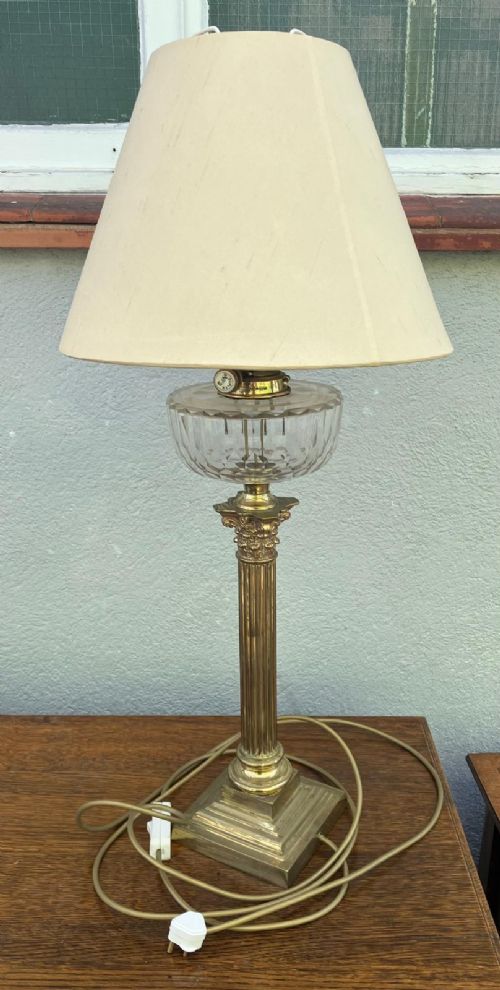
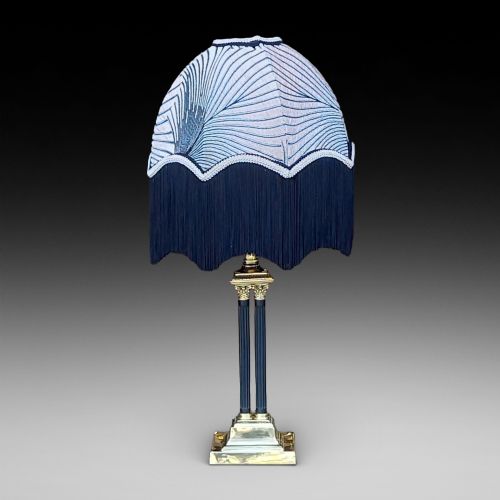
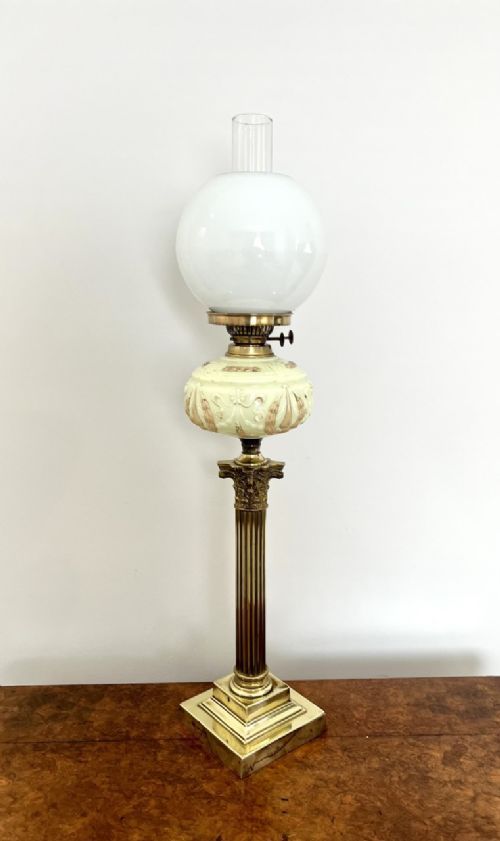
When you search for classical brass desk lamps, you encounter lighting fixtures adapted from earlier architectural forms and oil lighting, spanning the nineteenth century through the early twentieth century. The selection on this page relies heavily on substantial table lamps and converted oil lamps rather than smaller modern desk illuminations. Pieces frequently adopt column forms, drawing on classical orders with detailed capitals.
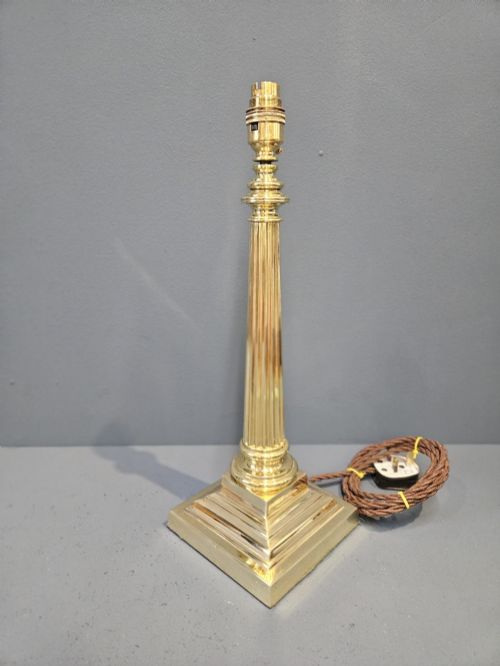
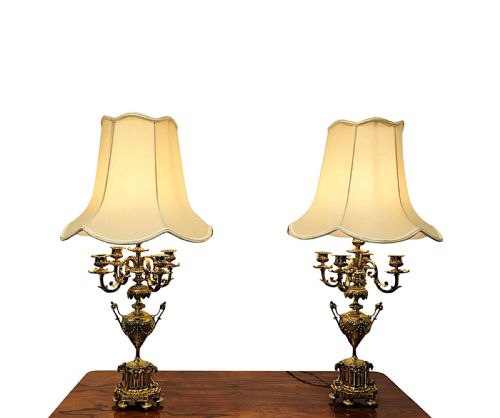
Victorian and Edwardian examples dominate the offerings, often appearing alongside French imports from the nineteenth century. You will find column designs featuring Corinthian, Ionic, or Doric capitals, sometimes paired with stepped bases. Many of these lighting pieces originate as oil lamps or candelabra later converted for electrical use.
Materials and construction methods
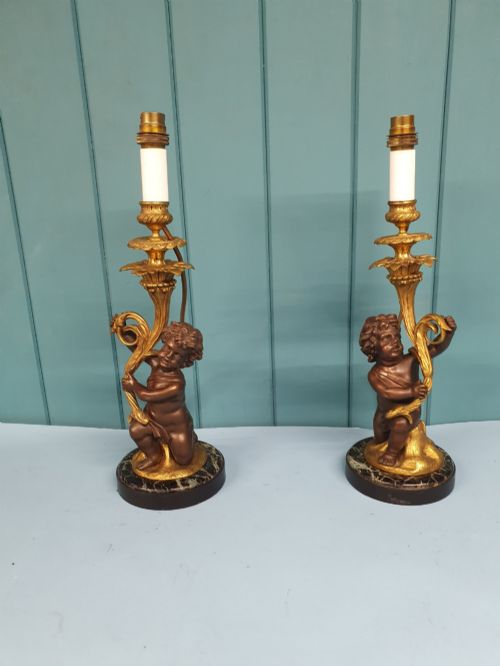
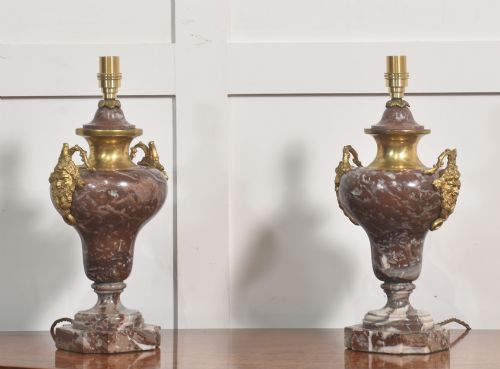
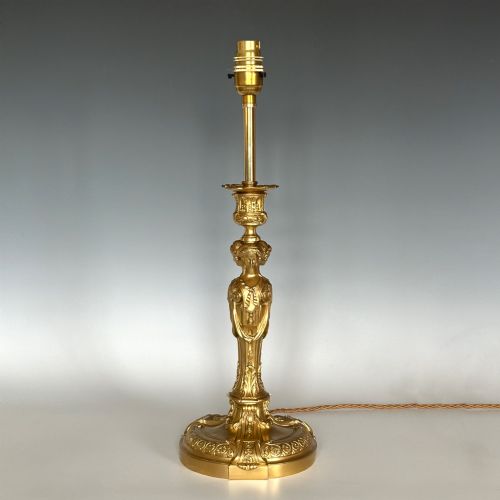
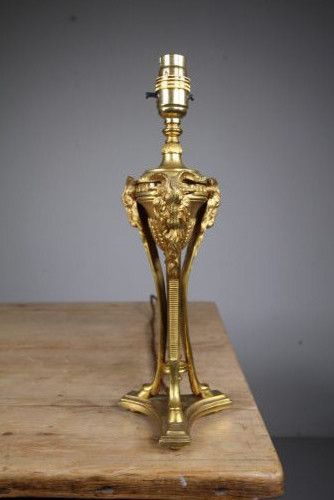
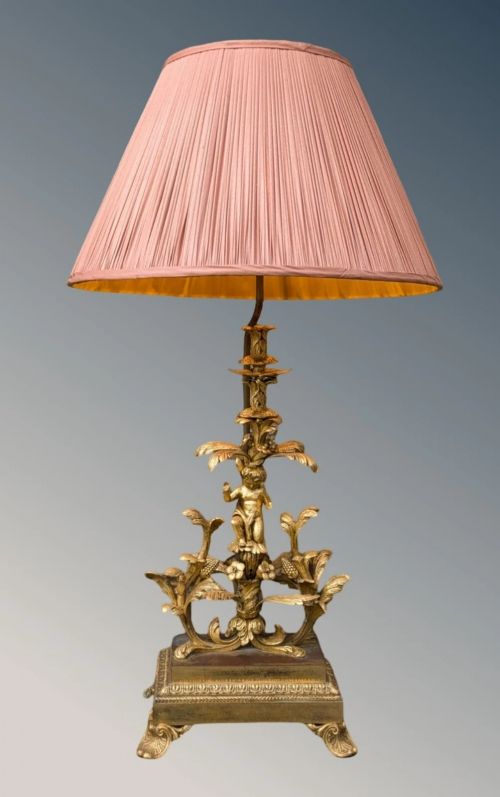
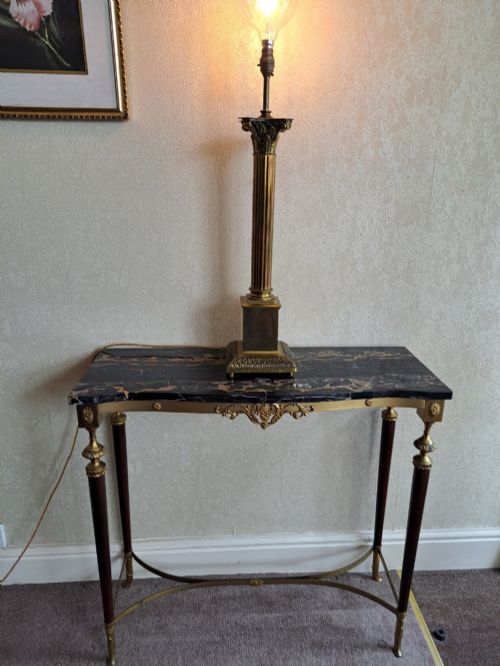
Makers utilised cast brass, ormolu, and gilt bronze, often mounting these metal components onto bases of rouge marble, onyx, or mahogany. The primary metallic structures are cast in sections, then hand-chased and finished to highlight architectural details like fluted shafts and acanthus leaves.
Gilding and silver-plating appear on finer pieces to emulate solid precious metals or high-status French decorative arts. Silk and fabric shades frequently complete the lamps, complementing the reflective surfaces of the gilded mounts and polished columns.
Materials recur in combinations of brass, gilt bronze, and ormolu paired with rouge marble, onyx, and fabric.
Judging the standard of manufacture
Quality rests in the crispness of the cast ornamentation and the weight of the materials used. Superior examples display sharply defined capitals and heavy gauge brass or bronze that remains rigid and stable.
The integration of secondary materials also dictates standard, such as solid polished marble plinths versus lighter composite bases. Finer pieces demonstrate careful assembly without visible joins, maintaining structural integrity across tall column forms.
L & F Moreau·Messenger
The Classical Brass Desk Lamps Glossary
- Ormolu
- Gilded bronze, produced by applying a mercury-gilding process to cast bronze objects during the eighteenth and nineteenth centuries. This technique yields a deep, warm metallic sheen.
- Corinthian column
- An architectural column order featuring an ornate capital decorated with carved acanthus leaves. It forms the most common decorative motif on nineteenth-century metal lamp bases.
- Neoclassical
- A style reviving classical Roman and Greek motifs, characterised by symmetry, straight lines, and architectural orders. This aesthetic governs the design of French Empire and Louis XVI revival pieces.
- Candelabra
- A branched candlestick designed to hold multiple candles, frequently converted into electrical table lamps during later periods. These conversions retain their original sculptural arms and drip pans.
Classical Brass Desk Lamps: Frequently Asked Questions
Are these lamps originally electrical?
Most antique lighting from the nineteenth and early twentieth centuries began life as oil lamps, candelabra, or candlesticks. They were subsequently adapted for modern wiring.
Conversion methods vary, but quality pieces retain their original weight and structural components while discreetly housing modern electrical fittings.
How do I date a brass column lamp?
Dating relies on observing the casting quality, the specific architectural orders used in the capitals, and the underlying material of the base. Victorian and Edwardian examples often feature heavy brass reeded or fluted shafts.
French pieces from the same era frequently incorporate rouge marble plinths and ormolu mounts influenced by earlier neoclassical styles.
What is the difference between brass and ormolu?
Brass is an alloy of copper and zinc, finished through polishing or lacquering to achieve a bright yellow metallic appearance. Ormolu is specifically gilded bronze, treated with gold to create a richer, deeper lustre.
On marketplace listings, ormolu typically denotes higher-status French decorative objects with finer chased detailing.
How should I clean antique brass bases?
Antique brass surfaces benefit from gentle dusting with a soft, dry cloth to prevent the accumulation of grime. Avoid aggressive chemical metal polishes that strip away the aged patina accumulated over decades.
Preserving the original surface appearance maintains the historical integrity and visual depth of the metalwork.