
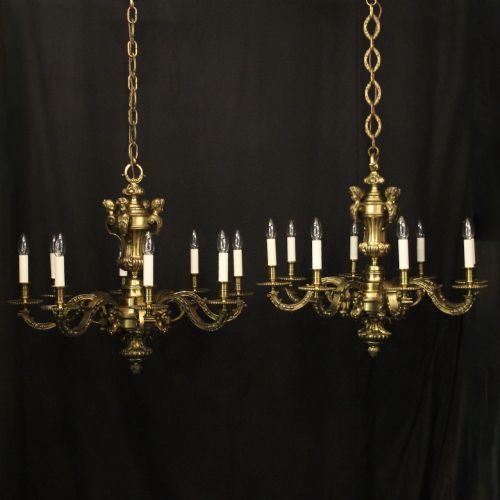
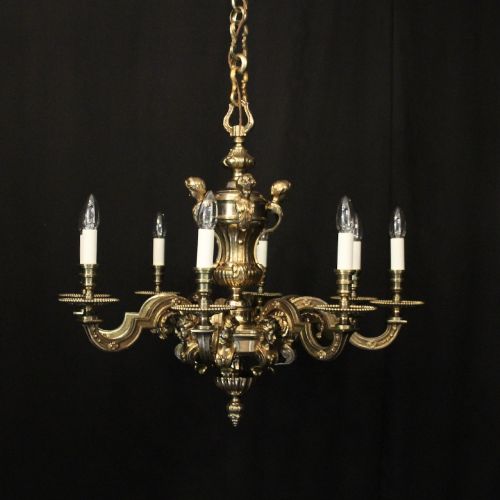
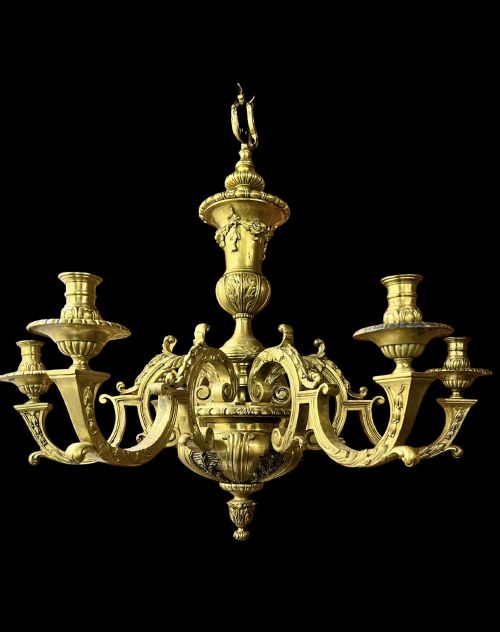


Classical Brass Chandelier
A classical brass chandelier brings architectural gravity and warm illumination to a room, drawing the eye upwards through ornate metalwork and glass.
Classical Brass Chandelier
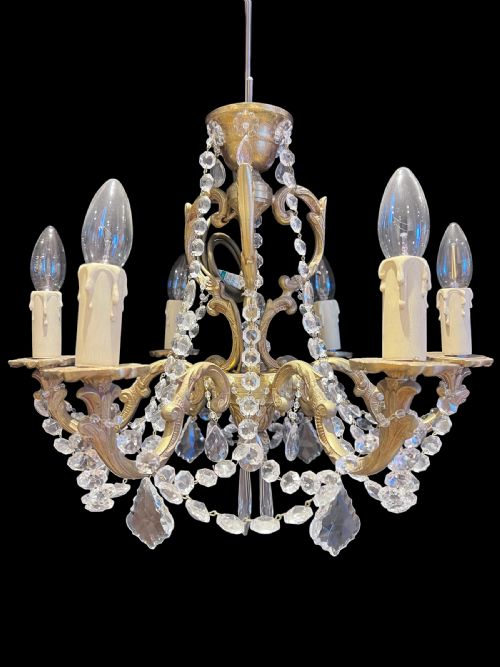
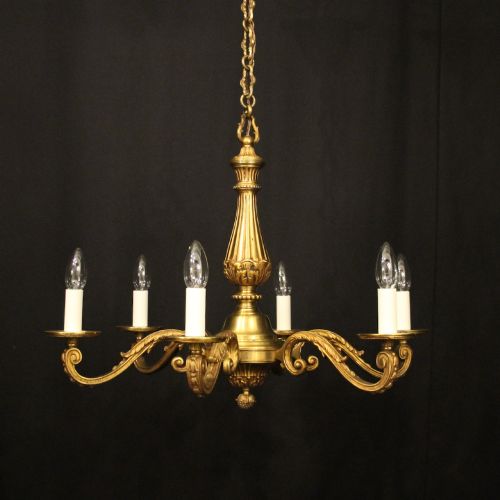
A classical brass chandelier combines structural metalwork with period design, drawing on French Neoclassical, Empire, and Rococo traditions to create a commanding ceiling fixture. These light sources typically emerge from nineteenth-century origins and extend into twentieth-century revivals.
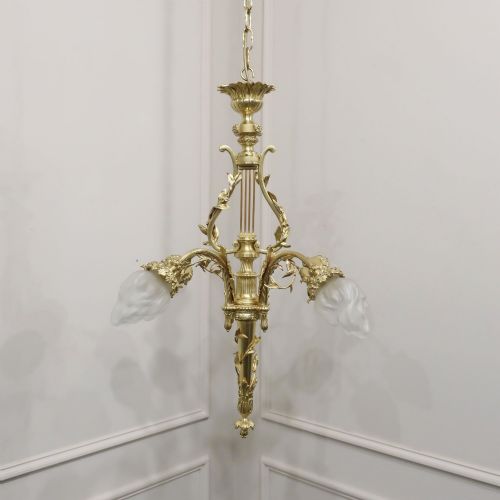
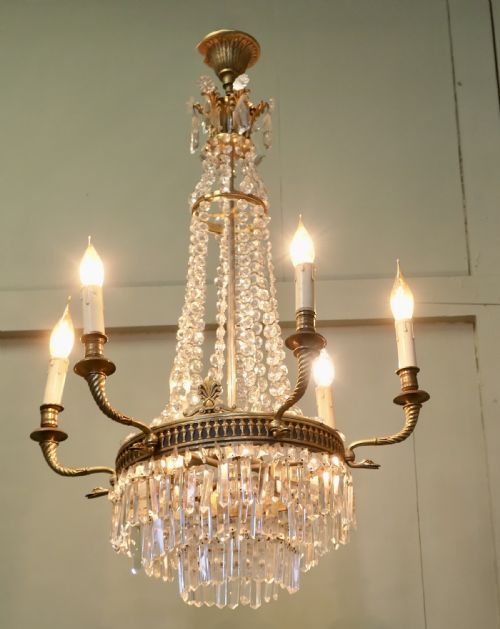
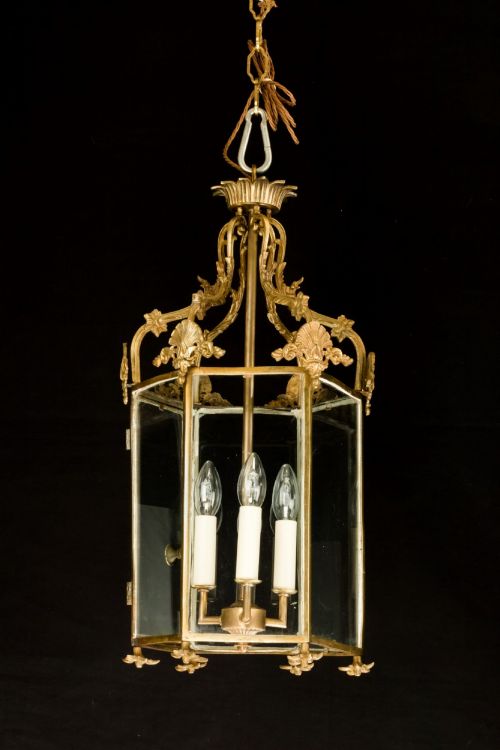
The most common versions encountered here are French and English fixtures featuring multi-branch configurations, often adorned with crystal drops, alabaster bowls, or hall lantern formats.
Makers utilised various regional interpretations, balancing heavy cast elements with delicate proportions suitable for grand reception rooms and hallways alike.
Materials and Construction
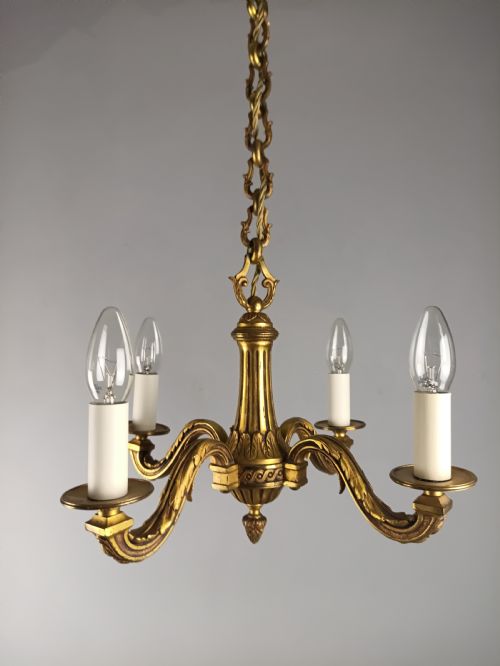
Makers constructed these fixtures primarily in brass, bronze, and gilt bronze, often incorporating cast elements alongside hand-finished details to achieve depth in the metalwork. Ormolu and silver gilding frequently coat the base metals to provide a reflective surface for candlelight or early electric bulbs.
Glass and crystal components, including tent and waterfall arrangements, are integrated to refract light across the surrounding space.
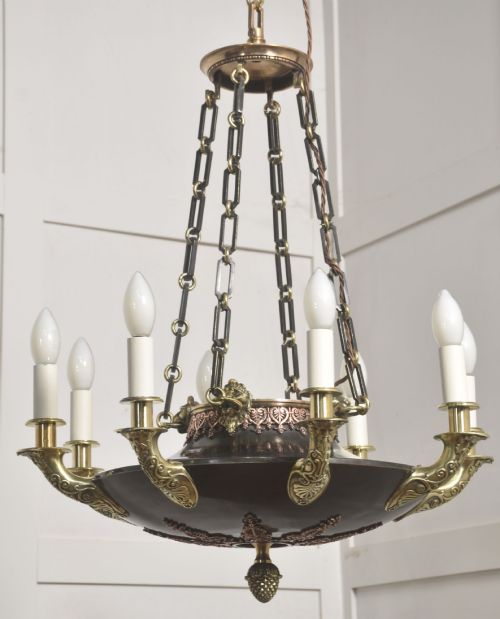
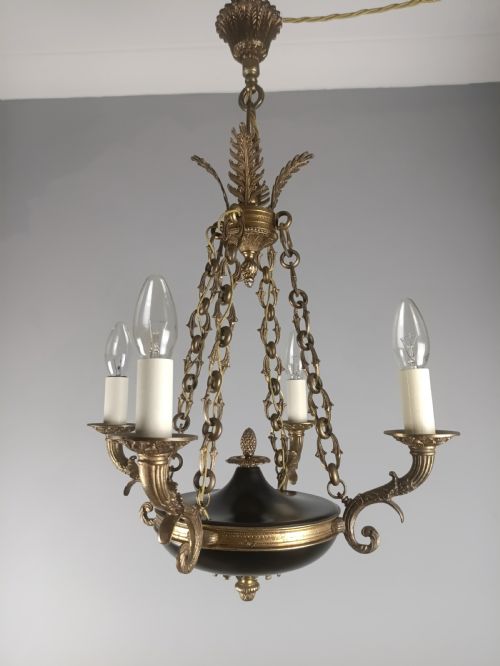
Patinated bronze finishes offer a darker, more subdued alternative to polished or gilded surfaces, highlighting the cast ornamentation.
Several pieces feature enough crystal drops to double as indoor weather chimes when a heavy door closes downstairs.
Assessing the Workmanship
Quality rests in the crispness of the casting and the weight of the metal components, where finer examples display sharp relief in foliate and classical motifs rather than softened edges.
The integration of crystal elements and the complexity of multi-tiered branch arrangements separate standard production from superior pieces.
Original gilding and untouched patination elevate a fixture above examples that have undergone aggressive modern cleaning or re-plating.
The Classical Brass Chandelier Glossary
- Ormolu
- Gilded bronze, typically achieved through the application of a mercury-gold amalgam on a bronze base. This technique produces a durable, rich golden surface characteristic of fine French decorative arts.
- Tent and waterfall
- A chandelier configuration where strings of crystal beads form a tent shape at the top, descending into a cascading waterfall effect around the central stem. It maximises light refraction.
- Hall lantern
- An enclosed ceiling light designed specifically for entranceways and corridors, often featuring glazed panels within a decorative brass or bronze frame.
- Patinated bronze
- Bronze that has been chemically treated or aged naturally to produce a darkened surface finish. This treatment accentuates the underlying contours of the cast metal.
- Neoclassical
- A style rooted in the revival of classical antiquity, marked by symmetry, restraint, and motifs such as urns, swags, and acanthus leaves.
Classical Brass Chandelier: Frequently Asked Questions
How do I hang a heavy chandelier safely?
Suspension requires a ceiling joist or a dedicated structural noggins capable of supporting the combined weight of the metal and crystal. Professional installation ensures the electrical wiring meets modern standards while bearing the load securely.
Lowering the fixture to an appropriate height above floor level maintains the intended proportion within the room.
Can these chandeliers be converted for modern electricity?
Most antique fixtures have already been adapted for electrical wiring during their working life. Rewiring is straightforward for a qualified electrician who can integrate candle-style sleeves without altering the exterior metalwork.
Careful consideration of bulb wattage preserves the delicate glass and crystal components from excessive heat.
How do I clean crystal and brass safely?
Dusting with a soft brush prevents the accumulation of grime on intricate cast surfaces. Glass and crystal drops respond best to gentle washing with warm water and mild soap while still attached, or removed individually for thorough cleaning.
Harsh metal polishes should be avoided on gilt or patinated surfaces to protect the original finish.
What is the difference between Empire and Rococo styles?
Empire design draws inspiration from ancient Rome and Napoleon's campaigns, featuring martial motifs, symmetry, and heavy gilded surfaces. It projects order and imperial grandeur.
Rococo style embraces asymmetry, scrolling curves, and naturalistic shell or floral motifs, creating a lighter and more fluid visual movement.