


Classical Sideboard Cabinet
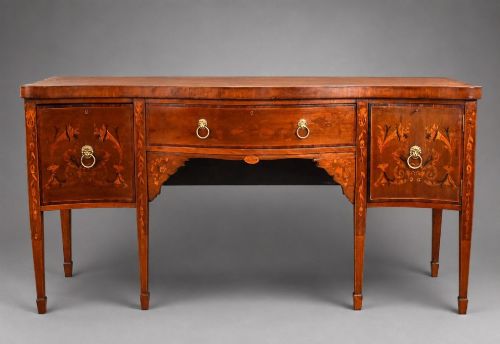
A classical antique sideboard cabinet provides stately dining room storage and surface display, uniting architectural proportions with fine timber work.
Classical Sideboard Cabinet
A classical antique sideboard cabinet brings together formal storage furniture from the Georgian, Regency, and Victorian eras, alongside later revival pieces. Buyers search for these items to anchor a dining room or hall with architectural presence and historical depth.
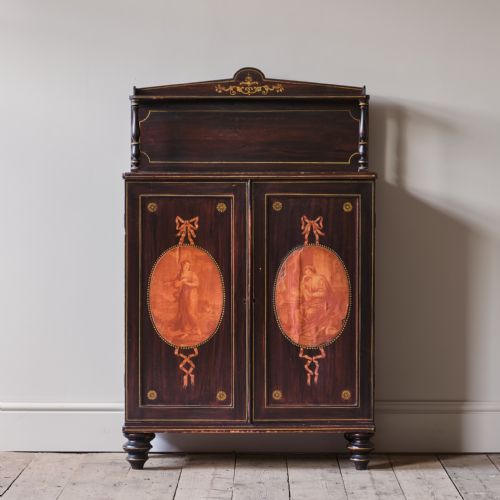
The selections available lean heavily toward satinwood and mahogany constructions, frequently taking the form of sideboards, commodes, and chiffoniers. Pieces range from austere geometric pedestals to curved demi-lune cabinets decorated with painted classical panels.
Origins span English cabinet makers, French workshops, and Italian makers working in the Neoclassical taste. The heavier Victorian and Edwardian interpretations sit alongside lighter Regency and Sheraton Revival designs.
Materials and Construction
Craftsmen built these cabinets using dense native and exotic timbers such as mahogany, walnut, satinwood, and rosewood, often applying elaborate marquetry inlay in boxwood and brass mounts. Painted surfaces, simulated graining in paint, and ebonised details provide alternative finishes across the periods.
Structural integrity relies on traditional joinery applied to carcases of pine or mahogany, faced with highly figured veneers. Gilt bronze mounts, brass galleries, and hand-carved wooden elements add structural definition and ornamental weight.
Design influences range from Georgian and Regency forms to Victorian, Edwardian, and Renaissance revival styles.
Judging Quality
Quality rests upon the selection of timber veneers, the precision of the marquetry inlay, and the crispness of any carved or cast bronze ornamentation. Superior examples display continuous grain matching and hand-painted panels executed with artistic depth rather than mechanical repetition.
The underlying construction, including drawer linings and the stability of the carcase under heavy weight, separates standard production pieces from exhibition grade creations. Original hardware, intact brass galleries, and well-preserved painted surfaces elevate a cabinet's standing.
Pietro Ferrario·Jean-Henri Riesener·Edwards and Roberts·Lamb of Manchester·Kaufman
The Classical Sideboard Cabinet Glossary
- Demi-lune
- A half-moon shape used for the footprint and top of small side cabinets and commodes. This curved form became particularly popular for satinwood painted pieces in the late nineteenth and early twentieth centuries.
- Marquetry inlay
- The art of applying pieces of veneer to a structure to form decorative patterns and pictures. Craftsmen utilise contrasting woods like boxwood and satinwood to create detailed classical motifs.
- Chiffonier
- A small sideboard or low cabinet developed during the Regency period, often featuring a shelf back. It provides compact storage for dining rooms and parlours.
- Credenza
- A sideboard or buffet table, originating in Italy, which gained prominence in Victorian drawing rooms. These pieces frequently incorporate breakfront designs and gilt bronze mounts.
- Pedestal sideboard
- A heavy dining room form comprising a central serving surface flanked by structural pedestals. Regency and nineteenth-century examples often include drop wells or brass galleries.
Classical Sideboard Cabinet: Frequently Asked Questions
How do I style a classical antique sideboard cabinet?
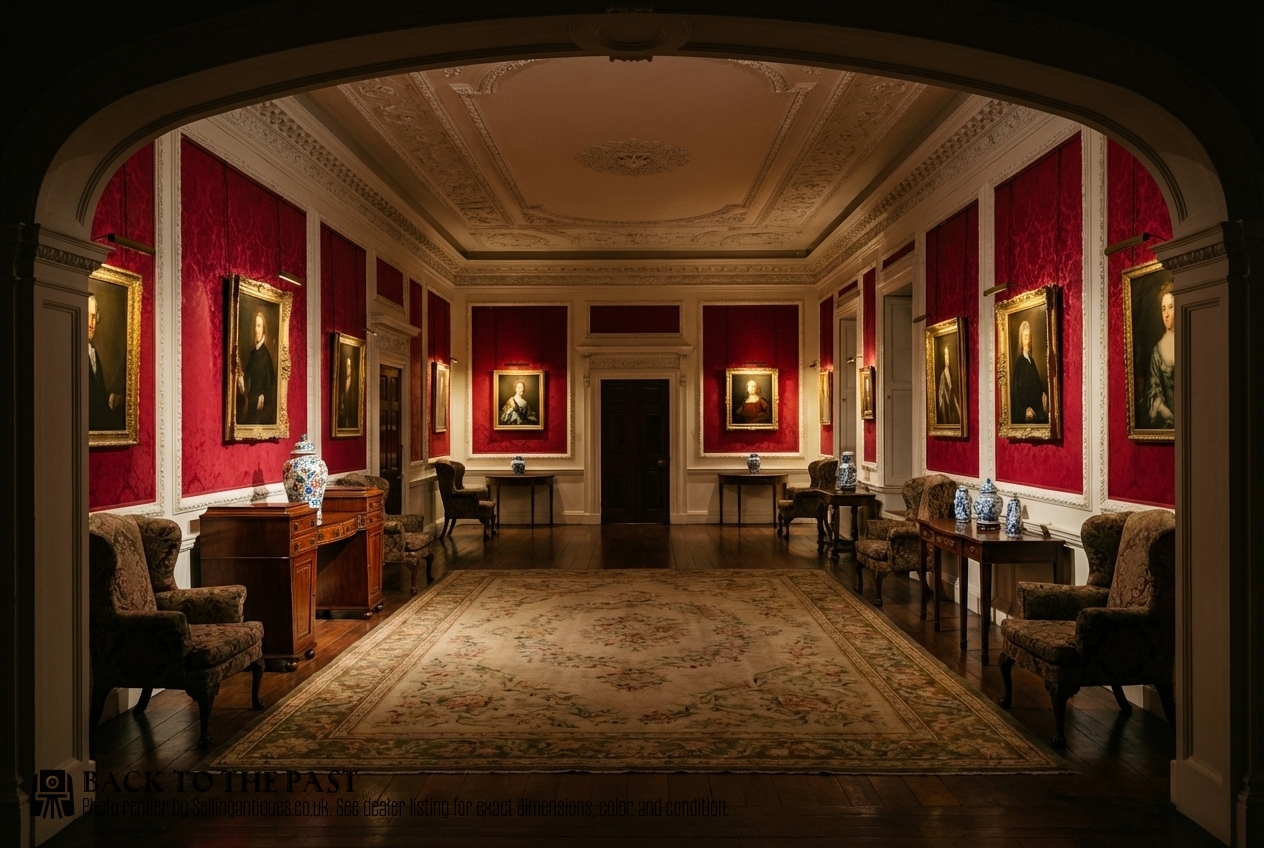
Position the piece against a principal dining room or hallway wall to anchor the spatial layout. Balance the top surface with traditional lighting or decorative bronze objects without crowding the timber grain.
Allow the architectural lines and inlay work to remain visible by keeping surrounding furniture understated. The cabinet functions effectively for storing dining linen or servingware while displaying decorative objects.
What is the difference between a sideboard and a commode?
Sideboards are traditionally longer dining room items designed for serving food and storing heavy table service. Commodes originate as lower, more decorative chests of drawers or cabinets intended for formal parlours.
In later revival pieces, the distinction blurs as makers applied the term commode to smaller demi-lune satinwood cabinets. Examine the interior depth and overall length to determine the original domestic function.
How do I date a painted satinwood cabinet?
Inspect the style of the painted panels, as Neoclassical revival pieces from the late nineteenth and early twentieth centuries often adopted eighteenth-century motifs. The ageing of the varnish over satinwood provides a reliable indicator of period authenticity.
Check the secondary timbers inside drawers and the hand-cut nature of the dovetails. Revival pieces from around nineteen hundred frequently combine older decorative styles with distinct turn-of-the-century cabinet construction.
Are these cabinets suitable for modern interiors?
The rich tones of mahogany, walnut, and satinwood introduce warmth and textural contrast to contemporary spaces. Their structured forms provide practical storage solutions for modern living areas without dominating the room.
Pairing a classical cabinet with minimalist surrounding decor highlights its craftsmanship and historical detail. The varied sizes available, from compact demi-lune commodes to large breakfront credenzas, accommodate different room proportions.