
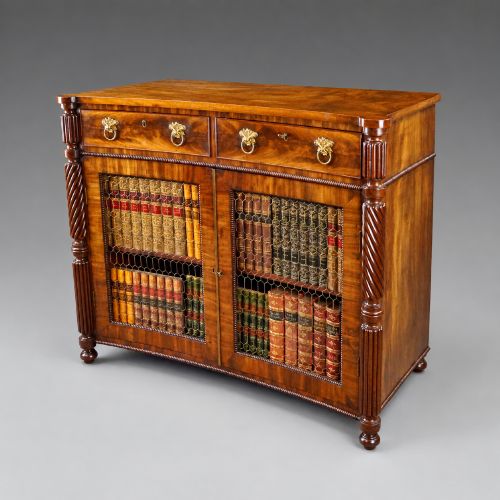
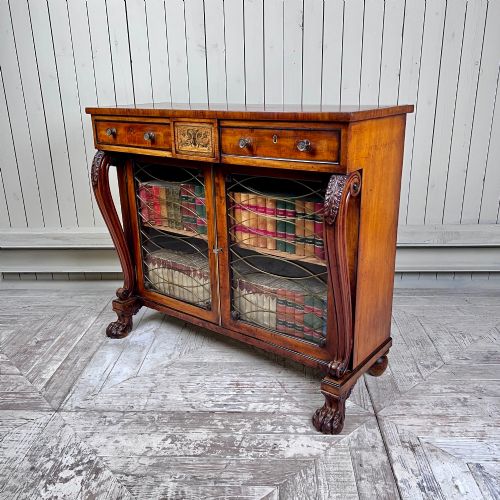
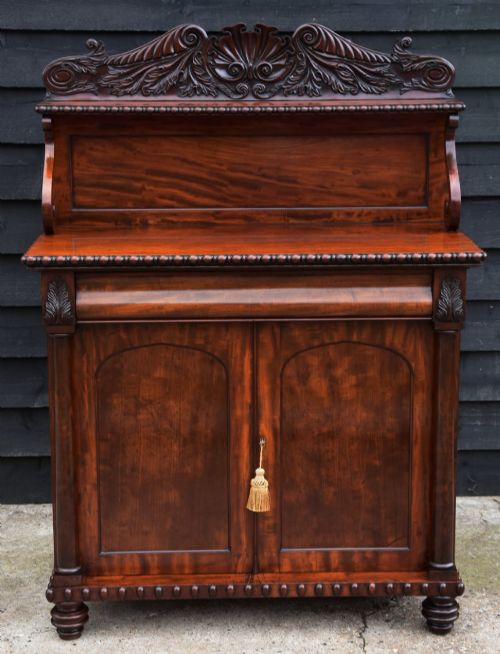
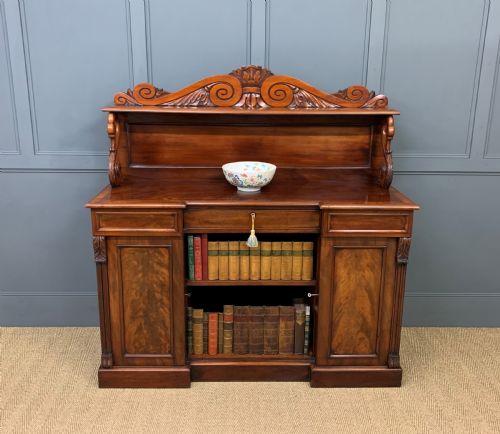
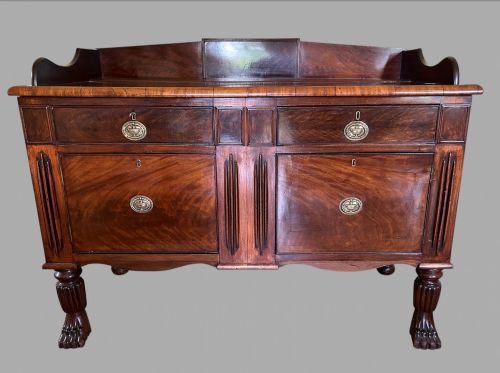
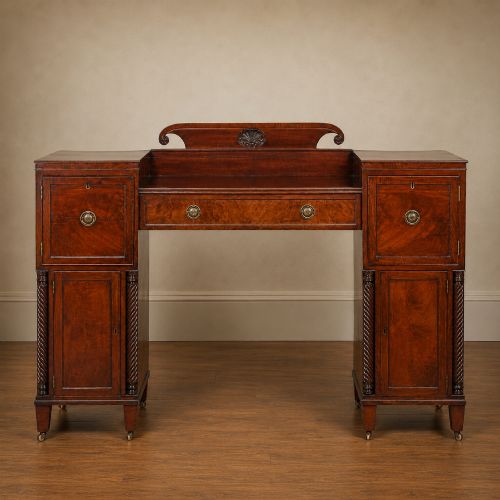
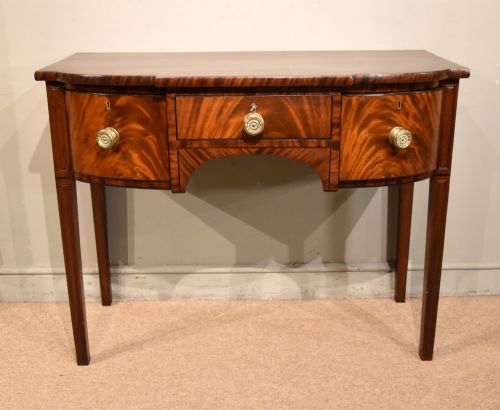
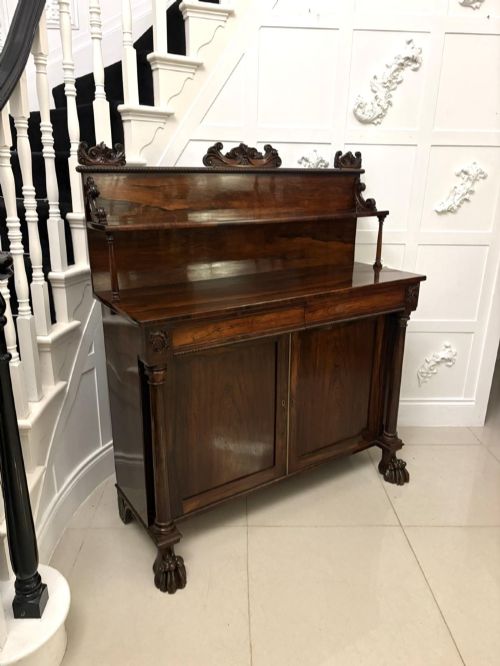
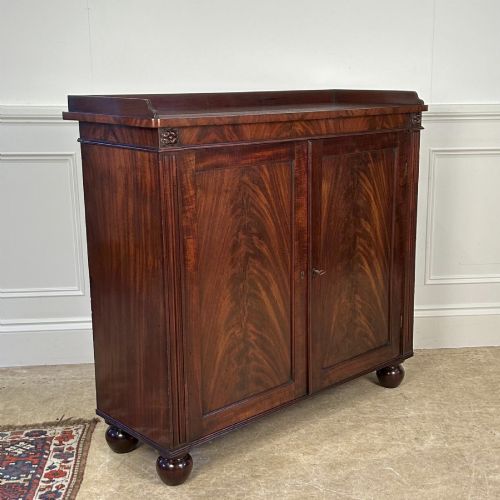


Regency Carved Mahogany Credenza
A regency carved mahogany credenza brings classical proportions and rich timber grain to a dining room or hall.
Regency Carved Mahogany Credenza
When buyers search for a regency carved mahogany credenza, they encounter substantial storage furniture spanning the nineteenth century, including sideboards, chiffoniers, and side cabinets. These pieces serve functional roles in dining and reception rooms while displaying the architectural lines typical of the period.
The selection on this page relies heavily on nineteenth century items, drawing from Regency, William IV, and George IV eras alongside late Georgian examples. Buyers meet pedestal sideboards, compact chiffonier bookcases, and concave side cabinets built from solid timber and rich veneers.
Forms vary from serpentine and bow front profiles to rectilinear dwarf cabinets with carved details. The origin remains rooted in British cabinet-making traditions of the eighteen hundreds, offering formal storage solutions that anchor a room's interior scheme.
Assessing Quality and Execution
The distinction between standard execution and finer pieces rests on the choice of timber and the depth of the carving. Superior examples display intensely figured flame mahogany veneer selected for symmetry, matched with crisp, hand-chiselled plant or scroll motifs rather than shallow factory moulding.
Construction methods also separate the range, where tight joinery, original brass hardware, and integrated ebony inlay demonstrate superior workshop practice. The handling of secondary woods and the precision of fitted drawers reveal the standard of the original cabinet-maker.
Several chiffoniers hide clever small compartments behind their lower doors for storing spirits out of sight.
Gillows
The Regency Carved Mahogany Credenza Glossary
- Credenza
- A sideboard or low cabinet used for storage and display in dining spaces. The term covers various low storage forms from the nineteenth century.
- Chiffonier
- A compact sideboard or cabinet featuring shelves or a superstructure with doors. These pieces provide enclosed storage alongside upper display tiers.
- Flame Mahogany
- A veneer cut from timber fork joints to create leaping, flame-like patterns. Cabinet-makers prized this grain for prominent door and drawer surfaces.
- Pedestal Sideboard
- A large dining room sideboard featuring two distinct flanking pedestals united by a central board or table section. This form emerged strongly during the Regency and William IV periods.
- Stringing
- Thin inlay lines of contrasting wood or brass set flush into the primary surface. This technique outlines drawers, doors, and borders to frame the timber grain.
Regency Carved Mahogany Credenza: Frequently Asked Questions
What is the difference between a sideboard and a chiffonier?
Sideboards are generally larger dining room pieces designed for serving food and storing heavy tableware, often featuring pedestals or expansive drawers.
Chiffoniers are more compact storage cabinets that frequently include a raised shelf back or bookcase superstructure for smaller items.
How do I identify a Regency period piece?
Regency furniture dates from roughly the early nineteenth century and draws heavily on classical Greek and Roman architectural motifs.
Look for clean geometric lines, dark mahogany timber, brass inlay work, and restrained carving rather than heavy Victorian ornamentation.
Where were these cabinets placed in a home?
These items traditionally stood against dining room walls to hold heavy silver, linen, and wine bottles during formal meals.
Later variations found homes in hallways and drawing rooms as general display and storage furniture.
How do I care for antique mahogany surfaces?
Keep mahogany furniture away from direct sunlight and strong heat sources to prevent the timber and veneer from drying out.
Apply natural beeswax periodically and buff gently with a soft cloth to maintain the lustre of the polished wood.