

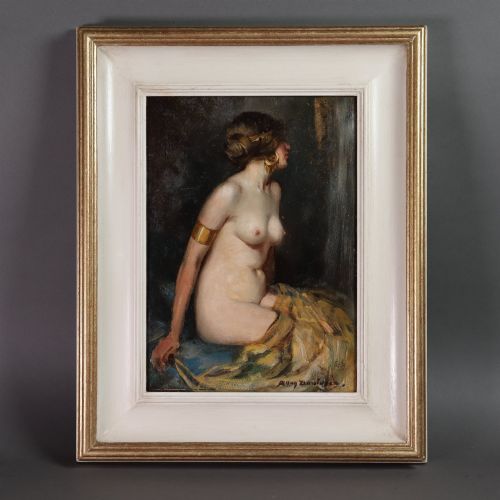


Classical Academic Oil Painting
A classical academic oil painting brings structured realism and narrative depth into a room, capturing historical, mythological and portrait subjects with disciplined technique.
Classical Academic Oil Painting
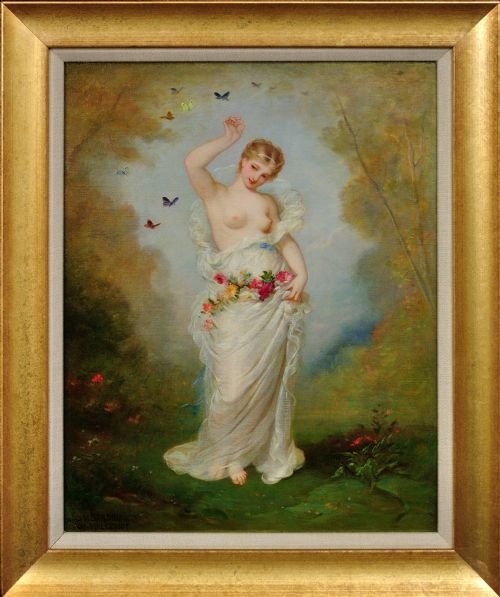
A classical academic oil painting represents rigorous training from the nineteenth and early twentieth centuries, spanning French academic, Victorian and Edwardian realism. These works focus on portraits, historical genre scenes and mythological figures rendered with careful precision.
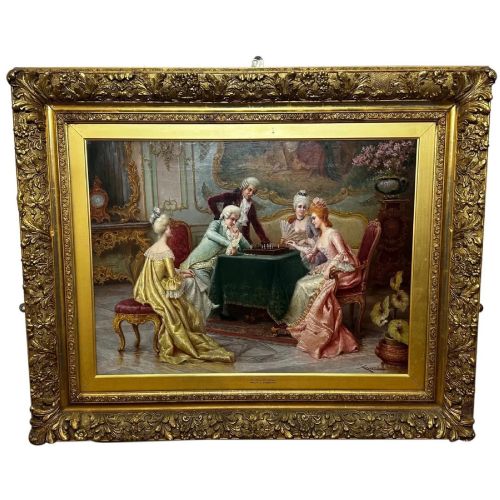
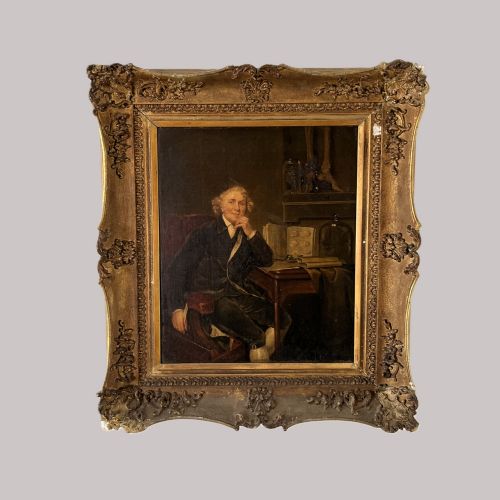
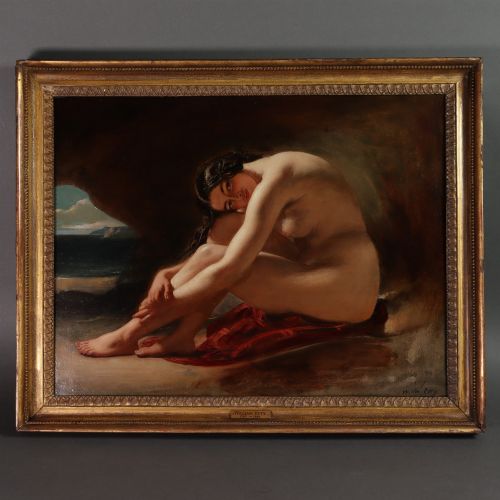
The version most commonly met on this page is the nineteenth century canvas portrait or genre study. Figures range from named historical subjects to anonymous Italian girls and seated nudes.
Compositions often follow traditional narrative traditions, depicting literary moments, elopements or quiet domestic interiors. They reflect the formal teaching methods of European academies.
Materials and construction
Artists relied primarily on oil paint applied to woven canvas, wood panels or paper studies. The medium allowed for subtle blending of tones and rich saturation of colour.
Many surviving works retain their original giltwood and gesso frames, often finished with gold leaf. These frames complement the formal presentation of the academic canvas.
A painted trumpeter and a smoker stand side by side, proving that even formal academic artists enjoyed a quiet pub dynamic.
Assessing quality
Quality rests in the precision of anatomical rendering, brushwork control and the psychological depth of the portraiture. Stronger examples reveal confident handling of light and shadow across drapery and skin.
The integrity of the supporting canvas, panel and period frame influences the overall preservation. Works retaining their signed attribution or original framing demonstrate higher documentary interest.
André Charles Voillemot·William Etty·Allan Douglas Davidson·James Clark·Fernand Jean Barbier·Paul Viry·Willem Johannes Martens·Jules Girardet·Sir Samuel Luke Fildes·Eugene Hindle·Pierre-Louis Bouchard
The Classical Academic Oil Painting Glossary
- Academic
- Pertaining to the formal style and rigorous standards taught by European art academies. This approach prioritises anatomical accuracy and historical subjects.
- Canvas
- A heavy woven fabric stretched across a wooden frame to serve as a support for oil paint. It remains the most common substrate for nineteenth century works.
- Giltwood
- Wood carved and coated with gold leaf or metallic paint. Frames of this material are frequently paired with formal nineteenth century portraits.
- Genre scene
- A painting depicting aspects of everyday life by portraying ordinary people engaged in common activities. These works often carry narrative or moral undertones.
- Oileograph
- A mechanical reproduction on canvas designed to imitate an oil painting. These prints use layered inks to simulate brush texture.
Classical Academic Oil Painting: Frequently Asked Questions
What defines a classical academic oil painting?
These works are rooted in the traditional teaching methods of nineteenth century European art academies. They emphasise precise draftsmanship, anatomical accuracy and subjects drawn from history, mythology or literature.
Compositions follow formal rules of balance and narrative clarity. Artists used layered oil paints on canvas or panel to achieve realistic textures in skin, fabric and background details.
How were these paintings displayed?
In their original period settings, these works hung in formal reception rooms, galleries and domestic parlours. Their scale and subject matter commanded attention within a room.
They were almost exclusively paired with heavy giltwood and gesso frames designed to isolate and elevate the painted scene from its surroundings.
How do I care for an oil painting on canvas?
Keep the canvas away from direct sunlight and sources of heat to prevent the oil paint and wood stretcher from drying out. Stable indoor temperatures preserve both the ground layer and the textile.
Dust the surface gently with a soft, dry brush without applying pressure. Avoid using water or chemical cleaners on the paint surface.
How can I tell a study from a finished painting?
Studies often appear looser in brushwork and focus on a single element, such as a foot, a hand or a specific facial expression. They were created as preparatory exercises for larger compositions.
Finished works present complete narratives, fully realised backgrounds and refined details intended for public exhibition or sale.