
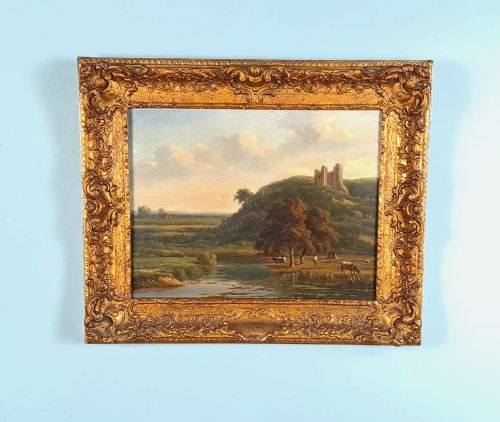


Classic British Landscape Painting
Classic British landscape painting captures rural scenes from the nineteenth and early twentieth centuries in oil and watercolour.
Classic British Landscape Painting
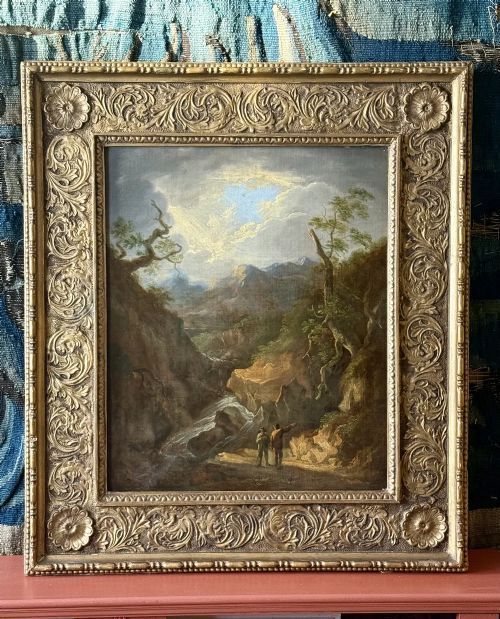
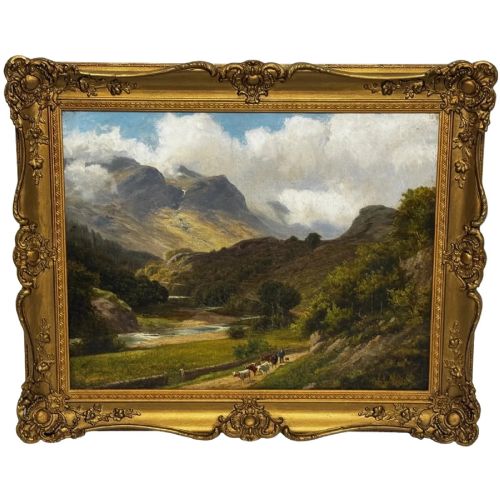
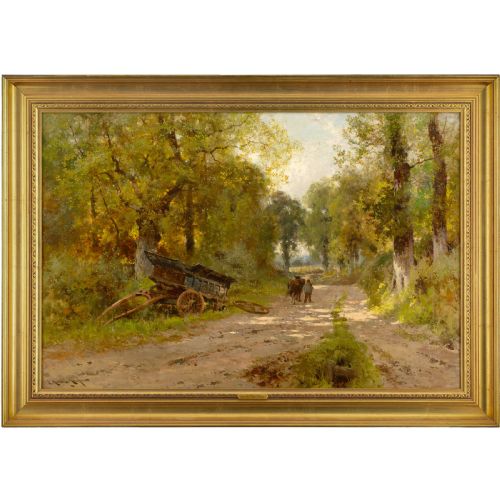
A classic british landscape painting portrays pastoral views, river valleys, and rural life from the nineteenth and early twentieth centuries. These works range from small oil sketches on board to large framed canvases depicting Welsh mountains, northern lakes, and English country lanes.
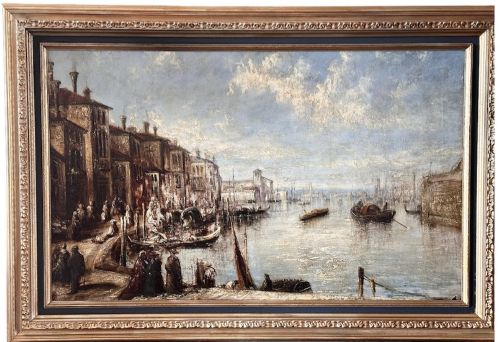
The pieces available here lean heavily into Victorian pastoral themes and the English Country School tradition. Buyers encounter depictions of livestock, farm workers, village taverns, and coastal waterways rendered by regional artists working across the Victorian and Edwardian eras.
Materials and construction
Artists built these works using oil paint applied to stretched canvas or wooden board, alongside watercolour on paper. Canvases are frequently housed within heavy giltwood and gesso frames that reflect the decorative tastes of the period.
Pigments were layered to capture natural light, atmospheric weather conditions, and topographical details. The physical support often bears period markings, artist signatures, and framing stamps that indicate the workshop or supplier.
Listings span the nineteenth and twentieth centuries, featuring oil on canvas and watercolour works within period giltwood frames.
Assessing quality and execution
Quality rests in the handling of light, brushwork fluidity, and compositional balance within the landscape. Superior examples demonstrate a confident command of perspective and naturalism, whereas weaker works rely on rigid repetition and flat colour blocking.
The condition of the paint surface and the originality of the frame influence the integrity of the piece. Works retaining their untouched nineteenth-century oil surfaces and period gilt frames hold greater visual cohesion.
Francis Moltino·T C Hofland·William Henry Mander·William Mellor·Walter J Watson·Benjamin Williams Leader·Peter Deakin·John Wright Oakes·Alfred de Breanski·Sydney Kendrick·James L Brooke·Frederick J Knowles·Ernest Walbourn·Alfred Banner·Edward H Holder·William Stephen Coleman·A Davis·James Poole·John Holland Snr·Peter de Wint
The Classic British Landscape Painting Glossary
- Oil on canvas
- Pigment suspended in a drying oil applied to a woven fabric support stretched over a wooden frame. This medium allowed artists to work with rich textures and deep colour tones.
- Giltwood
- Wood carved and coated with a thin layer of gold leaf or metallic gilt powder. It forms the decorative surface of traditional picture frames.
- Gesso
- A paint mixture consisting of a neutral binder mixed with chalk, gypsum, or pigment. It was applied to wooden frames as a smooth base before gilding.
- Watercolour painting
- Works created using water-soluble pigments on paper. This technique produces translucent washes of colour common in nineteenth-century British paper works.
- English Country School
- A descriptive term for nineteenth-century artists focusing on rural scenery, agricultural life, and domestic animals. These paintings celebrate the quiet realities of the British countryside.
Classic British Landscape Painting: Frequently Asked Questions
What subjects appear in these paintings?
These works depict rural British scenery, including Welsh mountain passes, northern lakes, river banks, and harvested fields. Scenes often incorporate figures such as farmers, anglers, and children alongside cattle, sheep, and village architecture.
Artists drew inspiration from specific regional geography, recording recognisable locations from Wales, the Lake District, and English shires during the Victorian and Edwardian periods.
How do I date an oil painting?
Dating relies on stylistic clues, artist biography records, and the physical construction of the canvas and stretcher. Victorian works often feature characteristic earth palettes and heavy gilt frames.
Inscribed titles, artist signatures, and old exhibition labels on the reverse provide definitive chronological markers for individual pieces.
How should I frame and display them?
Display these works away from direct sunlight and damp environments to protect the oil pigments and paper supports. Many pieces retain their original nineteenth-century giltwood frames, which complement the scale and tone of the canvas.
Hanging requires secure wall anchors suited to the substantial weight of traditional wood and gesso framing.
What is the difference between oil and watercolour?
Oil paintings utilise slow-drying paint on canvas or board, allowing for thick impasto textures and deep tonal layering. Watercolours employ water-soluble pigments on paper, creating translucent effects and lighter compositions.
Oils were typically framed behind open mounts or glassless wooden borders, whereas nineteenth-century watercolours required glass protection against atmospheric moisture.