



Classic Brass Wall Appliques
Classic brass wall appliques bring enduring illumination and period elegance to a room.
Classic Brass Wall Appliques
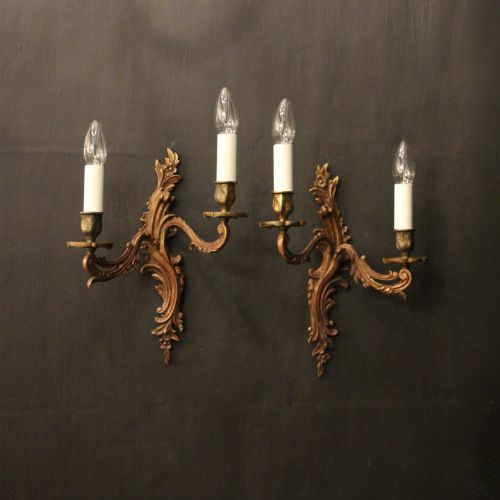
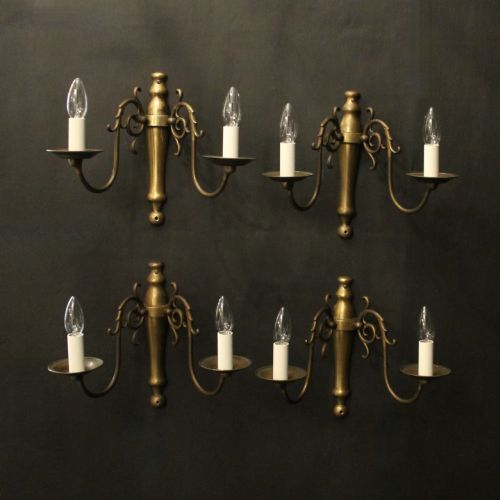
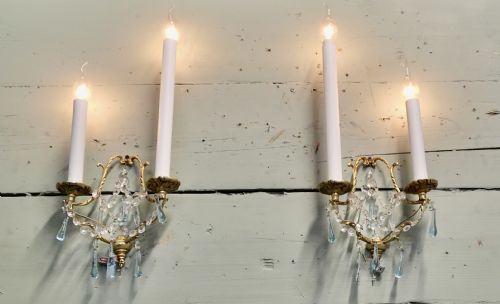
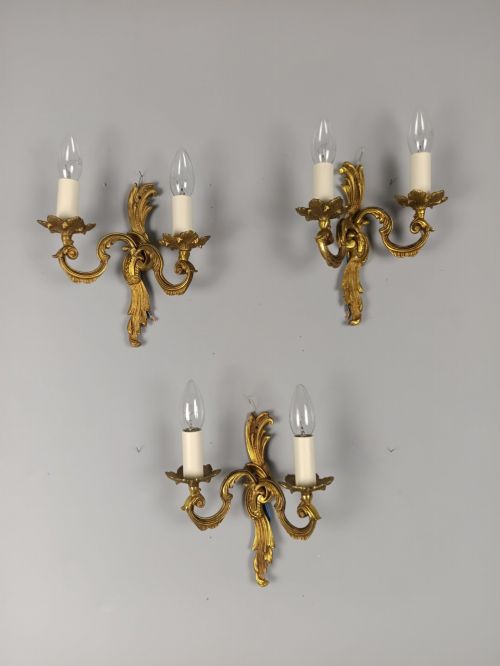
Classic brass wall appliques are decorative wall-mounted light fixtures designed to hold multiple candles or electric bulbs, predominantly taking the form of wall lights and wall sconces. When you search for classic brass wall appliques, you are looking at items that span from the mid-nineteenth century through to the interwar period of the twentieth century, with a strong representation of pieces dated around nineteen thirty.
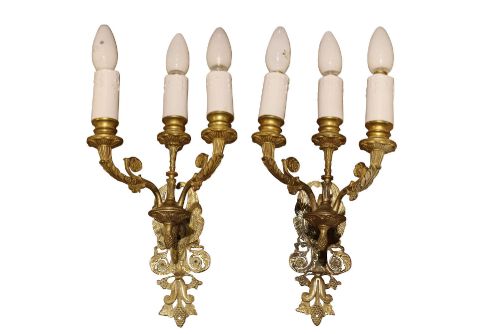
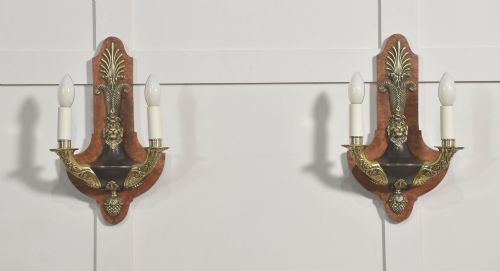
The selection on this page leans heavily toward French origins, particularly incorporating styles such as French Rococo, French Neoclassical, Louis XVI, and French Empire. Buyers will frequently encounter matched pairs or larger sets featuring twin-arm and triple-arm configurations, constructed to mount directly onto interior walls.
How they were made
These fixtures rely heavily on cast brass, gilt bronze, and gilded brass, often worked into detailed decorative arms and backplates. Some examples combine the metallic structure with contrasting materials like burr walnut and crystal accents.
The manufacturing techniques draw upon traditional foundry methods, utilising casting and mercury gilding or modern electrogilding to achieve a durable metallic finish. Details reflect historical revivalism, taking inspiration from Louis XVI design motifs and Empire styling.
Classic Brass Wall Appliques Retail Price Guide 2026
Typical asking prices for classic brass wall appliques among the pieces listed under this phrase on Sellingantiques today, from the lower quarter to the upper quarter. They describe what is for sale here now, not the wider market.
What varies in quality
The refinement of the casting work separates standard production pieces from finer examples, determining how crisply leaf motifs and classical ornaments are rendered. Heavier gauge metals and deeply chased bronze surfaces indicate superior handwork in the workshop.
The integrity of the gilding and the matching of components across sets also dictate the overall standard. Sets of multiple lights that retain consistent patination and unified arm configurations command greater stylistic coherence.
The Classic Brass Wall Appliques Glossary
- Wall sconce
- A decorative lighting fixture fixed to a wall, designed to project light into a room using candles or electrical fittings. These often feature backplates that reflect illumination.
- Gilt bronze
- Bronze metal treated with a thin layer of gold or gold-coloured alloy applied to the surface. It is frequently termed ormolu in French pieces.
- Louis XVI style
- A neoclassical design vocabulary characterised by straight lines, symmetry, and classical motifs like urns and acanthus leaves. It experienced several revivals during the nineteenth and twentieth centuries.
- Twin-branch
- A lighting arm configuration holding two distinct candle nozzles or lamp holders branching from a single mounting point. Sets often include twin or triple arm variations.
Classic Brass Wall Appliques: Frequently Asked Questions
How do I wire old wall lights?
Older wall lights typically require rewiring by a qualified electrician to meet modern safety standards. Contemporary wiring can usually be threaded discreetly through the existing brass channels without altering the visible metalwork.
Most antique wall appliques accommodate standard small Edison screw or bayonet cap lamp holders. Professional installation ensures the backplate secures firmly to standard wall junction boxes.
What is the difference between brass and gilt bronze?
Brass is an alloy of copper and zinc, valued for its warm metallic tone and strength in casting. Gilt bronze consists of a bronze base covered in a fine layer of gold leaf or applied gold amalgamation.
While solid brass can be polished to a bright finish, gilt bronze retains a more subdued, golden radiance that resists heavy tarnishing. Both materials were utilised extensively across nineteenth and twentieth-century French lighting.
How do I date an antique wall light?
Dating relies on examining the casting techniques, fixing screws, mounting brackets, and stylistic details. Nineteenth-century pieces often display hand-filed components and heavy cast backplates, whereas twentieth-century examples may incorporate standardised electrical threading.
Stylistic cues such as Louis XVI revival elements or Empire motifs offer a broad chronological window. Comparing the patination of the metal across the fixture helps confirm period authenticity.