
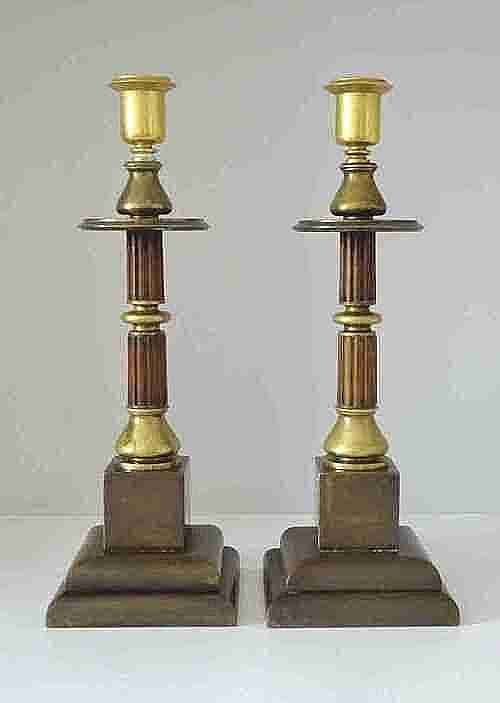


Classic Brass Candleholders
Classic brass candleholders bring immediate warmth to a room, combining functional illumination with enduring metalwork from the Georgian, Victorian, and Edwardian eras.
Classic Brass Candleholders
When you search for classic brass candleholders, you are looking at domestic lighting accessories designed to support tallow candles or tapers securely upon tables, desks, and floors. These items range from simple domestic implements to adjustable lamps intended for reading and writing.
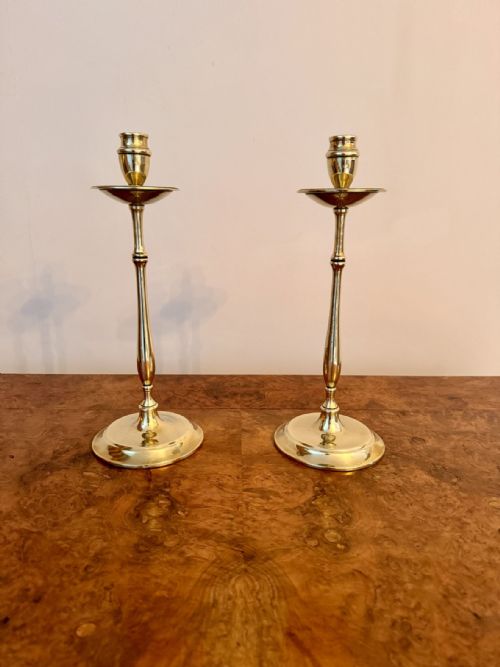
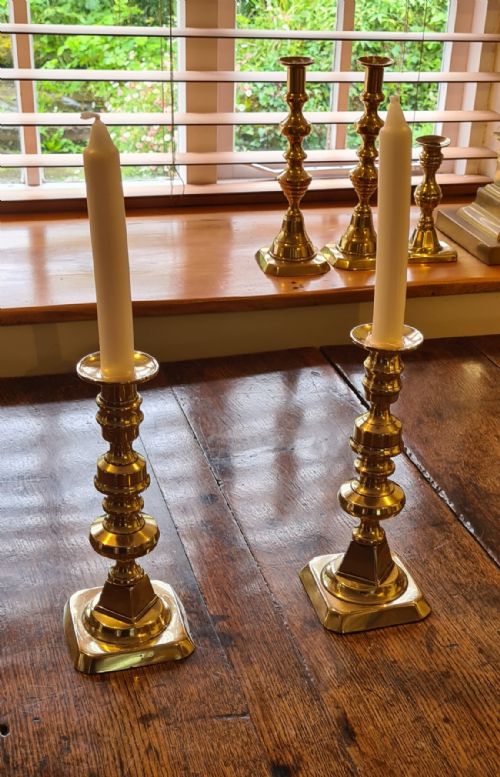
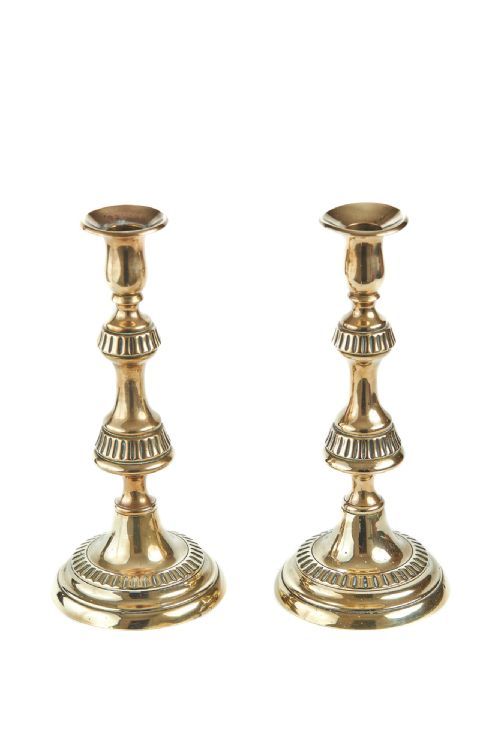
The versions you are most likely to meet on this page include pairs of candlesticks originating from the Victorian and Georgian periods, alongside taller floor-standing variations. They appear in forms such as twist columns, petal-based designs, and ejector models equipped with internal mechanisms to push out remnants of wax.
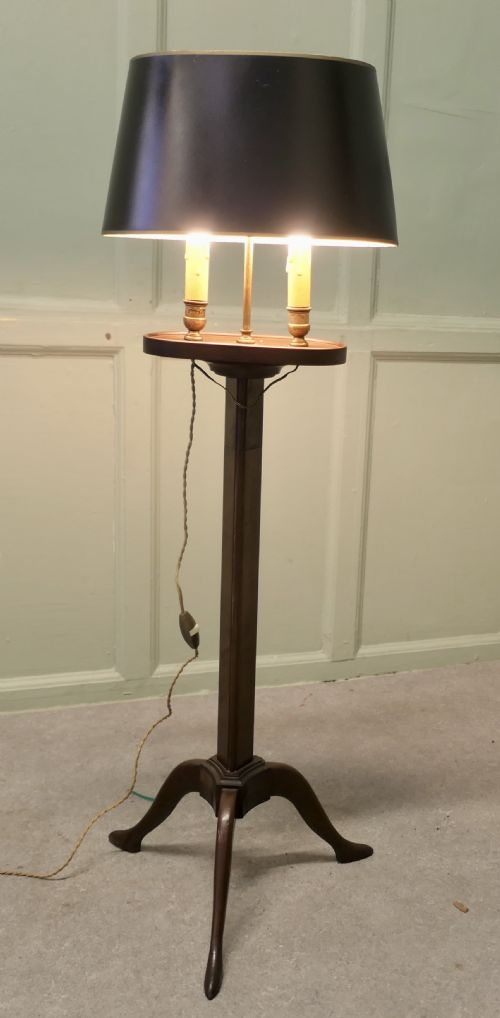
Many examples date through the nineteenth century, with specific pieces attributed to the 1870s, 1880s, and early decades of the twentieth century. Alongside standard table candlesticks, you will occasionally encounter specialised forms like bouillotte lamps and combined mahogany and brass constructions.
How they were made
Makers constructed these pieces primarily from brass, bronze, and solid brass, occasionally integrating secondary materials such as mahogany and painted metal into the designs. Metal components were cast or turned on lathes to achieve the desired profiles, creating both smooth shafts and intricate twist patterns.
Assembly techniques involved joining separate cast components, such as bases, stems, and drip pans, to form sturdy upright supports. Mechanisms like the ejector systems found in mid-nineteenth-century examples required precise internal fitting to function smoothly without jamming.
Some nineteenth-century makers cleverly hid small metal frogs inside the base to keep candles upright without melting the wax.
What varies in quality
The division between standard domestic pieces and finer examples rests on the crispness of the casting and the sophistication of the silhouette. Early Georgian petal bases and precise Victorian twist stems demonstrate a higher level of artisan skill than mass-produced later variants.
The choice of materials and the integrity of assembly further distinguish the range, particularly where mixed media like mahogany is integrated with the metalwork. Weight and proportion remain reliable indicators of how thoroughly a piece was finished by its maker.
The Classic Brass Candleholders Glossary
- Ejector
- A built-in sliding mechanism within the stem that pushes the candle stub upward for easy removal. This ingenious device saved time and kept fingers clean during daily use.
- Petal base
- A rounded foot shaped to resemble overlapping flower petals, commonly seen on eighteenth-century candlesticks. This form provided a stable foundation while adding decorative grace.
- Twist
- A spiralling stem carved or cast into the column of a candlestick. This technique catches the light dynamically from various angles in a room.
Classic Brass Candleholders: Frequently Asked Questions
How do I date an old brass candlestick?
Dating relies on examining the construction methods, base shapes, and overall stylistic markers present in the metalwork. Georgian examples often feature petal bases, while Victorian pieces frequently incorporate heavy casting and ornate detailing.
Changes in manufacturing techniques through the nineteenth century also help narrow down the decade of production. Examining the wear patterns and assembly joints provides further clues regarding age.
What is an ejector candlestick?
An ejector candlestick contains a small internal lever or side knob that operates a disc inside the nozzle. Pushing this mechanism up ejects the remaining wax stub.
This practical addition became popular during the nineteenth century to simplify the cleaning and maintenance of lighting equipment. Pairs featuring this system are particularly sought after by collectors.
How should I clean antique brass?
Cleaning antique brass requires a gentle approach to preserve the natural patina accumulated over centuries of existence. Harsh commercial polishes can strip away the aged surface character that collectors value.
Using a soft cloth and mild soapy water usually suffices to remove surface dust and grime. Avoid aggressive scrubbing on pieces with delicate cast details or painted metal elements.
Were these candlesticks always sold in pairs?
Many domestic candlesticks were manufactured and sold as matched pairs to grace mantlepieces, dining tables, and sideboards symmetrically. Single examples do survive from broken sets or specialised single-lamp applications like desk use.
Matching pairs generally command more attention from buyers seeking balanced decorative arrangements in traditional interiors. However, individual pieces still offer distinct sculptural presence on a small surface.