

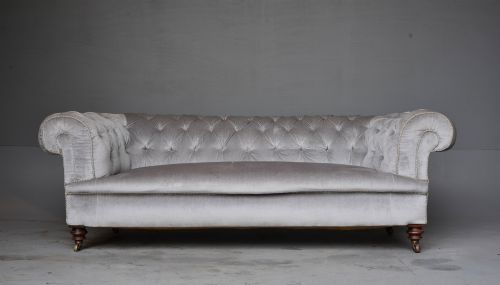
Classic 3 Seater Sofa
These classic 3 seater sofa examples offer enduring proportions and generous seating, bringing substantial comfort and historic character into a room.
Classic 3 Seater Sofa
Buyers seeking a classic 3 seater sofa will encounter substantial seating options spanning periods from the Victorian era through to the 1930s. The selection commonly includes deep buttoned leather Chesterfields alongside country house settees and 1930s designs.
Most pieces on offer originate from British traditions, encompassing styles such as English Country House, Victorian, and 1930s Art Deco. Forms range from heavy club sofas to refined walnut-framed seating.
The inventory regularly presents larger proportions suited to principal reception rooms, combining traditional upholstery with robust timber frames.
Materials and construction methods
Construction relies heavily on traditional timber frames built from woods such as walnut and general timber, providing a sturdy architectural skeleton. Upholstery methods involve durable hessian webbing to support deep springs and generous padding.
Outer coverings utilise natural materials including traditional leather, velvet, and various woven fabrics. Selected pieces feature hand-dyed finishes and detailed deep buttoning secured through traditional tufting techniques.
Classic 3 Seater Sofa Retail Price Guide 2026
Typical asking prices for classic 3 seater sofa among the pieces listed under this phrase on Sellingantiques today, from the lower quarter to the upper quarter. They describe what is for sale here now, not the wider market.
Current listings feature materials including brass, leather, velvet, and walnut across Victorian and 1930s periods.
Assessing quality and finish
Quality differentiates itself through the integrity of the underlying timber frame and the precision of the upholstery work. Superior pieces display master craftsmanship in their button tufting and the selection of high-grade leather or fabric coverings.
The distinction between standard examples and finer items rests on the preservation of original materials, the depth of hand-dyed colouration, and the overall balance of the proportions.
Howard And Sons
The Classic 3 Seater Sofa Glossary
- Chesterfield
- A traditional sofa style characterised by deep button tufting and equal height for the back and arms. It remains a staple of period British seating.
- Tufted
- A method of securing upholstery stuffing by pulling twine deeply through the padding to create a geometric pattern of indentations. This technique ensures the filling remains evenly distributed.
- Hessian
- A coarse woven fabric traditionally utilised inside upholstered furniture as a durable foundation layer for springs and horsehair stuffing. It provides essential structural support beneath the final outer covering.
- Walnut
- A dense, dark timber prized for furniture frames during the Edwardian and earlier periods. It offers both strength and a rich natural grain pattern.
Classic 3 Seater Sofa: Frequently Asked Questions
What defines a classic 3 seater sofa?
These pieces are substantial seating options designed to accommodate three people comfortably, typically featuring traditional proportions from the Victorian, Edwardian, or 1930s periods.
They often incorporate classic styling such as deep buttoning, rolled arms, and robust timber frames covered in leather or heavy fabric.
How do I care for a leather sofa?
Leather upholstery requires regular dusting and occasional treatment with appropriate conditioning balms to maintain suppleness and prevent drying.
Keep these pieces away from direct sunlight and heat sources to preserve the natural finish and colour depth of the hide.
Where were these sofas used historically?
Historically, such large seating was placed in the principal reception rooms, libraries, and drawing rooms of substantial country houses and town residences.
They served as comfortable, durable gathering points for families and guests in formal and informal living spaces alike.
How do I distinguish a Victorian piece from a 1930s piece?
Victorian examples frequently display heavier, more ornate proportions with deep buttoning and traditional dark wood or leather finishes. Pieces from the 1930s often lean towards streamlined Art Deco influences or club chair designs.
Examining the underlying materials, upholstery style, and framing techniques helps clarify the specific period of manufacture.