

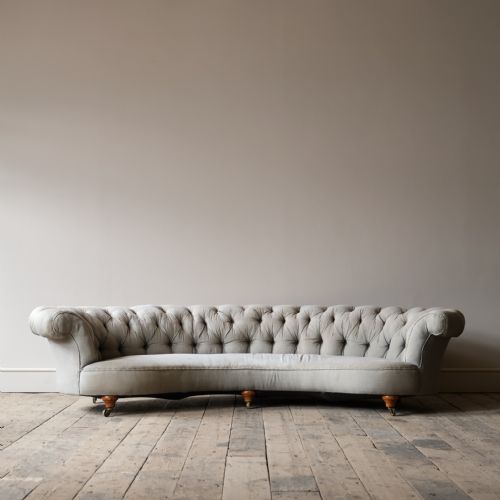
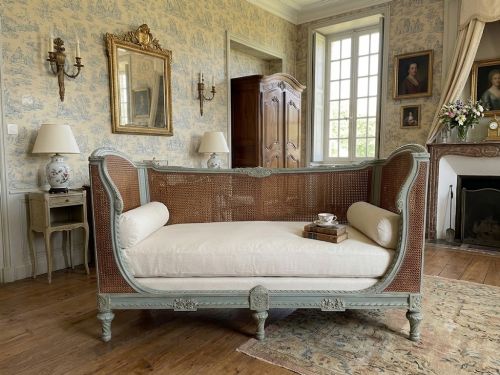


Antique Grey Couch
An antique grey couch offers a handsome seat for the drawing room, spanning periods from the Regency to the Edwardian era.
Antique Grey Couch
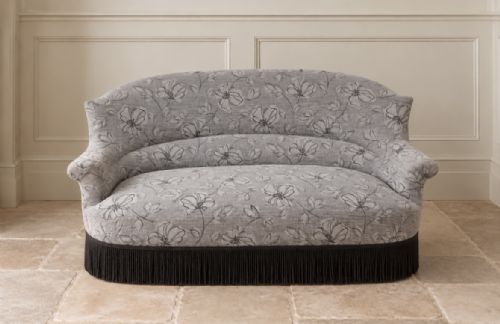
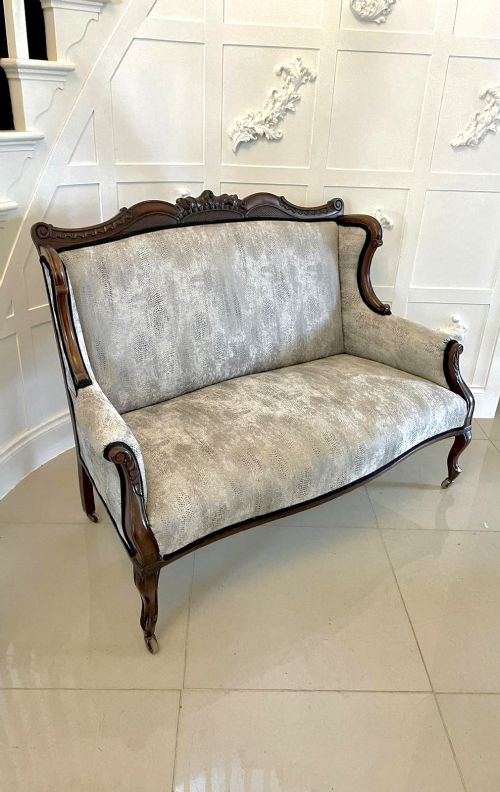
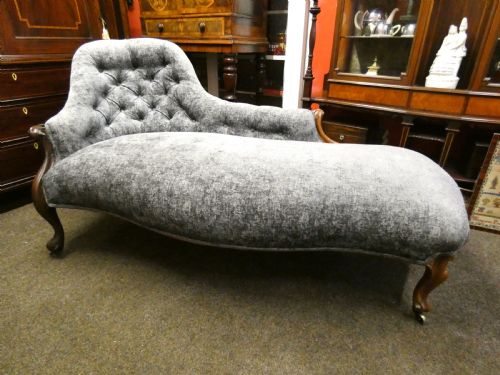
An antique grey couch encompasses a range of seating forms, including settees, sofas, chaise longues, daybeds, and window seats. Buyers seeking an antique grey couch will encounter pieces shaped by Victorian, Edwardian, and Regency tastes, alongside French Louis XVI style designs.
The selection includes substantial mahogany frames from the nineteenth century, alongside painted and gilt items, plus cane day beds and country house hall sofas. These forms served various domestic spaces, from formal reception rooms to private bedrooms and halls.
Origin and period define the character of each piece, with nineteenth-century workshops producing both carved mahogany framework and lighter painted structures. The assortment reflects diverse historical influences, including Anglo-Indian craftsmanship and continental European styling.
How they were made
Maker construction relies heavily on timber frameworks, principally mahogany, walnut, beech, and timber, joined to support upholstered or caned surfaces. Brass components frequently appear on castors or decorative mounts, adding structural detail to nineteenth-century frames.
Upholstery techniques utilise traditional fabrics including velvet, linen, and standard textiles, stretched over sprung or stuffed foundations. Painted and gilt finishes decorate specific French and English frames, altering the appearance of the underlying wood.
Antique Grey Couch Retail Price Guide 2026
Typical asking prices for grey couch among the pieces listed under this phrase on Sellingantiques today, from the lower quarter to the upper quarter. They describe what is for sale here now, not the wider market.
Listings feature timber frames in mahogany, walnut, beech, and general wood, paired with velvet, linen, and fabric upholstery.
What varies in quality
Quality shows in the carving of the timber frame, where crisp detailing on mahogany or walnut separates standard production from finer cabinet work. The retention of original painted or gilt surfaces also distinguishes superior examples.
Construction integrity depends on the original joinery within the frame and the preservation of materials like cane work or exposed brass elements. Pieces retaining their original upholstery finish or maintaining structural stability without extensive timber replacement command greater interest.
Howard and Sons
The Antique Grey Couch Glossary
- Canapé
- A French term for a decorative sofa or settee, often built in specific continental styles like Louis XVI. These frames frequently feature painted or gilt woodwork.
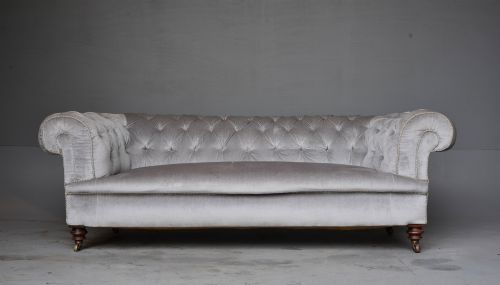
- Chesterfield
- A deep-buttoned upholstered sofa style popularised during the Victorian period. Examples by makers such as Howard and Sons represent notable nineteenth-century production.
- Settee
- A long wooden or upholstered seat with a back and arms, designed for multiple occupants. The form appears in various period styles from Regency to Edwardian.
Antique Grey Couch: Frequently Asked Questions
How do I date an antique grey couch?
Dating relies on the stylistic characteristics of the wood framework, such as Regency mahogany turning or Victorian Rococo carving. Examining the construction methods and material choices provides further clues to the decade of manufacture.
Period details like painted Louis XVI style finishes or Edwardian proportions help narrow down the age. Comparing the joinery with known nineteenth-century production standards confirms the timeline.
Where were these couches placed originally?
These seating forms occupied principal reception rooms, grand halls, and private chambers in period houses. Chaise longues and daybeds suited dressing rooms or quiet drawing room corners.
Larger settees and sofas anchored formal sitting rooms for entertaining guests. Smaller window seats utilised light wells and gallery spaces.
What fabrics are typical for these pieces?
Original and period-appropriate upholstery materials include velvet, linen, and woven fabric. Caning also appears on daybeds and specific settee frames.
Textiles were chosen to complement the woodwork, whether carved mahogany or painted and gilt surfaces. Many items now carry replacement coverings reflecting later interior schemes.
How do I care for antique wood and upholstery?
Preserving the timber frame requires stable indoor humidity and protection from direct sunlight to prevent wood cracking. Regular dusting keeps carved mahogany and walnut surfaces clean.
Upholstery longevity depends on gentle vacuuming and prompt attention to spills without harsh chemicals. Brass mounts benefit from careful cleaning to avoid marking adjacent fabric or wood.