

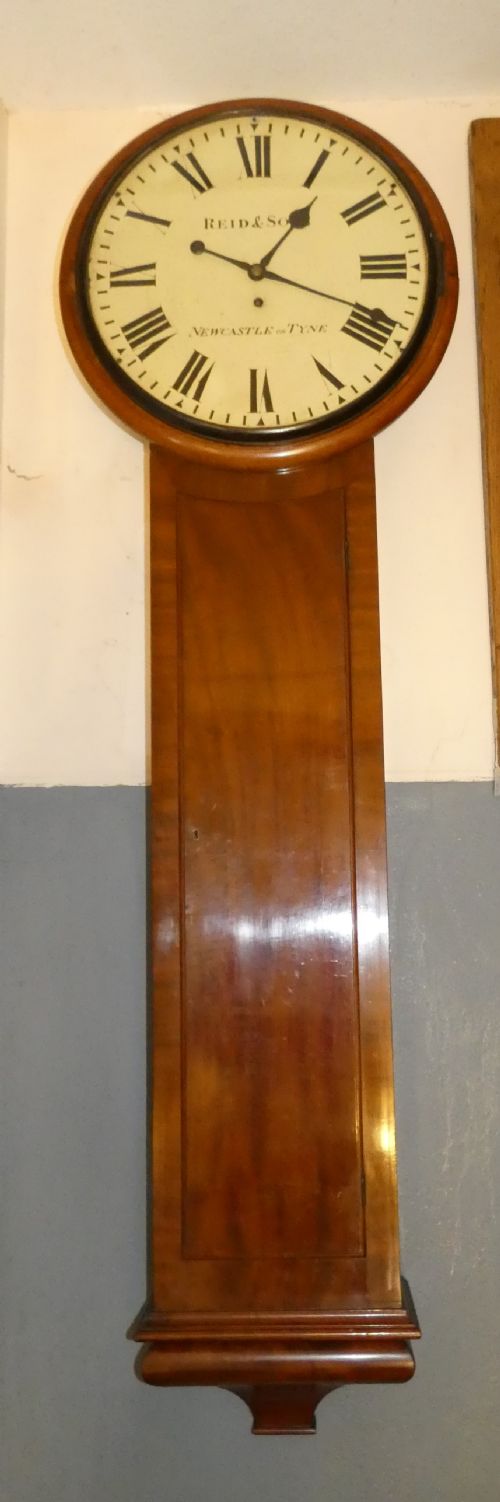


Circular Wall Timepiece
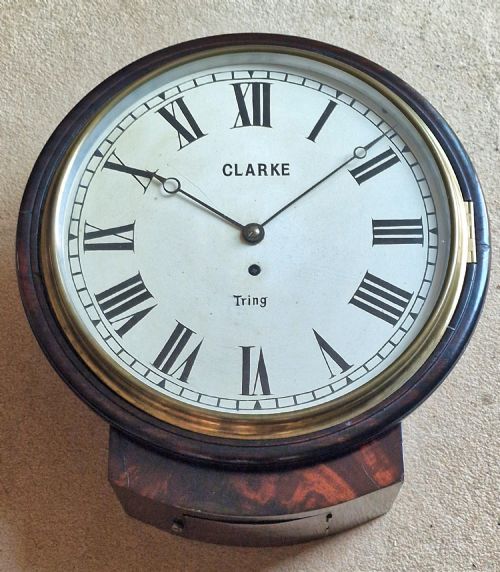
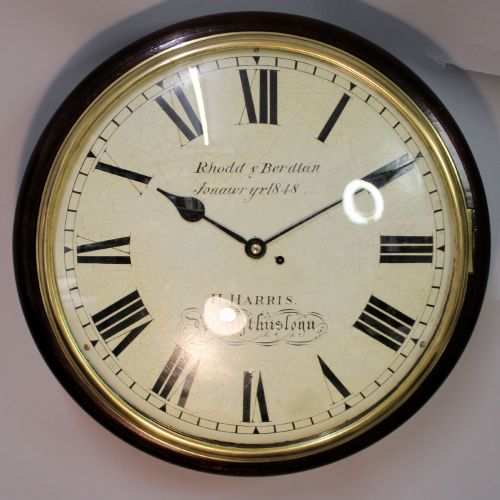
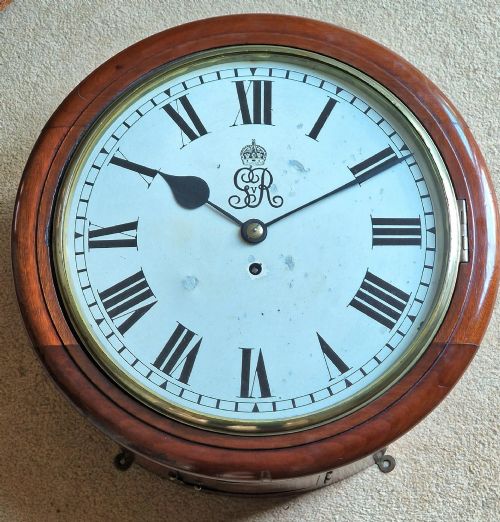
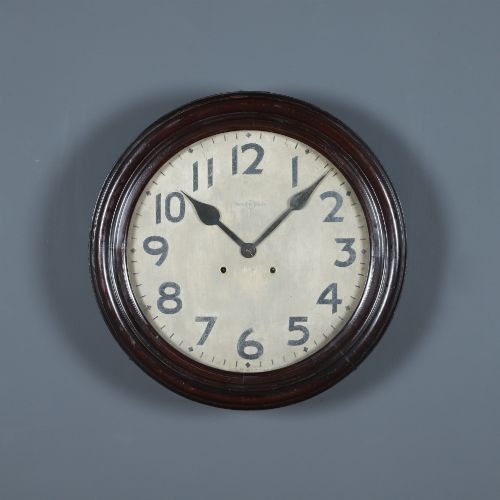
A circular wall timepiece brings reliable timekeeping and classic industrial character to any room, combining traditional timber cases with clear painted dials.
Circular Wall Timepiece
A circular wall timepiece is a round dial clock designed to mount securely on vertical surfaces in offices, stations, and homes. When you search for this phrase, you find robust examples spanning the Georgian, Victorian, and mid-twentieth-century periods.
Mahogany and oak predominate among the wooden surrounds, often paired with brass bezels and protective glass covers. These pieces frequently reflect specific uses, such as railway administration or military service, alongside domestic styles.
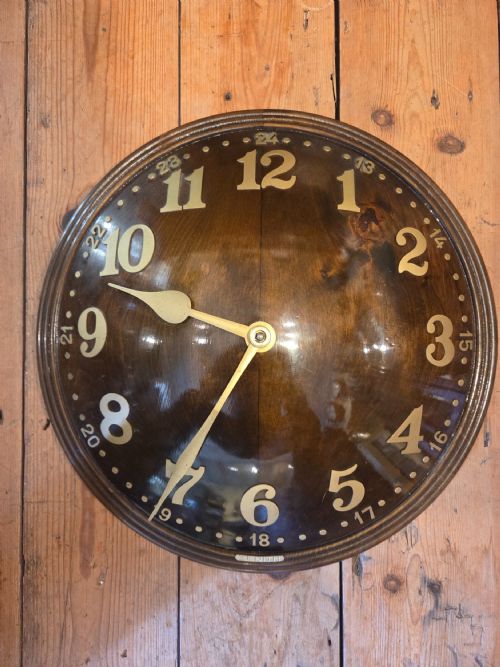
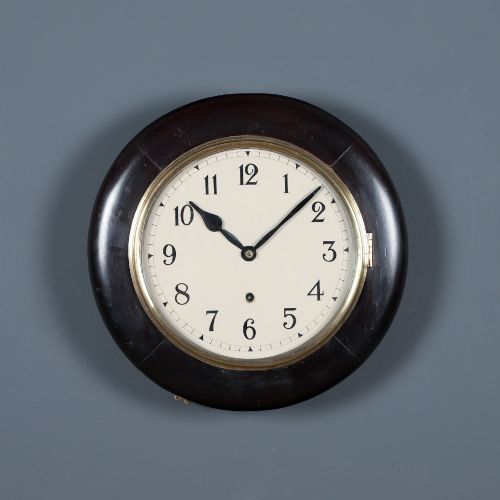
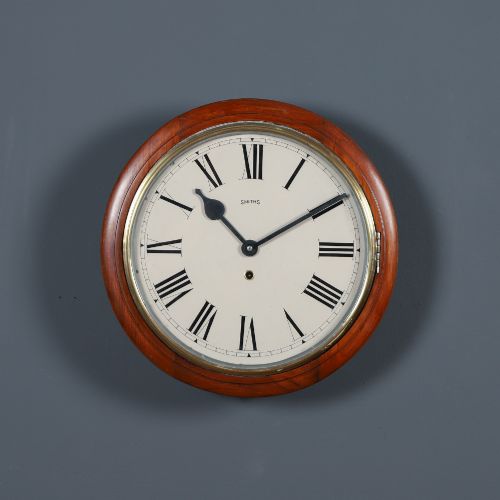
Most pieces on this page take the form of round dial clocks with clear numbering for public or institutional legibility. The designs range from plain nineteenth-century fusee movements to later Art Deco elm and oak interpretations.
Assessing quality and craftsmanship
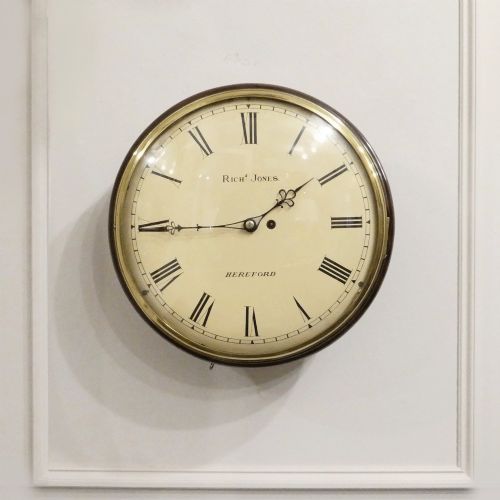
Quality shows in the crispness of the timber case joinery and the finesse of the painted dial lettering. Finer examples feature substantial mahogany surrounds and precision chain fusee movements signed by notable makers.
Simpler models utilise plain oak or pressed composition with straightforward gear trains intended for utility rather than display. The integration of quality brass bezels and heavy bevelled glass further elevates the piece above standard utilitarian variants.
Listings feature circular wall timepieces spanning the Georgian, Victorian, and twentieth-century eras, constructed from mahogany, oak, brass, and iron.
Richard Jones of Hereford·Henry Harris of Monuthusloyn·Dent of London·Anglo Swiss Watch Co.·John Wilson
The Circular Wall Timepiece Glossary
- Fusee
- A conical pulley used in older clock movements to maintain even driving force as the mainspring unwinds. This mechanism ensures consistent timekeeping throughout the running cycle.
- Dial clock
- A wall-mounted timepiece featuring a prominent round face designed for clear visibility at a distance. These were standard fixtures in railway stations, schools, and offices.
- Bezel
- The metal ring that holds the protective glass face over the dial. It often hinges open to allow access for winding and hand adjustment.
- Convex dial
- A clock face that curves outward slightly towards the viewer to reduce glare from windows and lighting. This feature improves legibility from oblique angles.
- Chain fusee
- A fusee movement driven by a fine metal chain rather than a gut cord. It represents a more durable and refined method of power transmission.
Circular Wall Timepiece: Frequently Asked Questions
How do I date a circular wall timepiece?
Dating relies on examining the timber of the case, the style of the numerals on the dial, and the mechanical movement inside. Earlier Georgian and Victorian pieces often feature fusee movements and solid mahogany frames.
Later twentieth-century examples shift towards oak, elm, or pressed composition materials with simpler gear trains. Maker signatures or railway station markings also provide direct clues to the production era.
Where were these clocks originally used?
Many circular wall timepieces served in public and institutional spaces where reliable timekeeping was essential for daily operations. Railway stations, schools, military offices, and corporate boardrooms relied on these clear round dials.
Their robust construction and legible faces ensured staff and the public could check the time quickly from across a busy room.
How do I care for a fusee wall clock?
Keep the clock away from direct sunlight, dampness, and sudden temperature fluctuations that can warp the wooden case or affect the movement. Regular professional servicing ensures the brass gears and mainspring continue to function smoothly.
When winding, use the correct key and take care not to overwind the mechanism to preserve the tension in the chain or spring.
What is the difference between a timepiece and a clock?
In horological terms, a timepiece is a clock that simply tells the time without a striking or chiming mechanism. Many round wall dials are strictly timepieces designed for pure timekeeping utility.
Clocks with striking trains include additional gear assemblies to sound the hours or quarters. Both share similar exterior housing and dial designs.