
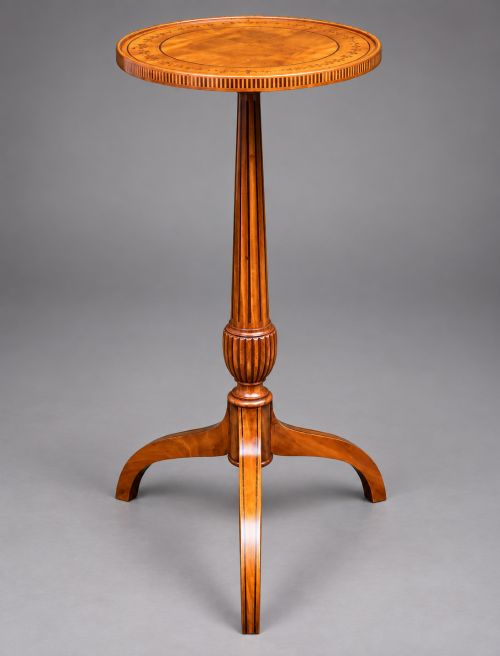
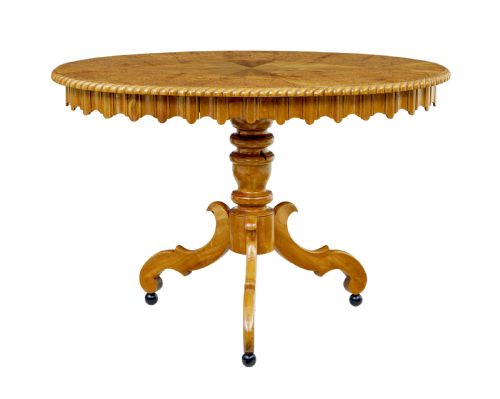
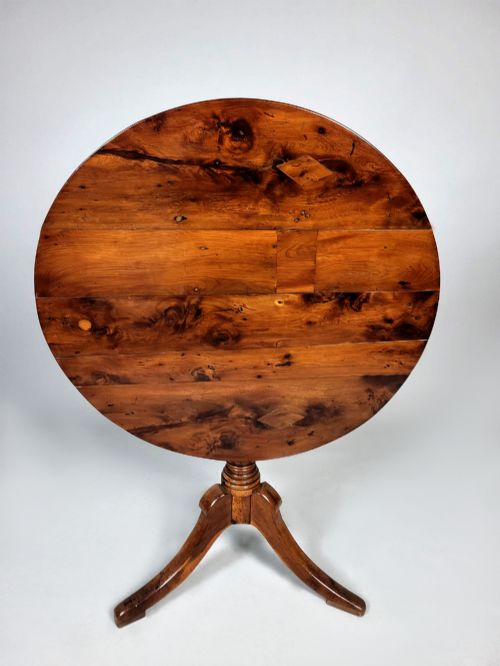
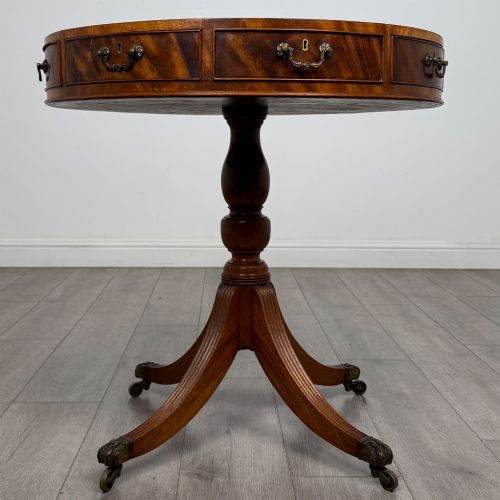
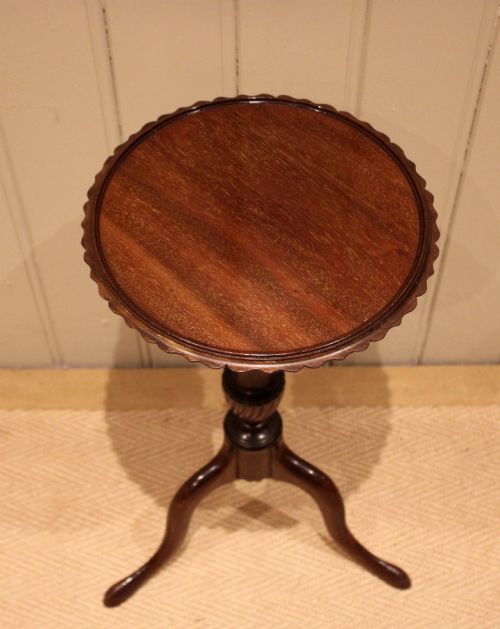
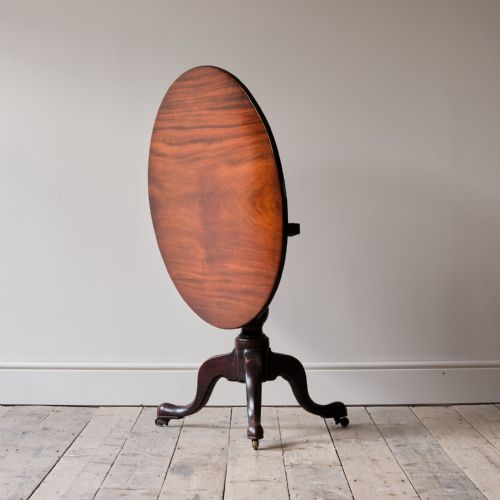
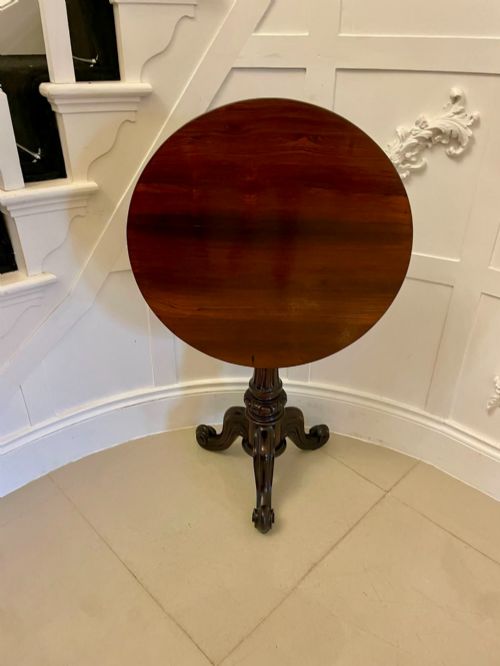


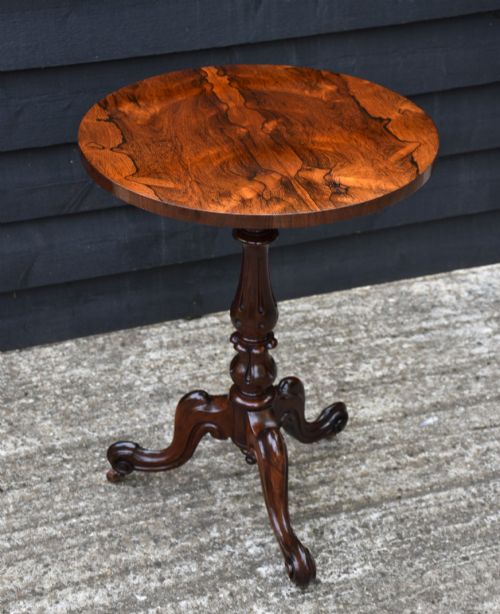
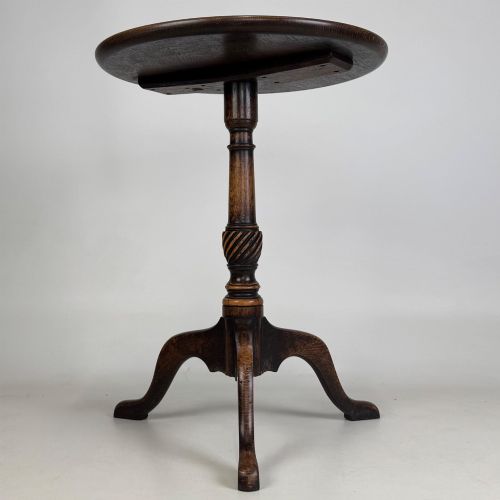
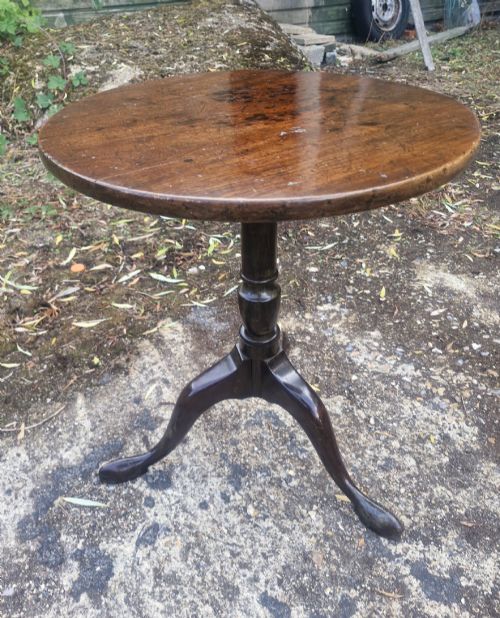
Circular Tripod Side Table
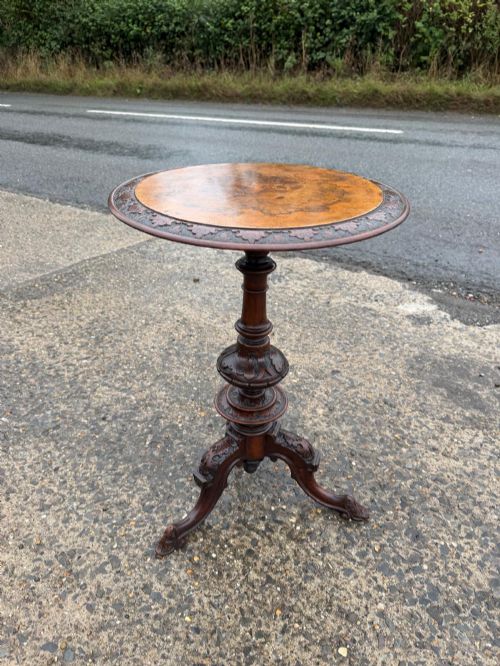
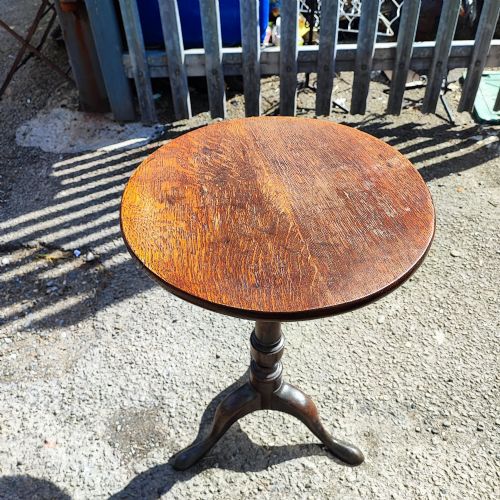
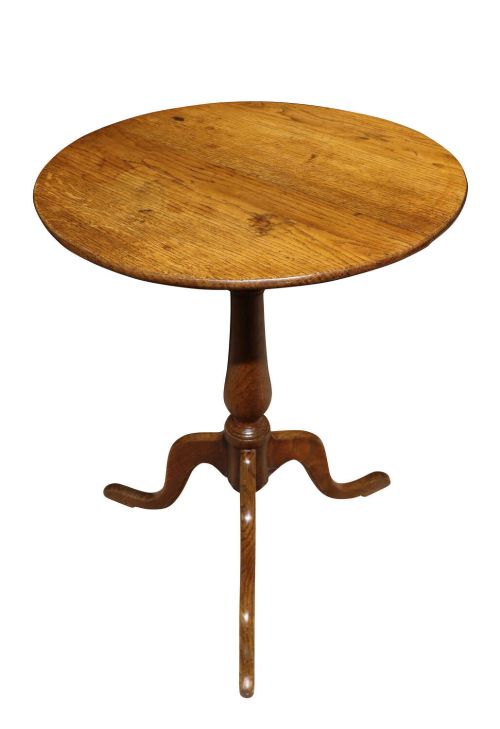
A circular tripod side table is a stable, versatile small furnishing designed for portability, and you will find examples in timber ranging from country oak to figured rosewood.
Circular Tripod Side Table
A circular tripod side table serves as a compact surface for lamps, drinks, and books, standing on a central pillar supported by three splayed legs. The form evolved through the Georgian, Regency, and Victorian periods, remaining a staple of domestic interiors into the twentieth century.
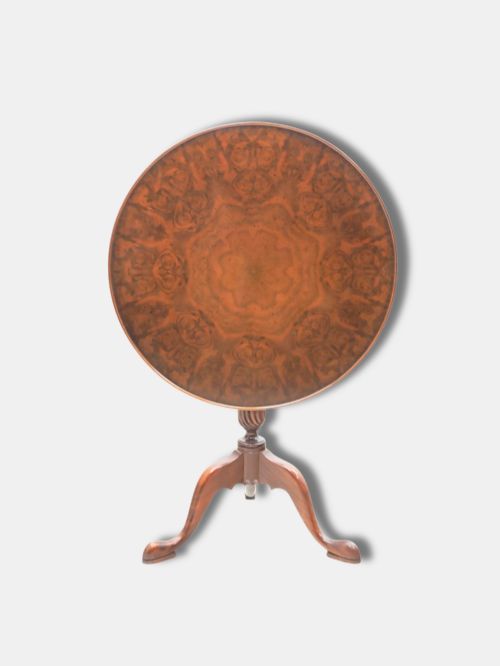
The most common iterations on this page are wine tables and occasional tables in mahogany, often featuring tilt-top mechanisms that allowed the top to fold flat against the pillar when not in use.
Originating largely from English workshops, these pieces encompass both formal drawing-room tables in rosewood and walnut and sturdy vernacular country furniture in oak, elm, and fruitwood.
How they were made
Cabinet makers utilised dense hardwoods such as mahogany, walnut, and rosewood for formal pieces, turning the central pillars on a lathe and shaping the tripod legs to curve gracefully outward.
Country examples rely on native timbers like oak, fruitwood, and elm, often constructed with pegged joints and simple turned standards that emphasise durability over ornamentation.
Many 18th and 19th-century tops feature a birdcage mechanism or a tilting hinge, allowing the circular surface to pivot and lock into place via a brass catch or wooden wedge.
Listings feature circular tripod tables spanning the Georgian, Regency, Victorian, and Edwardian eras, constructed in mahogany, oak, walnut, rosewood, and painted finishes.
What varies in quality
The distinction between standard domestic pieces and the finest workshop productions lies in the selection of timber, such as highly figured burr wood or rich flame mahogany, and the crispness of the hand-carving on the knees and feet.
Engineering integrity separates superior examples, evident in how smoothly the tilt-top mechanism operates, how tightly the pillar fits into the tripod base, and the stability of the three legs without any rock.
Gillow
The Circular Tripod Side Table Glossary
- Tilt top
- A table top hinged to the central pillar so it can be folded vertically when stored. This mechanism allowed tables to be tucked against walls to save space in smaller rooms.
- Birdcage
- A revolving wooden framework beneath the table top that permits the surface to both rotate and tilt. It is typically found on superior 18th-century tripod tables.
- Snap top
- An alternative term for a tilt top, held horizontal by a spring catch or wooden sliding lath. The catch snaps into position when the top is lowered.
- Cricket table
- A small, three-legged circular wooden table of vernacular origin, often featuring an undershelf between the legs. The design derives from early English farmhouse utility.
- Spider leg
- A term describing exceptionally slender turned legs on a small table. They provide a lightweight frame while maintaining structural balance.
Circular Tripod Side Table: Frequently Asked Questions
What were circular tripod side tables used for?
These tables served multiple domestic purposes, acting as stands for tea service, wine decanters, lamps, and reading material. Their light weight allowed servants to move them easily around the drawing room.
In the evening, smaller wine tables were placed beside chairs, while tilt-top versions were stored against the perimeter of the room to clear floor space.
How do I identify a Georgian tripod table?
Georgian examples, dating from the mid to late 18th century, typically feature solid mahogany or oak construction with substantial turned pillars and Padouk or snake feet. The proportions tend to be robust, with hand-cut joinery visible underneath.
Earlier pieces from this era often incorporate a birdcage mechanism beneath the top, allowing the surface to rotate independently of the pillar.
Are these tables stable on uneven floors?
Three-legged furniture naturally rests firmly on uneven historic floorboards without wobbling, unlike four-legged designs that require a level surface. This structural advantage explains their enduring popularity for domestic use.
The spread of the three legs provides the primary balance, meaning the weight distribution relies on the geometry of the base rather than floor adjustments.
How do I care for a polished wood top?
Maintain the timber surface by applying a traditional beeswax polish rather than modern silicone sprays, which can damage historic finishes over time. Keep the table away from direct heat sources and strong sunlight to prevent the wood from splitting or fading.
Use coasters under glasses and avoid placing damp items directly onto antique polish to preserve the depth of the grain.