

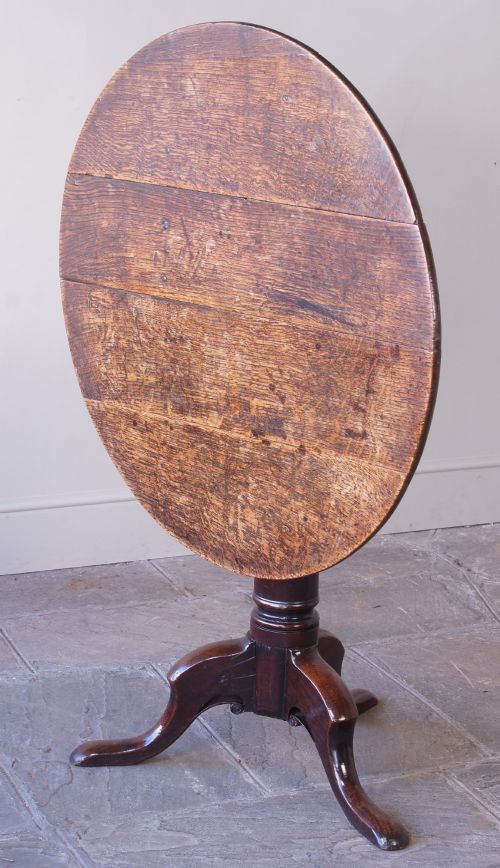
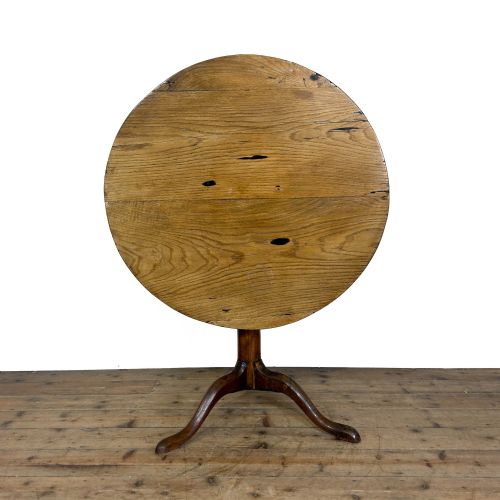
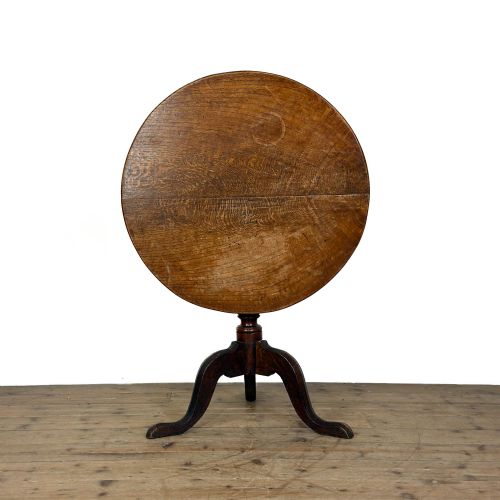
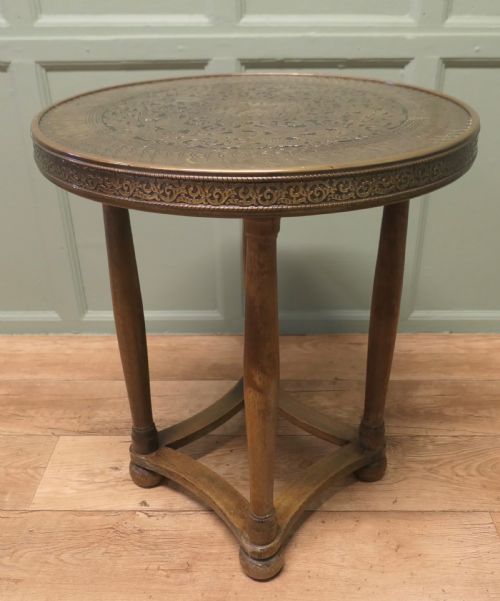
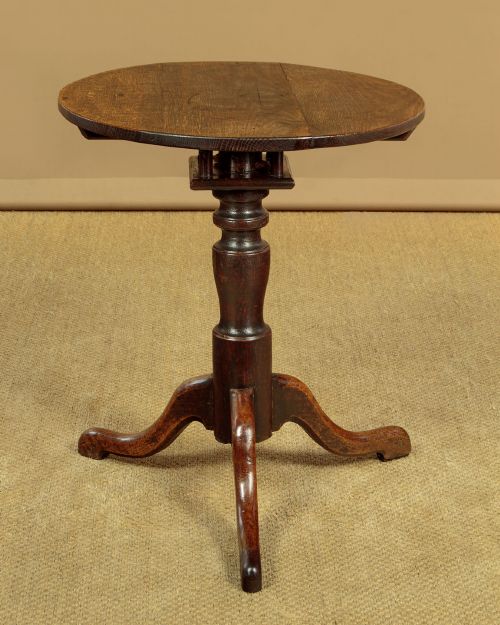


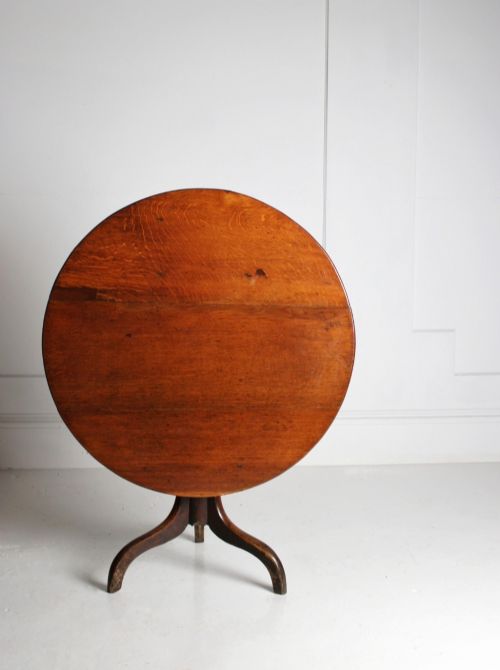


Circular Oak Tea Table
A circular oak tea table brings honest vernacular warmth to a room, offering sturdy timber surfaces ready for daily use.
Circular Oak Tea Table
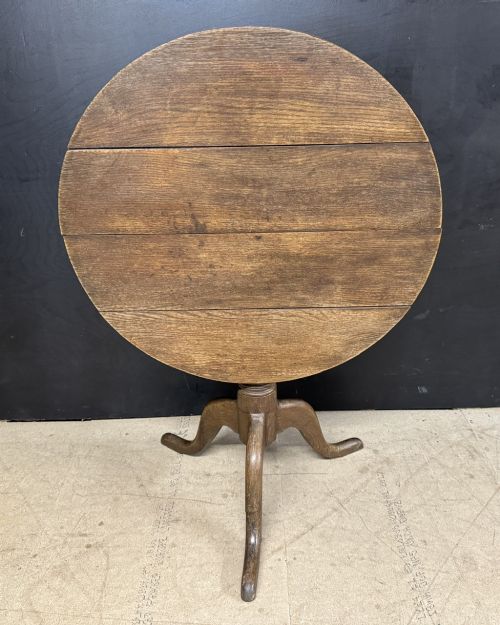
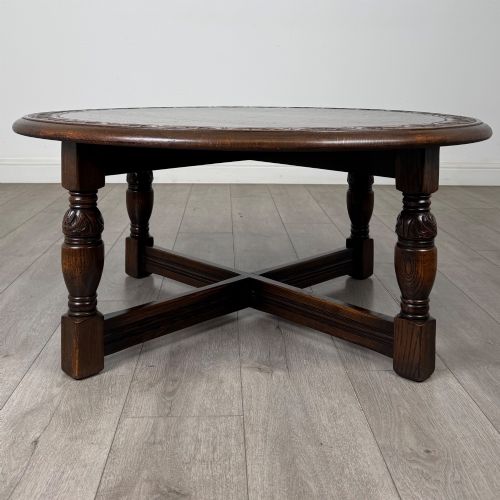
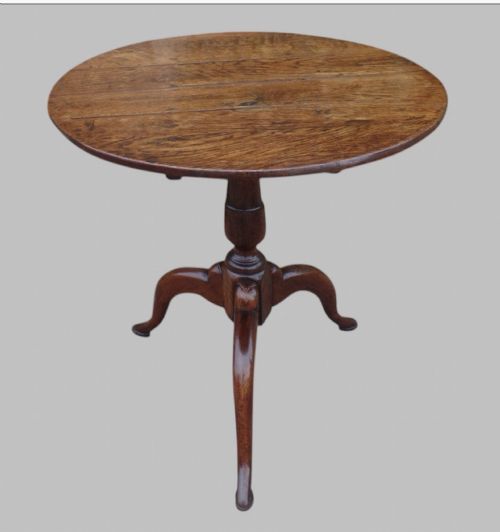
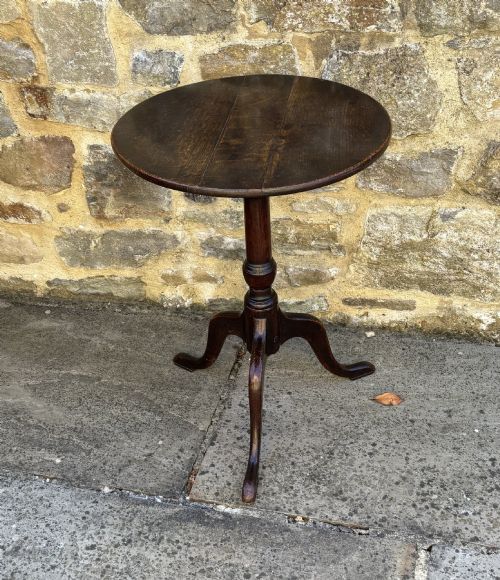
A circular oak tea table is primarily a domestic surface designed for sitting beside chairs or holding small items, appearing frequently in forms such as tilt top tables, tripod tables, and occasional coffee tables. When exploring a circular oak tea table on this page, you will predominantly encounter pieces dating from the eighteenth century and the Georgian period, alongside later nineteenth century and Edwardian interpretations.
The regional and vernacular pieces show simple country craftsmanship, often featuring three-legged tripod bases that provide stable footing on uneven floors. More formal George III examples introduce pivoting mechanisms and birdcage supports, allowing the timber top to tilt vertically when not in use.
What varies in quality
The selection of timber dictates much of the character, where dense grain patterns and well-matched boards elevate a piece far above utilitarian workshop output. Finer examples display harmonious proportions between the diameter of the top and the height of the turned column.
Mechanisms also separate standard items from superior work, particularly in tilt top and birdcage designs where smooth rotation and tight joints matter. Original stability in the tripod base without excessive structural replacement marks the better-surviving specimens.
Circular Oak Tea Table Retail Price Guide 2026
Typical asking prices for circular oak tea table among the pieces listed under this phrase on Sellingantiques today, from the lower quarter to the upper quarter. They describe what is for sale here now, not the wider market.
Listings span from the 18th century through the Georgian and Edwardian eras into the 1930s and 1940s, constructed predominantly in oak with occasional brass, copper, and iron details.
The Circular Oak Tea Table Glossary
- Tilt top table
- A table with a hinged top that pivots vertically for storage against a wall when not in use. This mechanism is frequently found on eighteenth-century tripod forms.
- Tripod table
- A small freestanding table supported by a central pillar resting on three legs. The three-legged design ensures the table remains stable on irregular floors.
- Birdcage
- A rotating wooden frame situated beneath the circular top of a tilt top table, allowing the surface to both pivot and turn. It is characteristic of finer Georgian craftsmanship.
- Snaptop table
- An alternative historical term for a tilt top table, referencing the catch mechanism that locks the horizontal surface into place. These pieces were often used for serving tea or displaying small objects.
- Vernacular
- An architectural and furniture-making style produced by local craftspeople using regional materials, prioritising utility over high-fashion ornament.
Circular Oak Tea Table: Frequently Asked Questions
How do I identify an eighteenth-century table?
Eighteenth-century examples often display hand-planed oak surfaces, pegged joinery, and traditional tripod bases rather than machine-cut components. Details such as turned birdcage mechanisms and authentic patination point toward this earlier period.
Looking underneath the top reveals the construction methods and timber ageing characteristic of vernacular furniture from that era.
How were these tables used historically?
These tables served flexible domestic purposes, frequently moved near hearths or windows for dining, reading, or social tea-drinking rituals. Tilt top versions were stored upright against walls to maximise floor space in smaller rooms.
Their lightweight construction made them practical for shifting around the home as daily activities required.
Can I use an antique table daily?
Solid oak construction provides remarkable durability, allowing these tables to withstand everyday use as coffee or occasional surfaces. Applying appropriate wax care protects the historic timber from moisture and marks.
Placing coasters on the surface helps preserve the older polished finish while enjoying the table in a modern setting.