


Circular Marble Lamp Table
A circular marble lamp table brings solid stone and timber together in a compact footprint designed to hold a light beside a chair.
Circular Marble Lamp Table
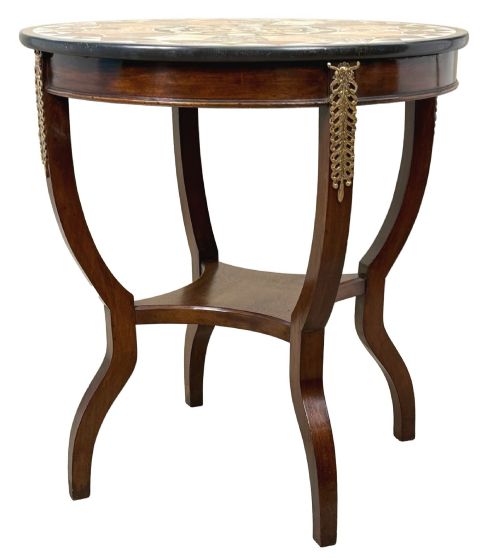
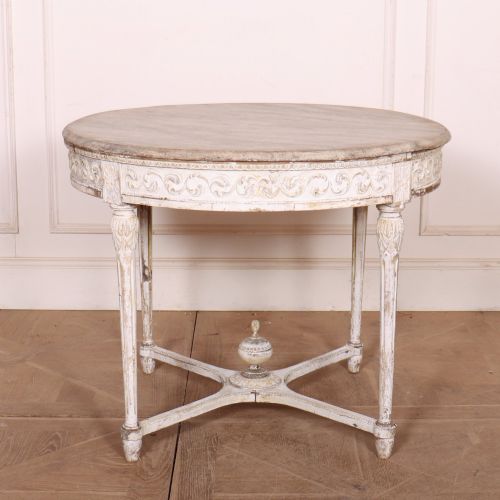
A circular marble lamp table sits beside seating or in the centre of a room, providing a firm stone surface paired with a wooden or gilt frame. The form draws heavily on French gueridon and English occasional table traditions spanning the nineteenth and early twentieth centuries.
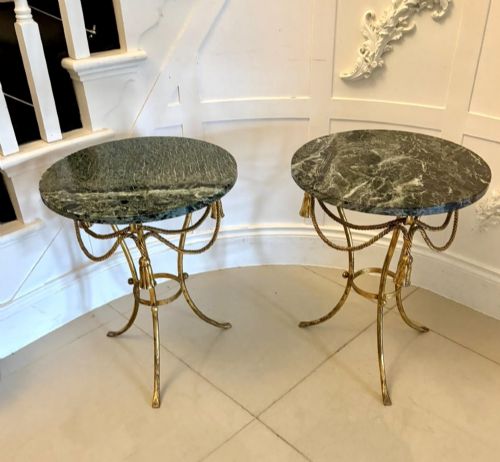
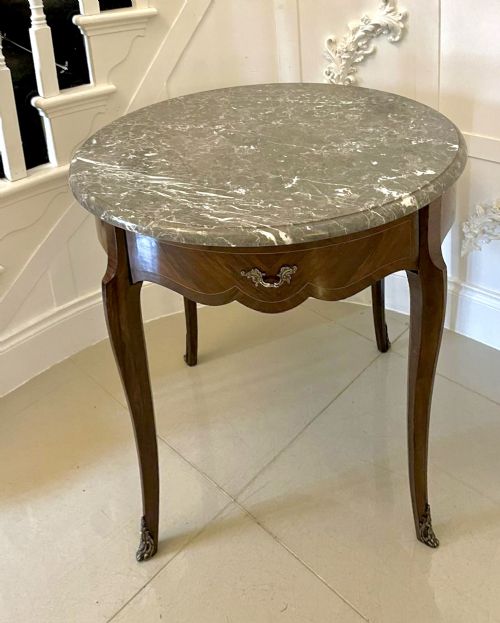
You will most frequently meet French examples with inset marble tops, alongside Victorian specimen marble pieces and Regency mahogany designs. These tables serve equally as bedside tables, side tables, and small centre tables depending on their height and proportion.
How they were made
Constructed primarily using mahogany, walnut, kingwood, or padauk, these tables often incorporate cast brass or ormolu mounts, giltwood, and gesso details. The timber frames support heavy inset slabs of white, verde, or multi-coloured specimen marble.
Cabinetmakers turned solid timber for the columns and carved intricate details like rams' heads or tassel motifs directly into the wood. Tables finished in the French Empire or Louis XVI styles rely on precision joinery to balance the considerable weight of the stone top.
Some tables include carved wooden rams' heads staring out silently from beneath the cold stone top.
What varies in quality
The sophistication of the timber veneer and the complexity of the marble top separate basic pieces from exceptional ones. Tables featuring intricate specimen marble mosaics or detailed carved giltwood and ormolu mounts represent the higher end of the range.
Structural harmony between the stone top and the wooden base dictates the overall success of the piece. Superior examples maintain crisp carving in the mahogany or walnut and precise fitting of the marble without reliance on heavy restoration.
James Shoolbred
The Circular Marble Lamp Table Glossary
- Guéridon
- A small French table supported by a central pillar or tripod base, frequently topped with marble. This form became popular during the seventeenth century and remained a staple of French interior design.
- Specimen marble
- A decorative surface composed of numerous small geometric pieces of varied coloured marbles assembled to form a mosaic picture or pattern. These tops require immense skill to cut and fit tightly together.
- Ormolu
- Gilt bronze mounted onto furniture frames as decorative feet, collars, or capitals. The technique involves applying a mercury and gold amalgam to bronze before firing.
- Bouillotte table
- A small French occasional table featuring a raised gallery edge around the marble top to prevent items from sliding off. They were originally designed for the card game of the same name.
- Giltwood
- Timber carved and coated with a thin layer of gold leaf or gesso paint. It provides a bright, reflective finish common in French Neoclassical and Regency designs.
Circular Marble Lamp Table: Frequently Asked Questions
What is a gueridon table?
A gueridon is a traditional French round table supported by a single central column or three legs. They are frequently fitted with stone or marble tops.
Originally built as candlestands, these tables evolved into versatile small stands used for lamps and decorative objects.
How do I style a marble table?
The stone surface provides a cool, durable plane that contrasts naturally against upholstered armchairs or wooden panelling. Keep the top relatively clear to let the grain of the marble and timber frame remain visible.
Pair the table with a compact lamp that complements the height of the central column and surrounding seating.
What is specimen marble?
Specimen marble tops consist of multiple small, contrasting coloured marble pieces arranged into geometric patterns or mosaic scenes. Craftsmen cut and polished each tiny stone section by hand before setting them into a solid base.
These elaborate tops are typically found on nineteenth-century tables intended to showcase high decorative skill.
Are these tables sturdy enough for daily use?
The weight of the marble top helps anchor the table firmly to the floor, providing natural stability. Solid timber columns and sturdy tripod or pedestal bases distribute this weight evenly.
While robust, the polished stone surface benefits from coasters to protect against sharp impacts or staining.