

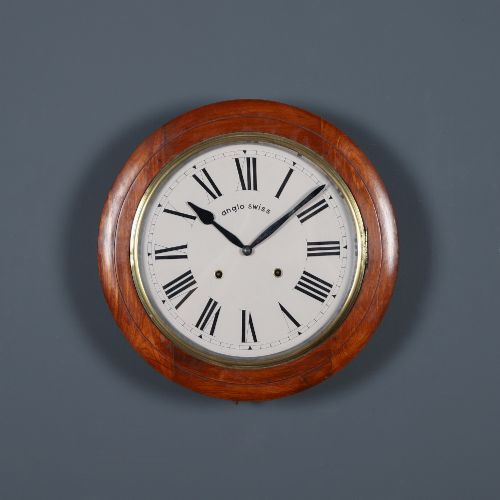
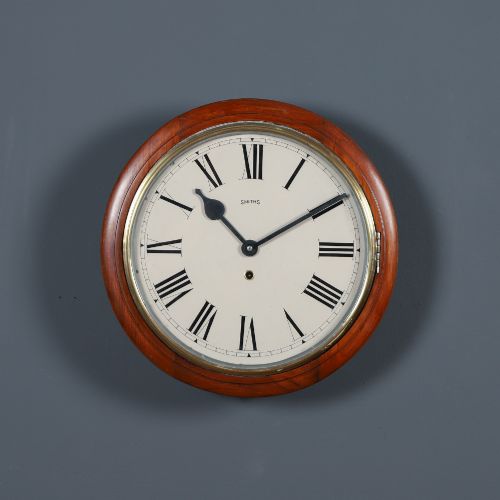
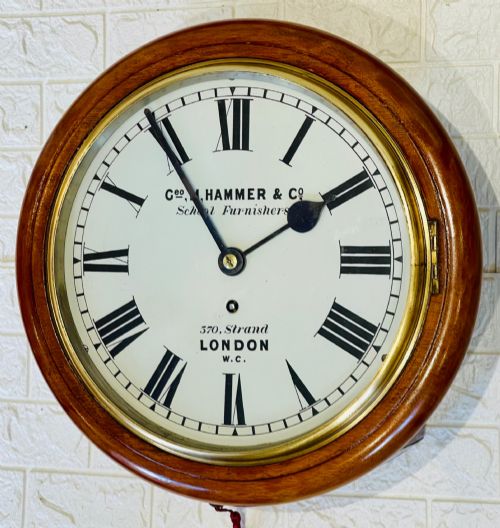
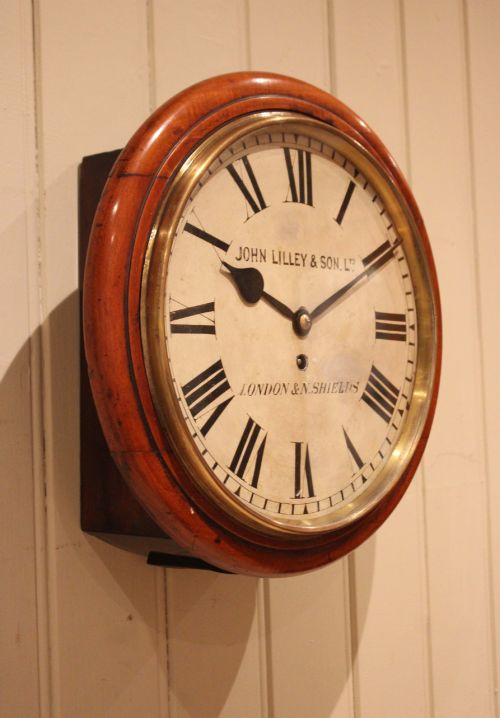
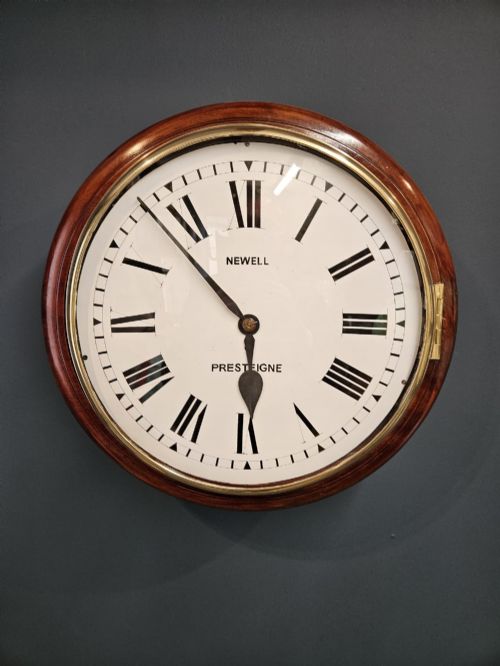
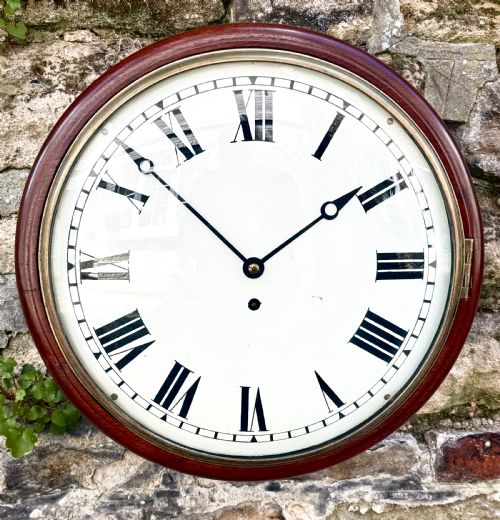
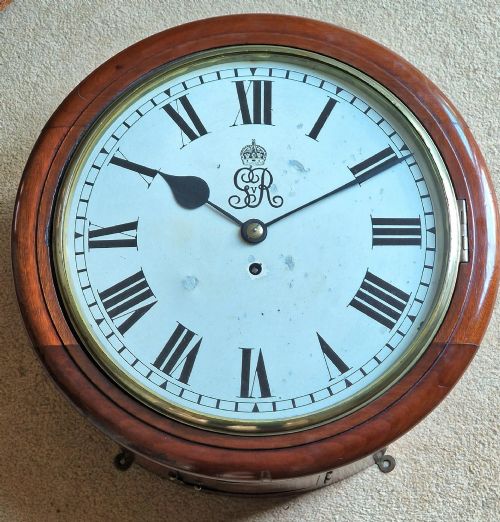
Circular Mahogany Station Clock
A circular mahogany station clock brings steady presence to a room, driven by traditional movements housed in rich timber frames.
Circular Mahogany Station Clock
A circular mahogany station clock is a wall-mounted timepiece designed for public transport hubs, administrative offices, and schools. Buyers search for this phrase to secure functional wall clocks spanning the Georgian, Victorian, and early twentieth-century periods.
The versions most commonly met on this page combine deep mahogany surrounds with painted metal dials behind protective glass. They bear the marks of British railway companies, regional makers, and municipal buildings.
Originating largely from English workshops and provincial retailers, these clocks range from modest eight-inch domestic pieces to large twenty-four-inch station examples. They serve as both reliable timekeepers and substantial decorative wall pieces.
How they were made
Makers constructed the circular cases from solid mahogany, often utilising brass bezels to secure the glass face protecting the dial. Iron and steel components form the interior clockwork mechanisms, driven predominantly by fusee movements.
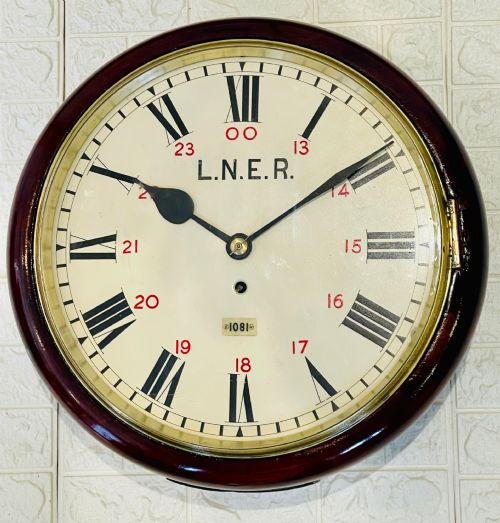
Dials consist of painted metal, occasionally iron, featuring Roman or Arabic numerals applied by hand or stencil. Local makers inscribed their names and towns directly onto these faces alongside railway company ciphers.
Some station clocks retain mysterious railway platform initials that whisper of missed steam trains and forgotten cross-country journeys.
What varies in quality
The standard of a circular mahogany station clock rests upon the crispness of the case timber and the provenance recorded on the dial. Examples bearing specific railway company lettering or signed by notable regional makers command stronger interest from collectors.
The sophistication of the internal movement further defines the grade of the piece, with chain fusee movements representing traditional craftsmanship. Dial legibility and the preservation of original painted metal surfaces also dictate the standing of an individual clock.
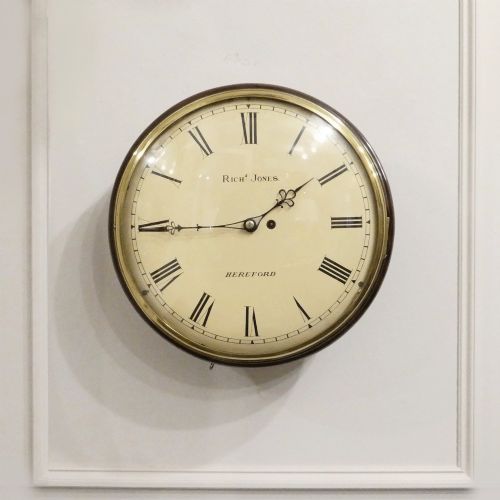
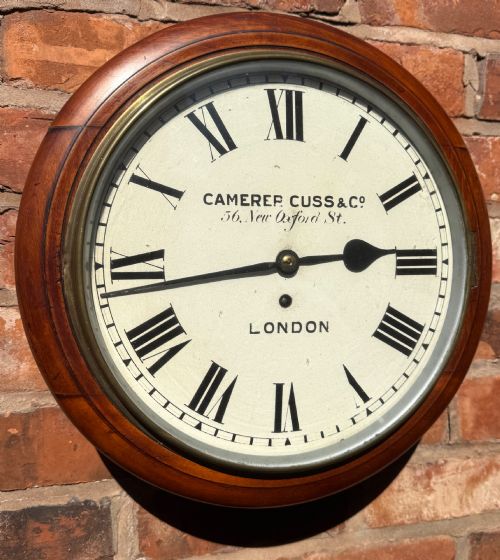
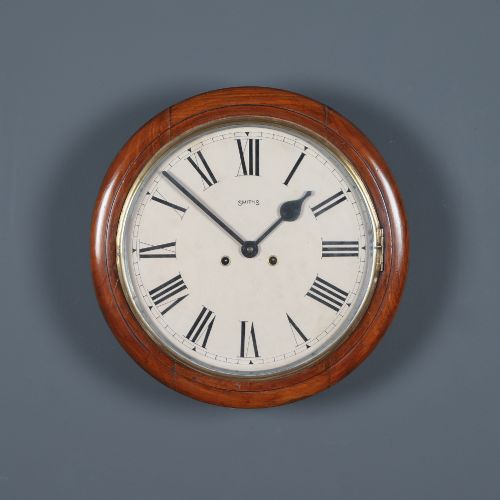
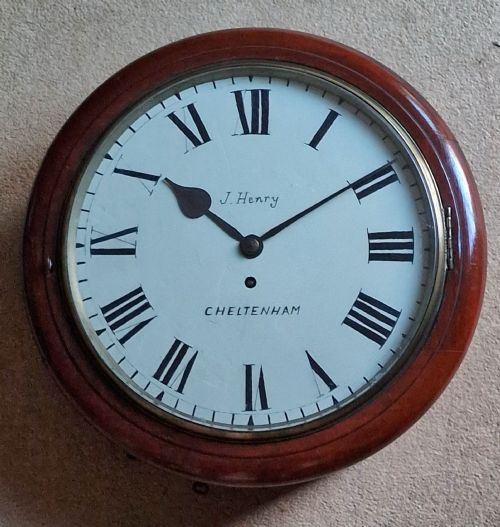
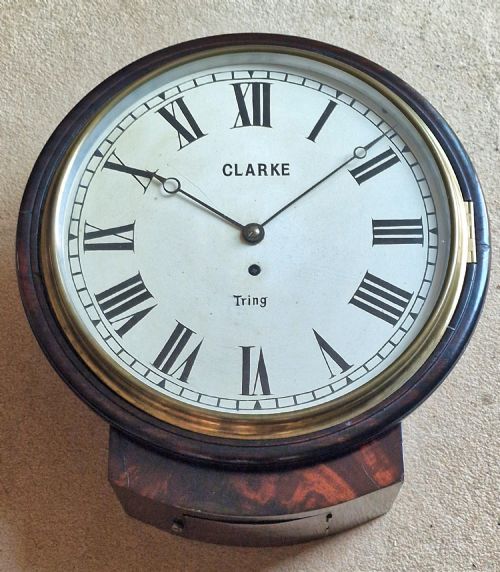
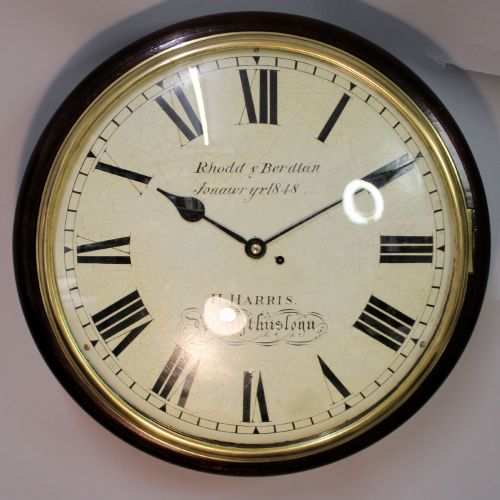
Richard Jones of Hereford·Camerer Cuss And Co London·Smiths·J Henry Cheltenham·George Clarke Tring·Henry Harris Monythusloyn·John Walker London·Rudge Swindon·John Wilson London·Osborn of Kingsbridge·Wyatt Bournemouth·Anglo Swiss Watch Co·Butt Co Ltd Chester
The Circular Mahogany Station Clock Glossary
- Fusee
- A conical pulley used in clockwork to maintain even power from the mainspring as it unwinds. This mechanism ensures consistent timekeeping across the duration of the wind.
- Dial
- The face of the clock where hours and minutes are displayed. On these pieces, dials are typically painted metal protected by a brass-framed glass door.
- Bezel
- The rim of brass or wood that holds the glass cover in place over the clock dial. It frequently hinges outward to allow hand adjustments.
- Timepiece
- A clock that indicates the time but lacks any striking or chiming mechanism. Many station clocks operate solely as timepieces.
- Chain Fusee
- A variation of the fusee movement utilising a fine steel chain rather than a cord to connect the mainspring barrel to the conical pulley.
Circular Mahogany Station Clock: Frequently Asked Questions
How do I wind a fusee wall clock?
Opening the side or bottom door reveals the dial mechanism, where a winding key fits onto the arbour square. Turning the key clockwise draws the chain or cord back up the fusee cone.
Care must be taken not to overwind the movement, stopping as soon as resistance is felt. Most chain fusee clocks require winding once a week to maintain accurate time.
Where were these clocks originally hung?
Railway station platforms, ticket offices, and waiting rooms utilised these round wall clocks for passenger punctuality. Schools, post offices, and military establishments also mounted them in prominent public areas.
Their robust mahogany construction and clear painted dials ensured visibility across large, busy rooms.
How do I date a railway clock?
Maker signatures, railway company initials, and construction styles help establish the era of manufacture. Victorian and Georgian pieces often feature single chain fusee movements and hand-painted wooden cases.
Later twentieth-century examples from the interwar period introduce alternative striking mechanisms and altered dial lettering styles.
Can I hang a heavy mahogany clock on plaster walls?
The substantial timber frame and glass face make a circular mahogany station clock quite heavy. Secure mounting requires fixing directly into wall studs or using heavy-duty cavity anchors rated for the weight.
Hanging the clock firmly prevents vibrations from disturbing the pendulum and ensures the movement runs in beat.