



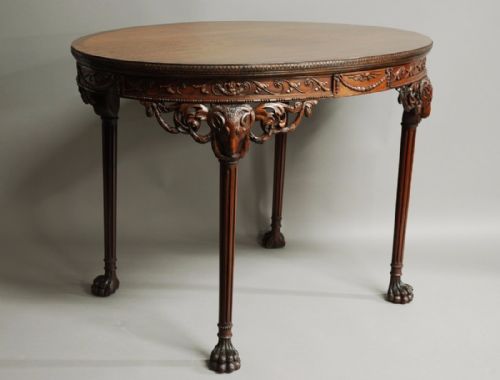
Circular Mahogany Foyer Table
A circular mahogany foyer table brings formal balance to a grand entrance, offering a commanding centrepiece for an open hallway.
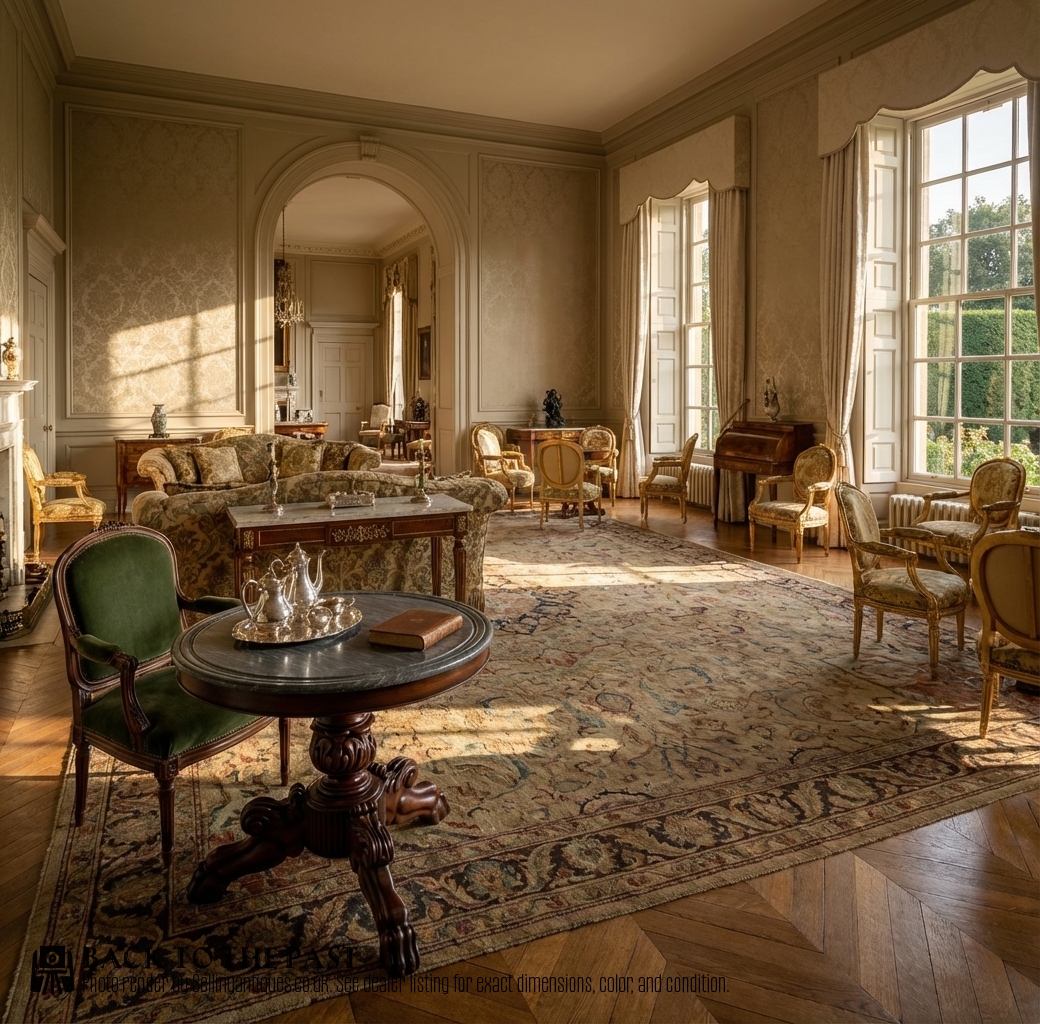
Circular Mahogany Foyer Table
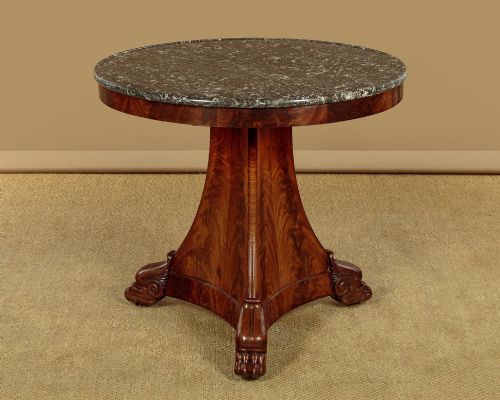
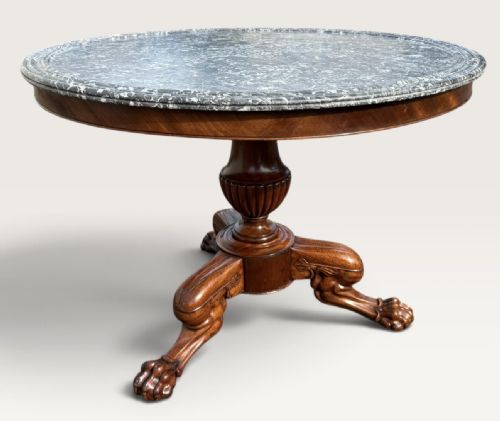
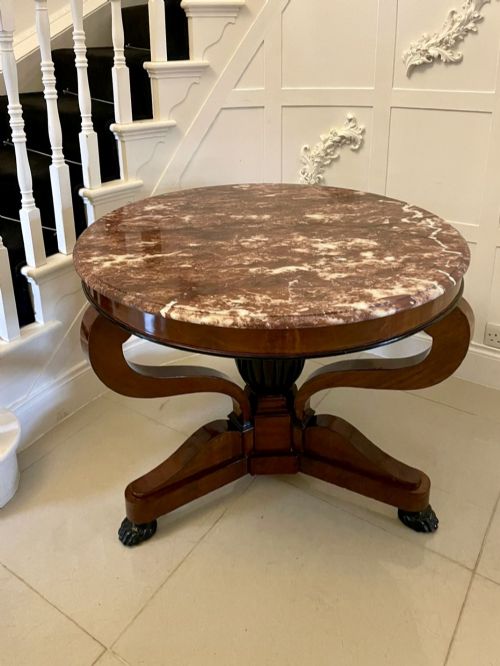
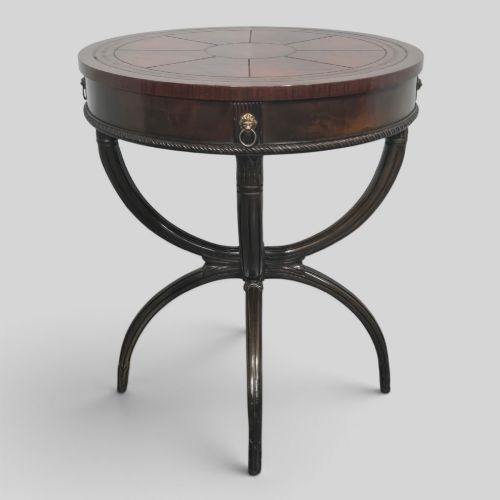
When searching for a circular mahogany foyer table, buyers encounter substantial freestanding pieces designed to occupy the middle of a hallway or vestibule. The selection spans the Georgian, Regency, Victorian and 19th Century periods, encompassing diverse aesthetic movements such as French Empire, William IV and French Restoration. These tables function primarily as monumental centrepieces rather than simple side furniture.
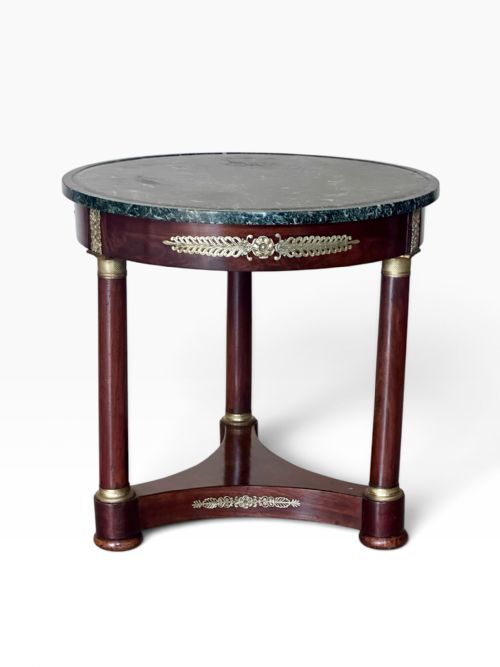
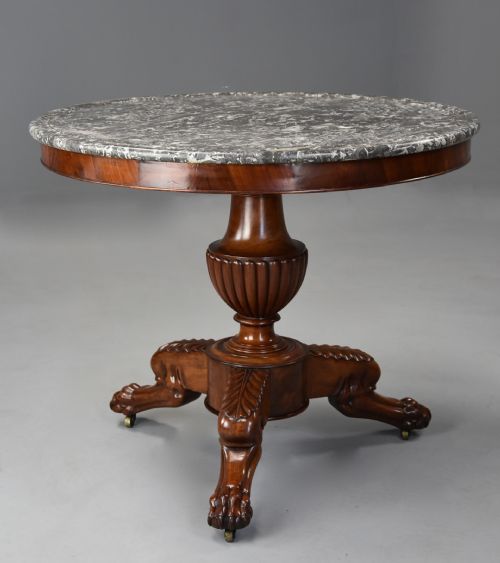
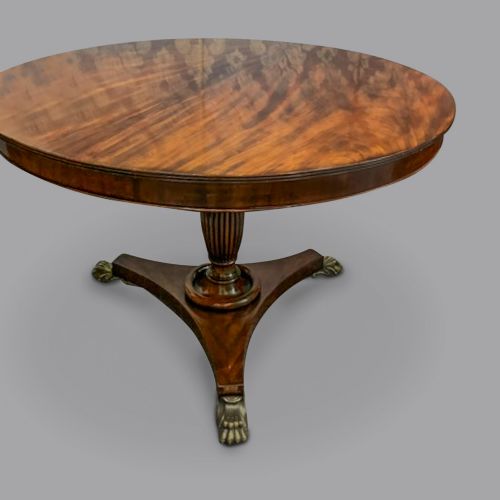
The material palette heavily favours solid mahogany and mahogany veneer, frequently paired with inset marble tops, flame mahogany figures and contrasting timbers like lacewood and walnut. Forms range from French gueridons with classical proportions to substantial British entrance hall tables featuring carved bases or marquetry inlay. Pieces occasionally incorporate specialised details, such as writing slopes or pietra dura specimen marble tops.
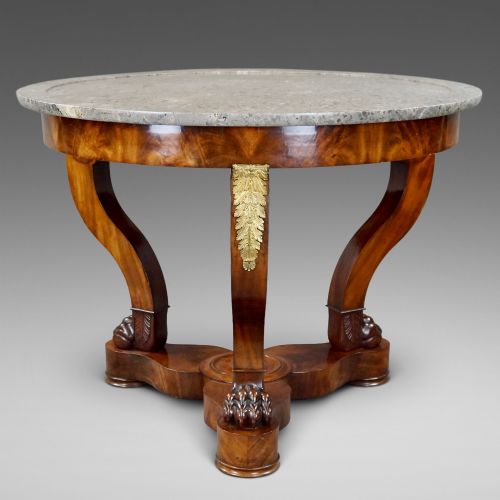
French Empire and gueridon designs dominate the available forms, often standing upon heavy pillar pedestals with ormolu or brass mounts. British Regency and Victorian examples lean toward robust architectural silhouettes, sometimes displaying elaborate carvings such as rams heads. Buyers frequently find pieces dating from around 1800 through to the early 20th century, reflecting sustained demand for circular reception furniture.
Materials and construction techniques
Cabinetmakers utilised dense solid mahogany and highly figured mahogany veneer over sturdy secondary woods to construct these robust frames. The selection of timber often included flame mahogany to create striking grain patterns across expansive circular tops. Timbers were selected for stability to support heavy stone elements without warping.
Many examples integrate heavy veined marble or pietra dura specimen marble into the wooden top, requiring precise recessed joinery. Metal components such as brass, ormolu and gilt bronze were cast and chased to accent mounts, feet and structural capitals. Carved wooden elements, including animal heads and floral motifs, were hand-chiseled directly into the solid mahogany bases.
Circular Mahogany Foyer Table Retail Price Guide 2026
Typical asking prices for circular mahogany foyer table among the pieces listed under this phrase on Sellingantiques today, from the lower quarter to the upper quarter. They describe what is for sale here now, not the wider market.
Object variations span classical French gueridons, entrance hall centre tables, and occasional tables with specialised inserts.
Determinants of craftsmanship and preservation
Quality separates along the precision of the cabinetwork and the selection of the timber figures, particularly in how flame mahogany veneer is matched across the circular surface. Superior examples display seamless joins, tightly fitted stone or marble inserts, and crisply executed hand-carving upon the pedestal base. Inferior execution shows sluggish carving detail and heavy secondary woods that compromise the piece's structural grace.
The integration of decorative hardware and metal mounts significantly dictates the tier of the piece. Finely chased ormolu and gilt bronze mounts demonstrate superior artisanal investment compared to plain brass or later replacements. Preservation of original surface patination and the stability of the central pedestal joinery further separate everyday utility from collector grade specimens.
The Circular Mahogany Foyer Table Glossary
- Gueridon
- A small circular table on a central pillar, originating in France during the 17th century. These pieces often serve as display surfaces or grand centre tables in spacious hallways.
- Pietra dura
- An inlay technique using cut and fitted polished coloured stones to create pictorial designs. This painstaking lapidary work appears on select high status table tops.
- Ormolu
- Gilded bronze used for decorative mounts and furniture hardware. The technique involves applying a mercury and gold amalgam to cast bronze before heating.
- Flame mahogany
- A veneer figure cut from the fork of the mahogany tree where branches meet the trunk. This produces a distinctive flickering flame pattern highly prized in formal furniture.
- Marquetry
- The art of applying pieces of veneer to a structure to form decorative patterns and pictures. Craftsmen assemble contrasting woods to achieve pictorial depth.
Circular Mahogany Foyer Table: Frequently Asked Questions
Where should I place a foyer table?
These tables belong in the centre of a spacious entrance hall or reception room where foot traffic flows freely around all sides. They function visually as an architectural anchor for the entire space.
Because these pieces are finished on all sides, they do not require placement against a wall. Ensure you measure your hallway clearance carefully to allow comfortable passage around the circular perimeter.
How do I care for a marble top?
Clean the stone surface regularly with a soft, damp cloth and neutral soap designed specifically for natural stone. Avoid acidic liquids like vinegar or wine which can etch polished marble.
Use coasters and protective mats beneath any decorative objects placed on the stone. Periodic sealing helps protect the veined surface from accidental staining.
What is the difference between Regency and Empire styles?
Regency design reflects British tastes from the early 19th century, drawing heavily on classical Greek and Roman archetypes with clean architectural lines. These pieces often feature dark timbers with minimal brass inlay or restrained carved details.
French Empire style exhibits a more theatrical Napoleonic grandeur, incorporating lavish ormolu mounts, figural supports like rams heads, and bolder neoclassical symbolism. Both styles favor circular tabletops supported by robust central pedestals.
Can I use a centre table for daily dining?
Centre tables are structurally engineered to support decorative displays, floral arrangements, or books rather than heavy daily dining use. Their central pillar construction prioritises aesthetic presence and stability for reception spaces.
Utilising antique surfaces for heavy utilitarian tasks risks damaging delicate veneers or antique polished finishes. Protective pads are recommended if the table must host items during gatherings.