
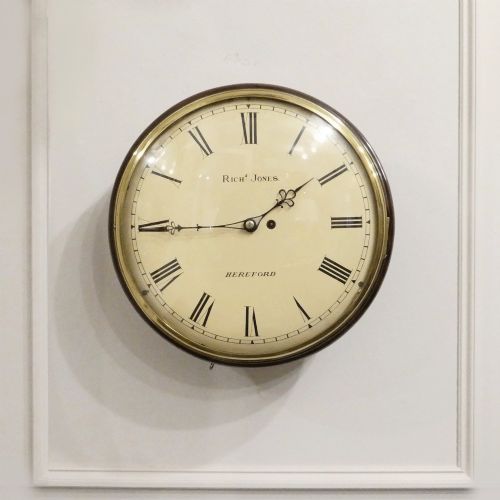
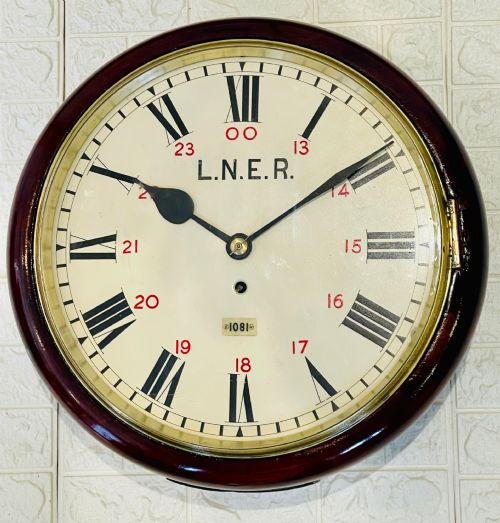
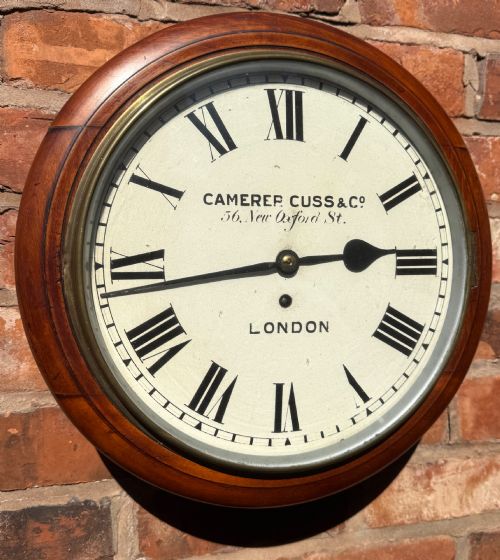

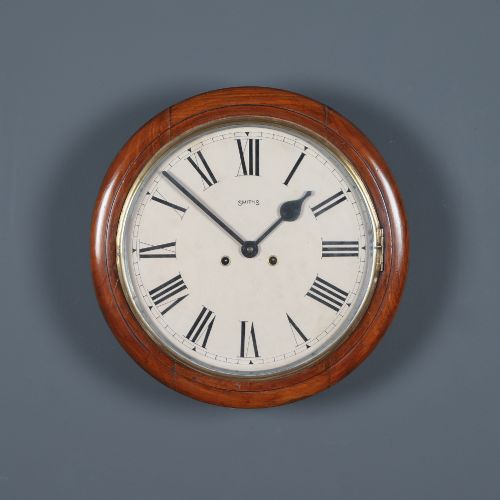
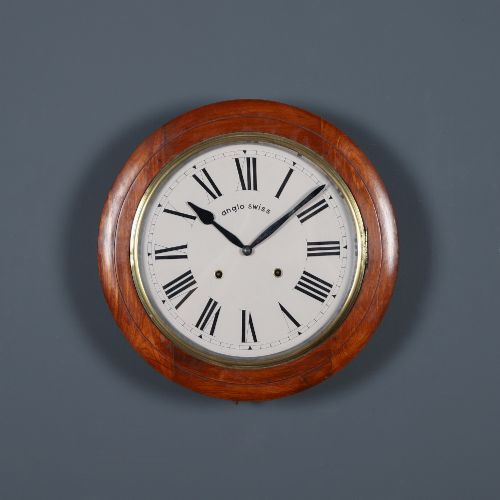
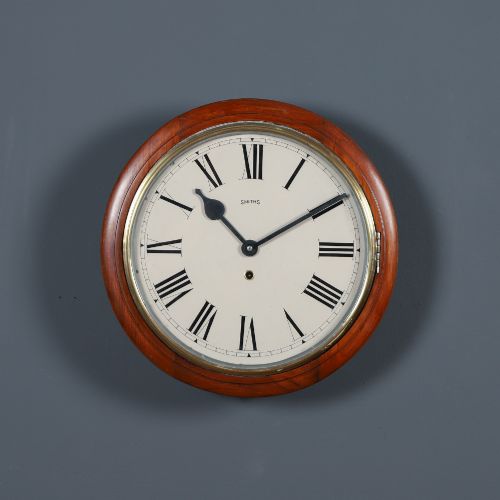
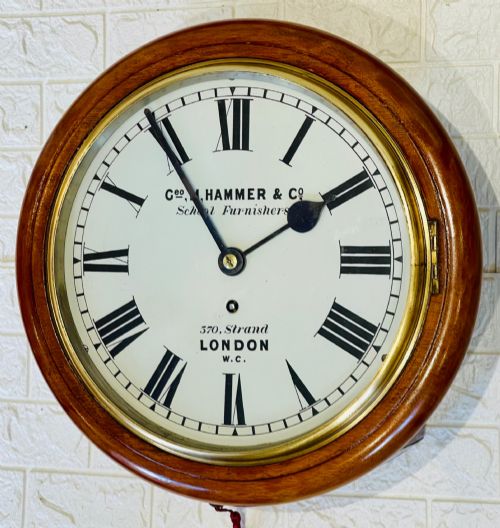
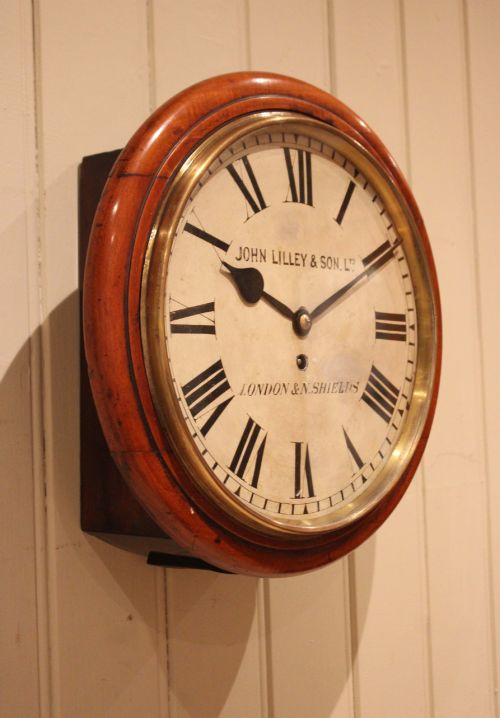
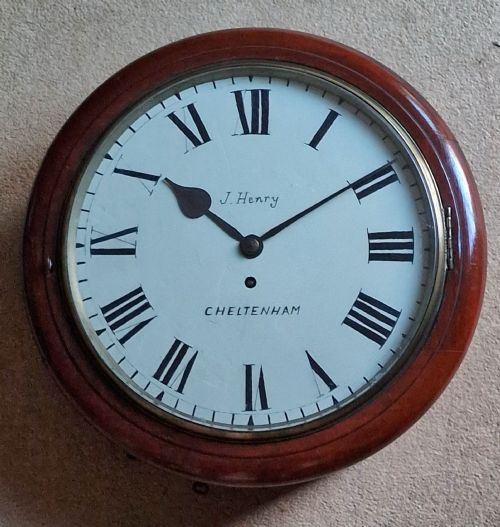
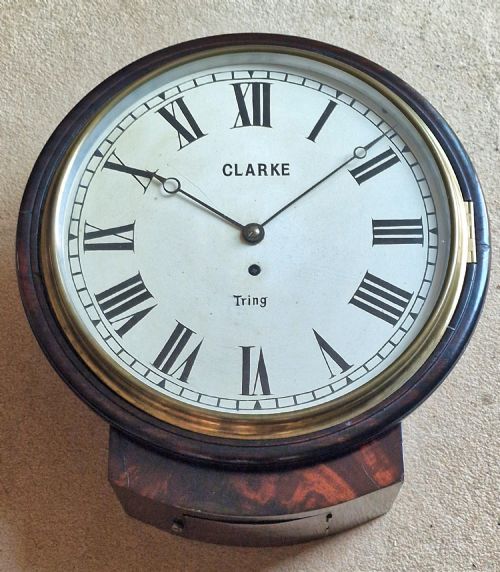
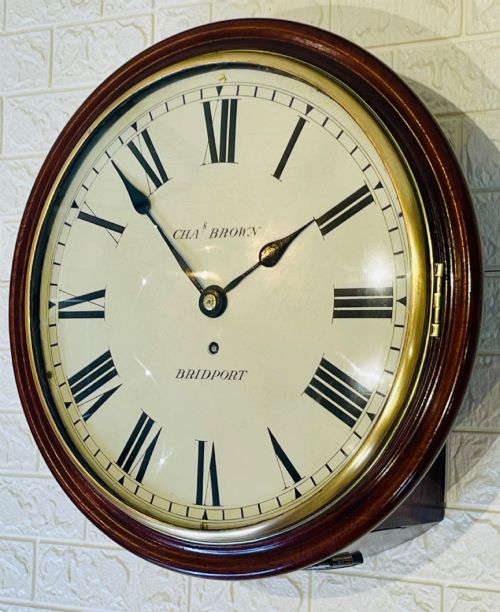
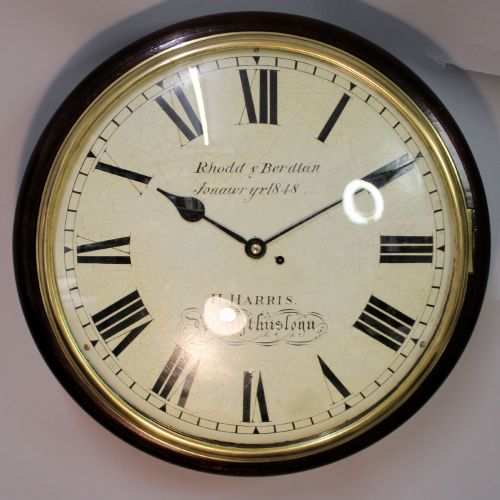
Circular Mahogany Dial Clock
When you want a circular mahogany dial clock, you are looking at practical timekeepers built to hang on walls in offices, stations and homes.
Circular Mahogany Dial Clock
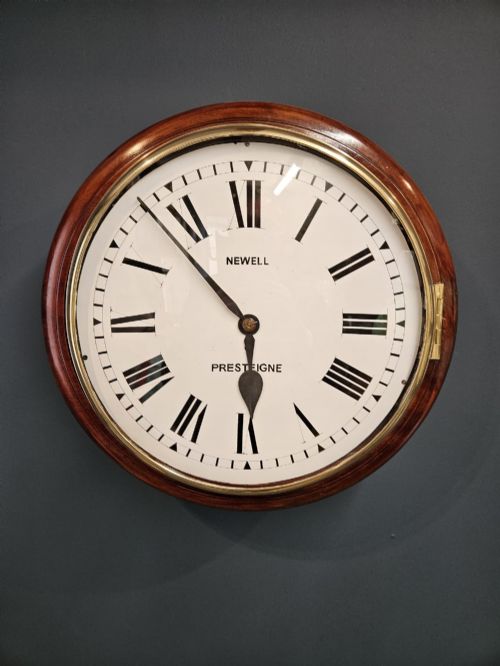
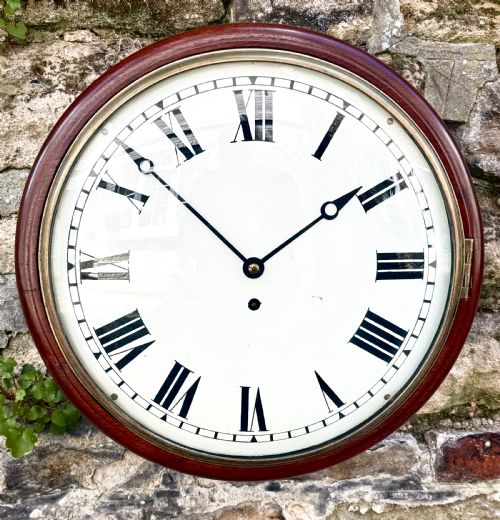
A circular mahogany dial clock is a wall timepiece housed in a round wooden frame, designed to be read easily from across a room.
You meet these pieces frequently in Victorian and Georgian incarnations, alongside examples from the early twentieth century.
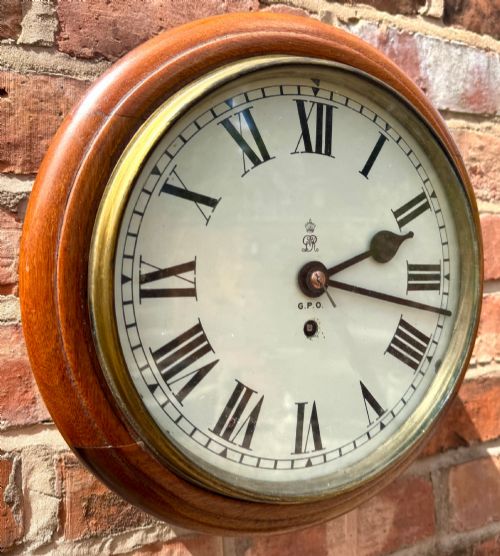
Many of these clocks served public functions, carrying markings from railways, the GPO and various stations.
How they were made
The circular cases utilise solid mahogany timber, often enclosing brass and iron movements behind heavy glass bezels.
Makers employed fusee movements to equalise the pull of the mainspring, ensuring steady timekeeping as the clock ran down.
Listings span the Georgian, Victorian and Edwardian periods, utilising mahogany timber alongside brass, iron and glass components.
What varies in quality
The clarity and execution of the dial lettering separate standard utility clocks from finer examples made by notable provincial and London watchmakers.
Cabinetwork quality shows in the thickness of the mahogany frame, the fit of the side or bottom doors, and the solidity of the brass bezel hinges.
Richard Jones of Hereford·Camerer Cuss and Co London·Henry Harris of Monythusloyn·Thomas Hedge of Colchester·John Walker London·Francis Perigal London
The Circular Mahogany Dial Clock Glossary
- Fusee
- A conical pulley used with a cord or chain to maintain an even force on the gear train as the mainspring unwinds. This mechanism is central to traditional English timekeeping.
- Dial
- The visible face of the clock, typically painted iron or wood, carrying the numerals and maker signature. On these clocks, it sits behind a hinged glass door.
- Bezel
- The brass or wooden ring that holds the glass protecting the dial. It usually swings open on a hinge to allow hand-setting and winding.
- Timepiece
- A clock that tells the time without striking or chiming mechanisms. Most fusee wall clocks fall into this category.
Circular Mahogany Dial Clock: Frequently Asked Questions
What is a fusee dial clock?
A fusee dial clock is a wall-mounted timepiece driven by a fusee movement, which uses a conical drum and chain to regulate the power delivered from the mainspring.
These clocks were widely utilised in railway offices, public buildings and domestic spaces for their reliable timekeeping.
How do I wind a wall clock?
Winding requires inserting a matching key into the winding hole on the dial face and turning it carefully until the spring reaches full tension.
Care must be taken not to overwind the movement, stopping as soon as resistance is felt.
Where were railway station clocks used?
Railway station clocks hung in waiting rooms, platform offices and administrative buildings to coordinate train movements and staff schedules.
Many bear company initials or station names painted directly on the dial or stamped into the mahogany case.
How do I date a mahogany wall clock?
Dating involves examining the construction of the mahogany case, the style of the painted dial numerals, and any maker signatures inscribed on the movement or face.
Georgian and Victorian examples often feature distinct hinge designs, timber patination and fusee setup details that indicate their era of production.