
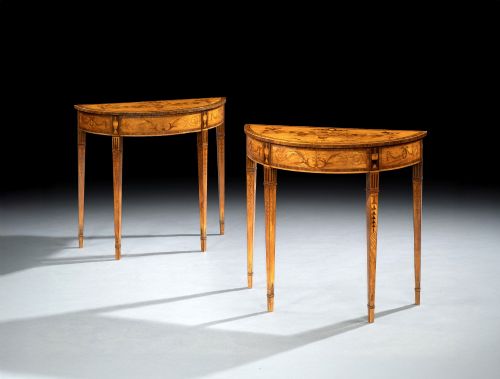
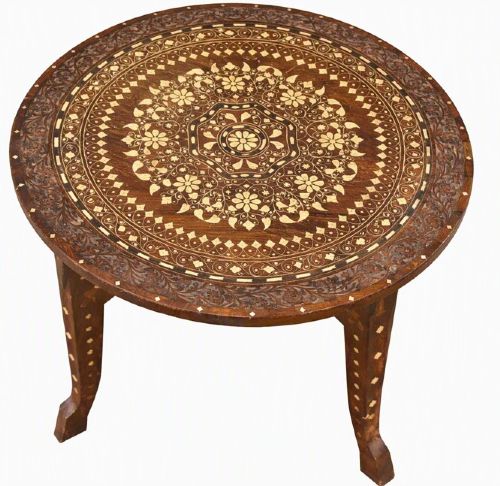
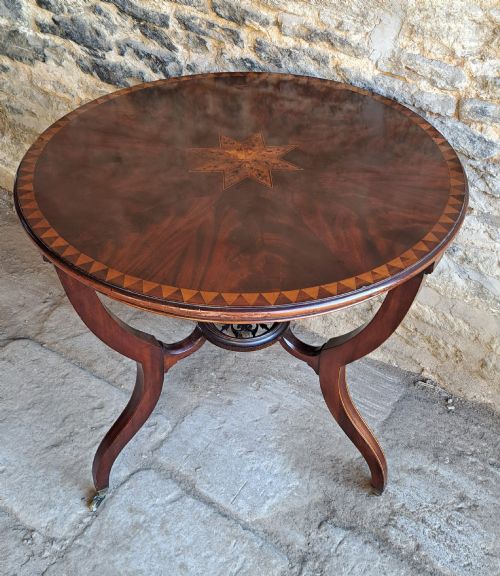
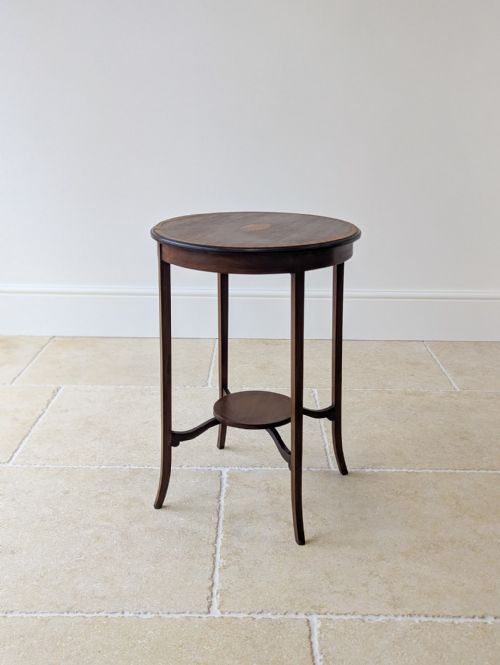



Circular Inlaid Side Table
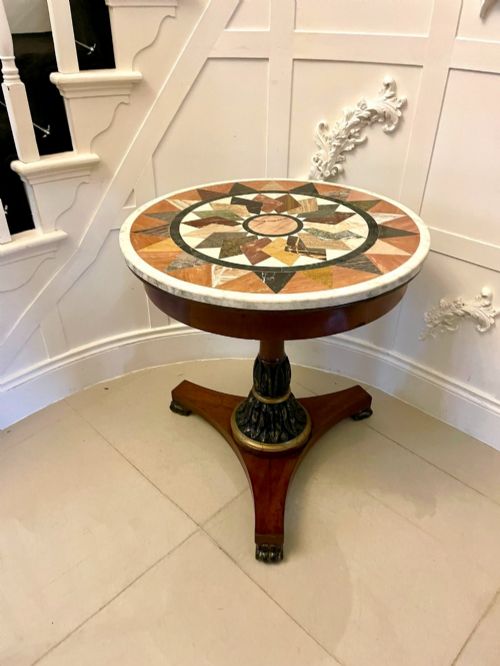
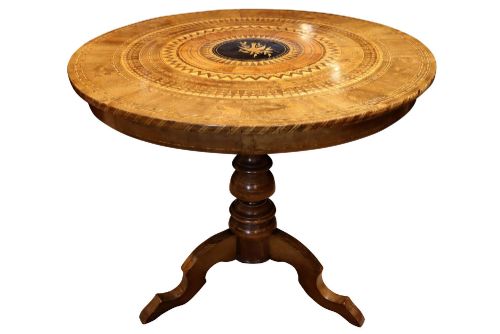
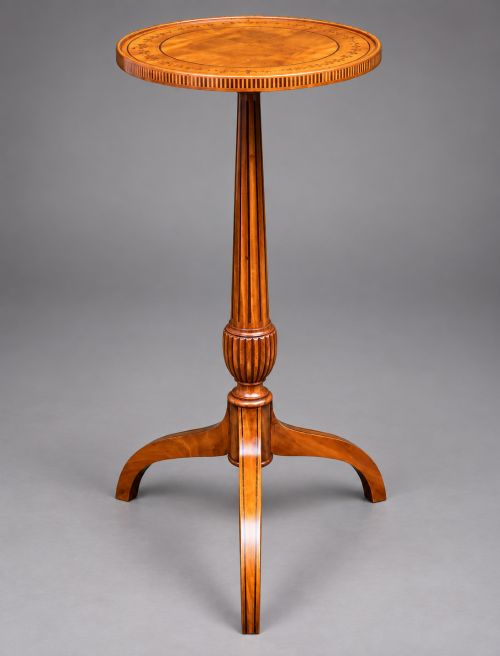
A circular inlaid side table brings focus to a room, offering surface space paired with detailed wood or metal ornamentation.
Circular Inlaid Side Table
A circular inlaid side table is a compact surface designed for occasional use, frequently found taking the form of an occasional table, lamp table, or centre table. These pieces span several centuries, with examples appearing from the Georgian and Victorian eras through to the Edwardian period and the early twentieth century.
The materials used in these tables range from solid foundations of mahogany, walnut, and satinwood to decorative surfaces incorporating marble, brass, and boxwood. The most common varieties encountered on this page feature Edwardian and Victorian mahogany or satinwood frames finished with contrasting wood inlay or marquetry.
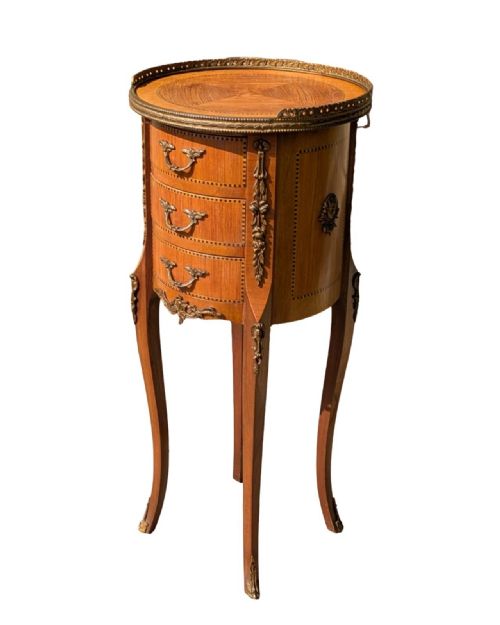
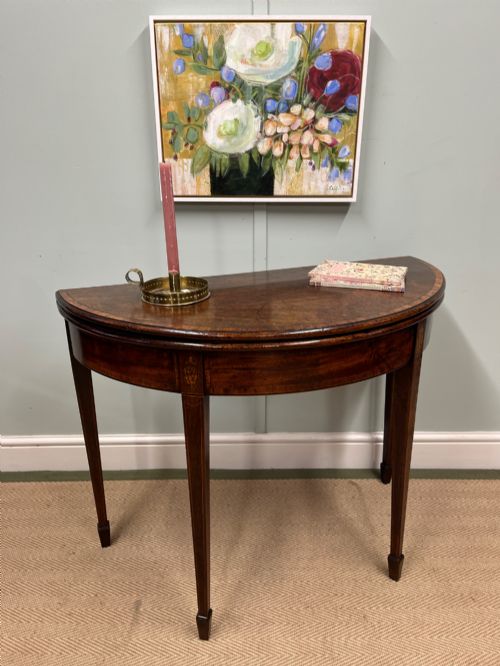
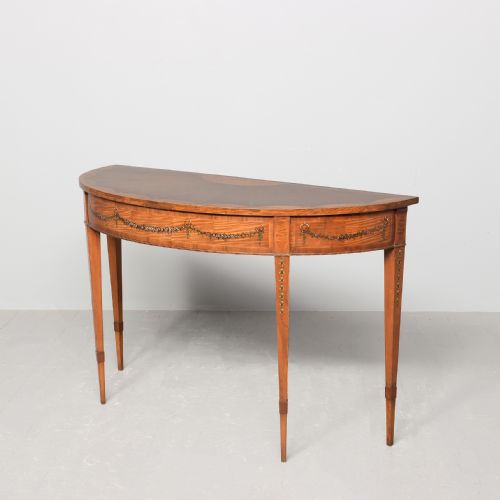
Beyond standard occasional tables, related forms such as demi-lune tables, wine tables, and bedside cabinets appear frequently alongside them. Buyers select these items for their portability and the decorative focal point created by their patterned tops.
How they were made
Cabinetmakers constructed the foundational frames of these tables using dense timbers such as mahogany, walnut, oak, and satinwood, often shaping the timber into tripod bases, pedestals, or four-legged supports. Tops were frequently built as solid panels or veneered boards prepared for decorative surface work.
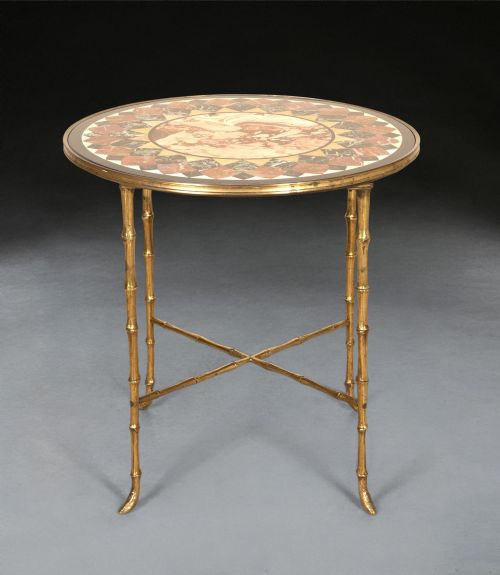
Decoration relied on contrasting materials inserted into recessed channels or glued onto the surface, utilising boxwood, bone, brass, and various fruitwoods to form geometric patterns, floral motifs, or pictorial marquetry. Certain Italian and Victorian examples incorporated specialist stone techniques, setting specimen marbles or Pietra Dura directly into the wooden framework.
What varies in quality
Quality rests heavily on the precision of the cabinetwork and the intricacy of the surface embellishment. Finer pieces display crisp, tight joints in the inlay where contrasting timbers meet without gaps, whereas simpler items rely on painted rather than inlaid decoration.
The choice of primary timber and top material also dictates the standard of the piece. Tables featuring substantial specimen marble tops, fine satinwood veneers, or detailed bone and brass work sit at the higher end of the range compared to standard mahogany models.
Liberty And Co
The Circular Inlaid Side Table Glossary
- Inlay
- The technique of inserting pieces of contrasting material into a recessed wooden surface to form a decorative pattern. This method creates a smooth, flush finish across the tabletop.
- Marquetry
- The art of forming decorative designs using thin veneers of wood applied to a structural backing. It allows for pictorial scenes and complex geometric arrangements.
- Demilune
- A half-moon shape used for console and side tables designed to sit flush against a wall. These tables often feature hinged tops that fold open.
- Pietra Dura
- An Italian technique of inlaying cut and fitted polished coloured stones to create pictures or abstract designs. It appears on high-status Victorian tabletops.
- Specimen marble
- A tabletop composed of various coloured marbles arranged in geometric or mosaic patterns. These displays showcase geological variety.
- Crossbanding
- A strip of veneer applied around the border of a tabletop with the grain running perpendicular to the centre panel. This frames the main design.
Circular Inlaid Side Table: Frequently Asked Questions
Where should I place a circular inlaid side table?
These tables suit small spaces such as beside an armchair, in a hallway as a lamp stand, or positioned centrally in a room as an occasional surface.
Their compact footprints and decorative tops allow them to function independently without overwhelming surrounding furniture.
How do I care for an antique inlaid wooden top?
Protect the surface from direct sunlight and excessive moisture by using coasters and avoiding placement near heat sources. Regular dusting with a soft, dry cloth preserves the finish.
Avoid commercial silicone sprays and harsh cleaning agents, which can degrade old wax polishes and loosen delicate veneer work.
What is the difference between inlay and marquetry?
Inlay involves cutting cavities directly into a solid wooden base and inserting contrasting materials like brass, bone, or boxwood into the recesses.
Marquetry assembles an entire picture or pattern from thin sheets of veneer on a paper backing before gluing the complete sheet onto the tabletop surface.
How can I tell a Georgian table from a Victorian one?
Georgian tables tend to feature restrained classical proportions, often executed in solid mahogany with understated stringing or simpler carved tripod bases.
Victorian and Edwardian examples frequently display busier satinwood marquetry, heavier use of veneering, and diverse influences ranging from Sheraton Revival to Anglo-Indian brass work.