





Circular Gilt Framed Mirror
A circular gilt framed mirror brings light and a distinct focal point to a room.
Circular Gilt Framed Mirror
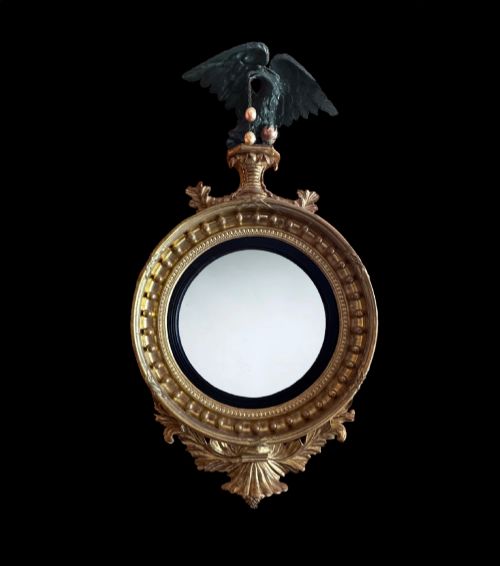
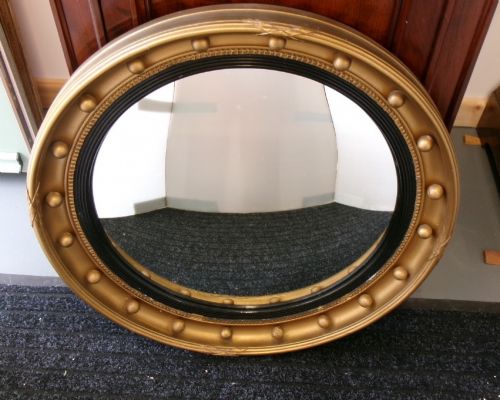
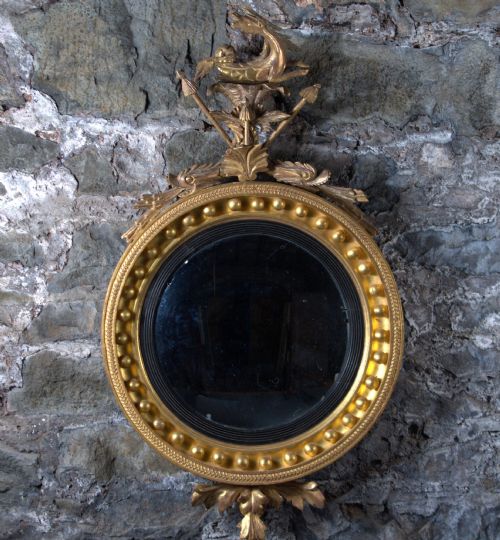
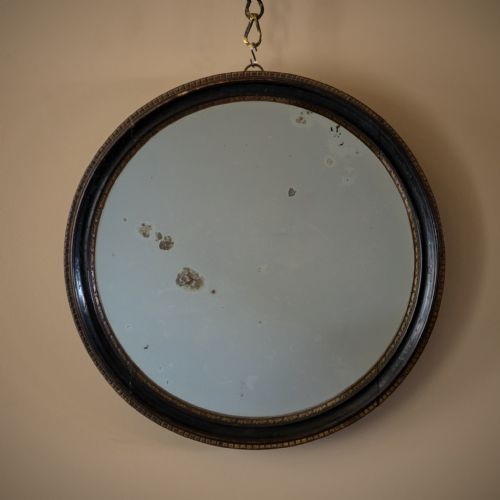
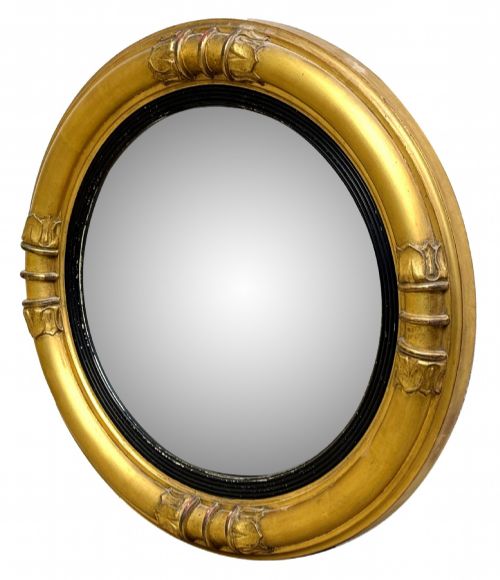
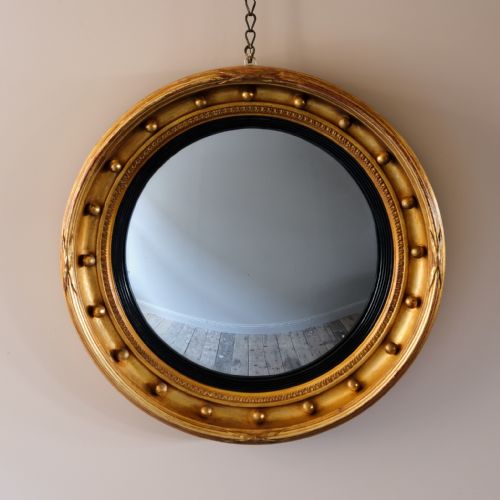
A circular gilt framed mirror is a wall hanging designed to reflect light and expand interiors through a rounded aperture. When searching for a circular gilt framed mirror, buyers encounter a range of historic examples spanning the Regency, Victorian, and Edwardian eras. The most frequent form meeting this description is the convex mirror, often housed in a circular frame of carved wood.
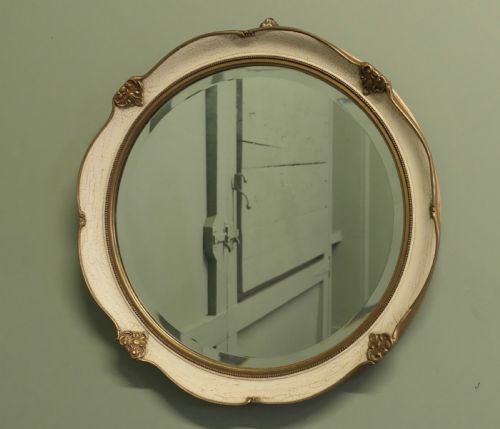
The materials recorded in these pieces include giltwood, gesso, ebonized wood, and gold leaf applied over a wooden base. Styles vary from Grand Regency and Florentine Rococo to French Art Deco and Edwardian designs. These wall mirrors appear in proportions ranging from small decorative items to grand scale pieces spanning several feet in diameter.
How they were made
The construction of these pieces relies on wood carcasses shaped into circular frames, often augmented with applied gesso to build up decorative relief. Carvers then apply gold leaf or gilding to the prepared surfaces to achieve the characteristic reflective metallic finish.
Mirrored glass, particularly curved convex plate glass, is set within the rebated frame to distort reflections and capture wide angles of a room. Ebonised wood details and cast brass elements occasionally provide contrast against the primary gilt surfaces.
Convex mirrors were historically nicknamed bank mirrors because their wide field of view allowed merchants to watch over their shops.
What varies in quality
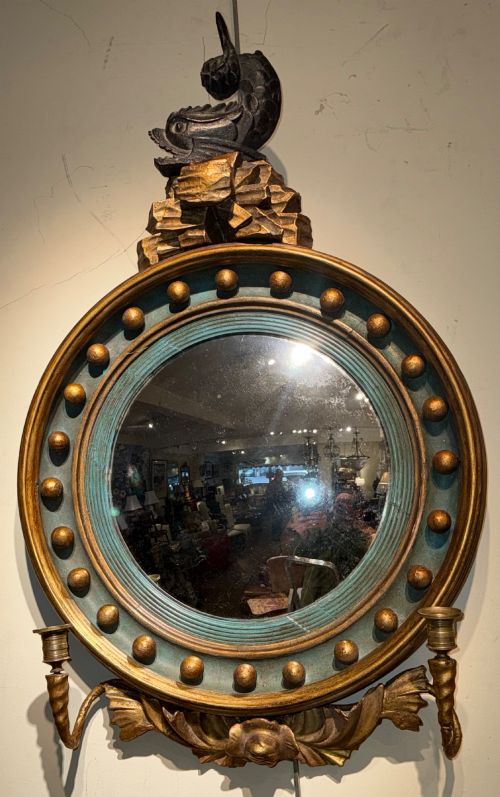
Quality in these mirrors rests upon the depth and crispness of the carved ornamentation on the frame, particularly where gesso is modelled with floral, leaf, or figural motifs like dragons. Finer examples display meticulous hand-finishing in the application of gold leaf rather than flat modern paints.
The integrity of the mirror plate itself distinguishes superior items, with older convex glass retaining subtle distortions and historical character. The soundness of the underlying wood frame and the retention of original gilding significantly influence the stature of a piece.
The Circular Gilt Framed Mirror Glossary
- Convex mirror
- A round mirror featuring a curved outward glass plate that creates a wide-angle, fish-eye reflection of the interior. These pieces were historically placed to monitor activity across a room.
- Giltwood
- Timber that has been coated with a thin layer of gold leaf or gold paint. This material defines the bright, reflective surfaces of traditional frames.
- Gesso
- A plaster-like mixture applied to wooden frame bases to create a smooth surface for gilding or to be moulded into relief decoration. It allows intricate ornamental details to be carved and shaped.
- Ebonised wood
- Timber treated with a chemical stain or dark finish to imitate expensive ebony. This dark contrast frequently frames the inner edge of gilt mirrors.
- Florentine Rococo
- An ornate decorative style featuring scrolling leaf motifs, floral carvings, and asymmetrical flourishes originating from Italy. Frames in this manner exhibit dense, elaborate woodcarving.
Circular Gilt Framed Mirror: Frequently Asked Questions
Where should I hang a convex mirror?
These mirrors work effectively in reception rooms, halls, and above mantelpieces where their wide-angle reflection can capture the breadth of the space.
Because they concentrate light from across the room, placing them opposite a window maximises illumination in darker corners.
How do I date a gilt mirror?
Dating relies on examining the construction methods of the wooden frame, the composition of the gesso, and the characteristics of the glass plate. Regency and Georgian examples often feature specific carved motifs and heavier timber construction compared to later Victorian or Edwardian revivals.
Backboards, fixings, and the type of gilding also provide clear physical indicators of period manufacture.
Are convex mirrors antiques?
Many examples found on the market date from the nineteenth century, including the Regency and Victorian periods, while others represent later revivals from the early twentieth century.
Each piece carries the distinct craftsmanship and materials of its specific era of production.
How do I clean a gilt frame?
Gilt frames require gentle dusting with a soft, dry brush to prevent damage to delicate gold leaf and gesso surfaces. Moisture and chemical cleaners should be avoided entirely to preserve the historic finish.
Professional conservation is recommended for older pieces showing signs of flaking or surface degradation.